Will GS1 Digital Link make Verification Obsolete?

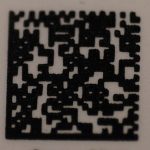
SCAN ME!
Will GS1 Digital Link eliminate the need for barcode verification? It seems that scanning with a smartphone is nearly foolproof—customers often report that when their verifier fails to read the barcode, their smartphone can.
There are reasons for that, and they do not support the belief that even bad GS1 Digital Link codes will always scan.
Barcodes are Images
GS1 Digital Link is a physical image, just like UPC. Images have intrinsic vulnerabilities—as well as advantages. Consider what would happen if the barcode were invisible, or if there was no barcode at all—for example, AI replaced barcodes by recognizing the product. First, while AI might be able to distinguish a Granny Smith from a Honey Crisp apple, it cannot distinguish a Honey Crisp from California from a Honey Crisp from Brazil.
Secondly, if an invisible barcode doesn’t scan, how can you determine what is wrong and how to fix it? A physical image provides physical clues and solutions.
GS1 Digital Link is UPC on Steroids
GS1 Digital Link is much more than a 2D version of a UPC. It encodes vastly more information. If it doesn’t scan right, the entire digital experience fails—consumers won’t reach the product information, authentication systems, or interactive content that GS1 Digital Link enables.
Admittedly, barcode scanning problems are rare. But that in no way equates to rendering verification obsolete; in fact, quite the opposite.
The stakes are higher with GS1 Digital Link because poor barcode quality now affects more than just checkout efficiency. When a barcode fails to scan:
- Consumers miss out on product stories, sustainability info, recipes, or instructions
- Brands lose engagement opportunities and can’t deliver personalized experiences
- Track and trace systems for supply chain transparency break down
- Product authentication and anti-counterfeiting measures fail
- Regulatory compliance information may be inaccessible
First-scan success is critical in consumer-facing scenarios. Unlike a retail checkout where a clerk can try multiple times or manually enter a code, consumers will simply give up if their phone can’t quickly scan a product barcode. This means quality standards need to be even more stringent.

Quality is More Important
Print quality issues are exacerbated because GS1 Digital Link barcodes often need to encode longer strings (full URIs rather than just GTINs), which can require denser data encoding or larger barcode sizes. Any printing defects, damage, or poor contrast become more problematic.
The shift to GS1 Digital Link essentially transforms barcodes from a mostly internal supply chain tool into a direct consumer interface—making quality assurance, verification testing, and proper printing specifications more important than ever.
In previous articles, we have claimed that a barcode is like a promise. In the case of the ubiquitous and venerable UPC, that promise was pretty simple: get the item from the manufacturer, through the distribution center to the retail outlet, and into your hands, while building the inventory replenishment order.
A Bigger Promise
GS1 Digital Link elevates that promise. It does everything the UPC does, plus:
- Consumer information such as recipe suggestions, use-by date, allergy information and nutritional data for a food item
- User Guides, warranty information, help resources and assembly instructions
- Parts and accessories
- …and basically anything else the purchaser may want to know about the item.
GS1 Digital Link makes barcode quality and compliance more important than ever.
 Questions and comments are welcome. Contact us here.