Barcode quality means two different things. Print quality is one important aspect of barcode quality. This other is data structure. A perfectly printed barcode with incorrectly parsed data will fail just as conclusively as a poorly printed barcode with correctly structured data. It is important that your verifier check both aspects of barcode quality!
The verification report is the basis for predicting how well (or whether) your barcode will scan correctly. It is also helpful in determining what is downgrading your barcode, and how to improve it. Understanding what the verification report means is the key to improving the barcode.
Old Verifiers Might Not Check Data Structure
Barcode data structure can be confusing. A barcode verifier is the last line of defense in making sure the data in your barcodes is correctly prefixed and parsed. Applications such as the UDI Rule for medical devices are a relatively recent development. Older verifiers may not check data structure at all, or have up-to-date software, reflecting ongoing changes in the specification. It may be wise to replace an older verifier, or at least to inquire about available firmware updates.
Symbol Contrast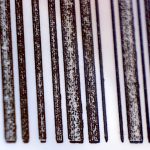

All scanners read and decode barcodes on the basis of reflectivity, or more precisely, reflective differences between the barcode image and its background. This is one of the most important attributes that a verifier reads and grades. Darken the barcode or lighten the background to improve Symbol Contrast
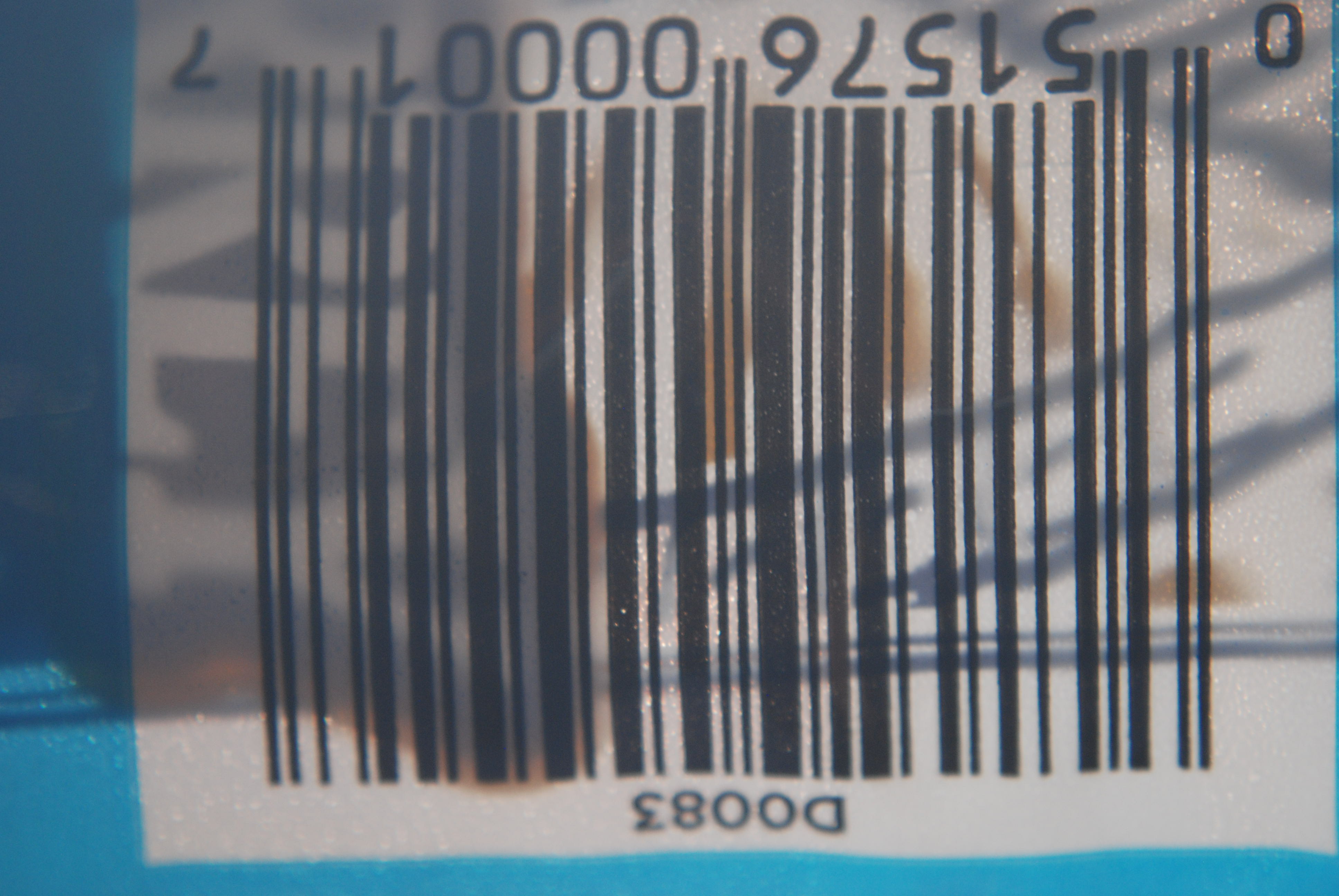 Furthermore, the two reflectance values must be uniform. The scanner expects to see just two reflectance values. Uneven reflectance downgrades the parameter Modulation. The solution: correct whatever is causing one of both of the reflectance values to be inconsistent. Is there a screen or other pattern in the background? Is there a gradient or color shift in the barcode?

Decodability and Nonuniformity
Distortion can damage or even destroy a barcode. When the bars and spaces in a 1D barcode are scaled improperly, the parameter Decodability can be downgraded. Distortion in 2D symbols can cause inaccuracies in the location of the dots or squares that encode the data. Stretching the 2D symbol in the X or W axis can downgrade the Axial Nonuniformity parameter. When the symbol is distorted to a non-square shape downgrades the Grid Nonuniformity parameter. IF these imaging errors are detected, the next step is to determine cause. Axial Nonuniformity is often caused by print speeds that are too fast. Try slowing down the printer. Grid Nonuniformity can be a problem when the substrate is stretched when applied to the product or package.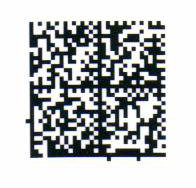
Fixed Patterns
Both 1D and 2D barcodes have fixed patterns. These are imaged elements that do not contain data. They help the scanner find the barcode in a field of text or graphics. They also help the scanner to correctly extract the barcode data. 1D fixed patterns include Quiet Zones and Start/Stop bar-space patterns. 2D fixed patterns include finders, clock tracks and quiet zones. If the verifier reports Fixed Pattern Damage, look for and correct problems in any of these areas.
1D and 2D barcodes differ on how they deal with scanning errors. Some 1D barcodes use check digits to signal errors in the barcode data, which can be due to design mistakes or subsequent damage to the printed image. A shrink wrap seam over a barcode can add an unexpected reflectance variation; damage to a section of the barcode can also confuse the scanner. Check digits in 1D barcodes detect these problems. If the 1D verification report indicates a check digit error, look for damage in the barcode. IF none is evident, confirm that the barcode does or does not have a check digit, which is optional for some symbol types.
Errors
2D symbols have the ability to recover from errors caused by damage to the barcode. Using the error correction budget even just a little, lowers the barcode grade.
 Comments are always welcome. Contact us here.