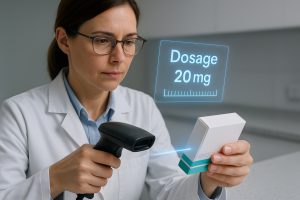
 Newstrail.com recently reported that 78% of hospitals in developed economies have implemented barcode scanning systems, used for medication administration and patient identification. That’s an impressive adoption rate, but the vagueness of “…developed economies…” is concerning. Furthermore, having a scanning system in place does not mean it is being used. A recent survey of nearly 2000 hospitals by the Leapfrog Group report validates this concern.
Nearly every hospital—98.7%–had an electronic barcode medication administration system. They own the technology, so you could conclude that adoption is essential in place. However, the same Leapfrog study found that only 34.5% of those hospitals have fully deployed the technology.
The Leapfrog Group sets the following standards for complete implementation:
Barcode-based medication tracking must be implemented in:
- 100% of their medical/surgical units
- 100% of their labor and delivery units
- 100% if their intensive care units
- Medications and patients must both be scanned in at least 9% of bedside medication dosing

The last requirement is where most failures occur, according to Leapfrog.
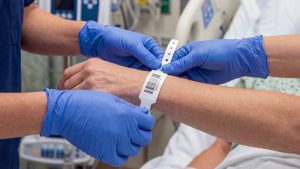 A related study by PubMedCentral (https://pmc.ncbi.nlm.nih.gov/) found that medication scanning rates range from 5.6% to 67%, and patient scanning varied from 4.6% to 89%.
Why are barcodes not getting scanned? One of the most commonly reported reasons?
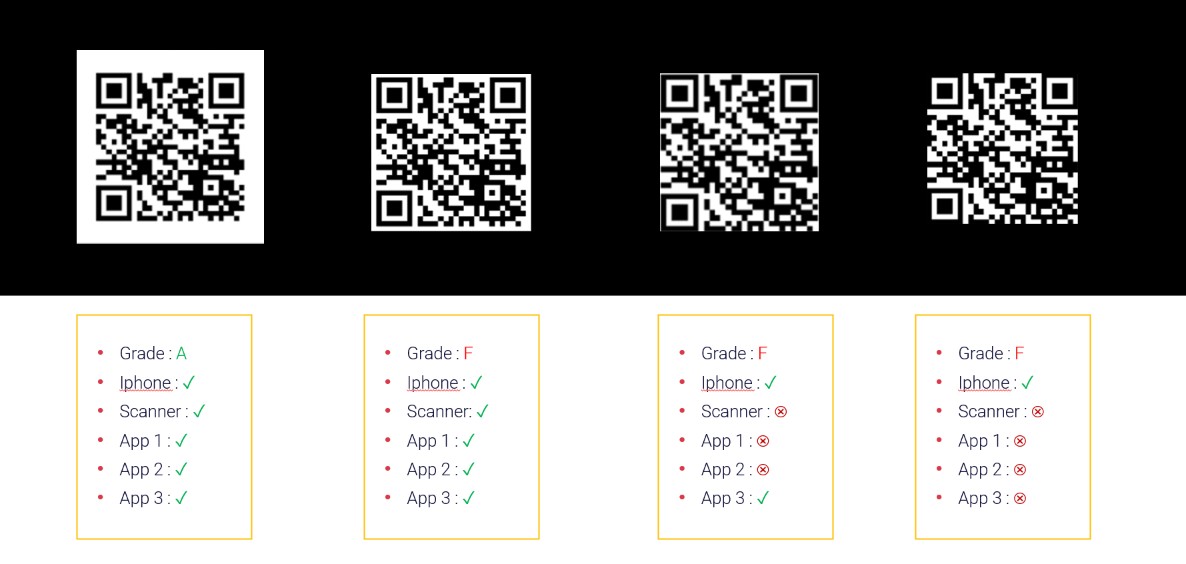
The barcode was unreadable
Sick barcodes in hospitals–isn’t that ironic?
Why is this important?
- Medication errors are a significantly expensive liability
- Effective barcode medication administration reduces errors by nearly 50%
- Harmful errors dropped from 0.65 to 0.29 per 100,000 medications administered
Resolving and preventing barcode problems is important not only for patient safety and the cost of liability. Bad barcodes also encourage stressed healthcare workers to skip the scanning process altogether.
Resolving a barcode problem can be done quickly, easily, and inexpensively—if you know who to call.
 We can help–quickly. Right now. Contact us here.