Some substrates can be very challenging for barcodes. The UDI requirement has introduced some new situations. Recently we were invited to a company that prints linear barcodes on clear plastic drip bags that hang at hospital bedsides, infusing a patient with a solution through the IV. Sounds simple, but it is surprisingly challenging.
Aluminum cans and infusion bags
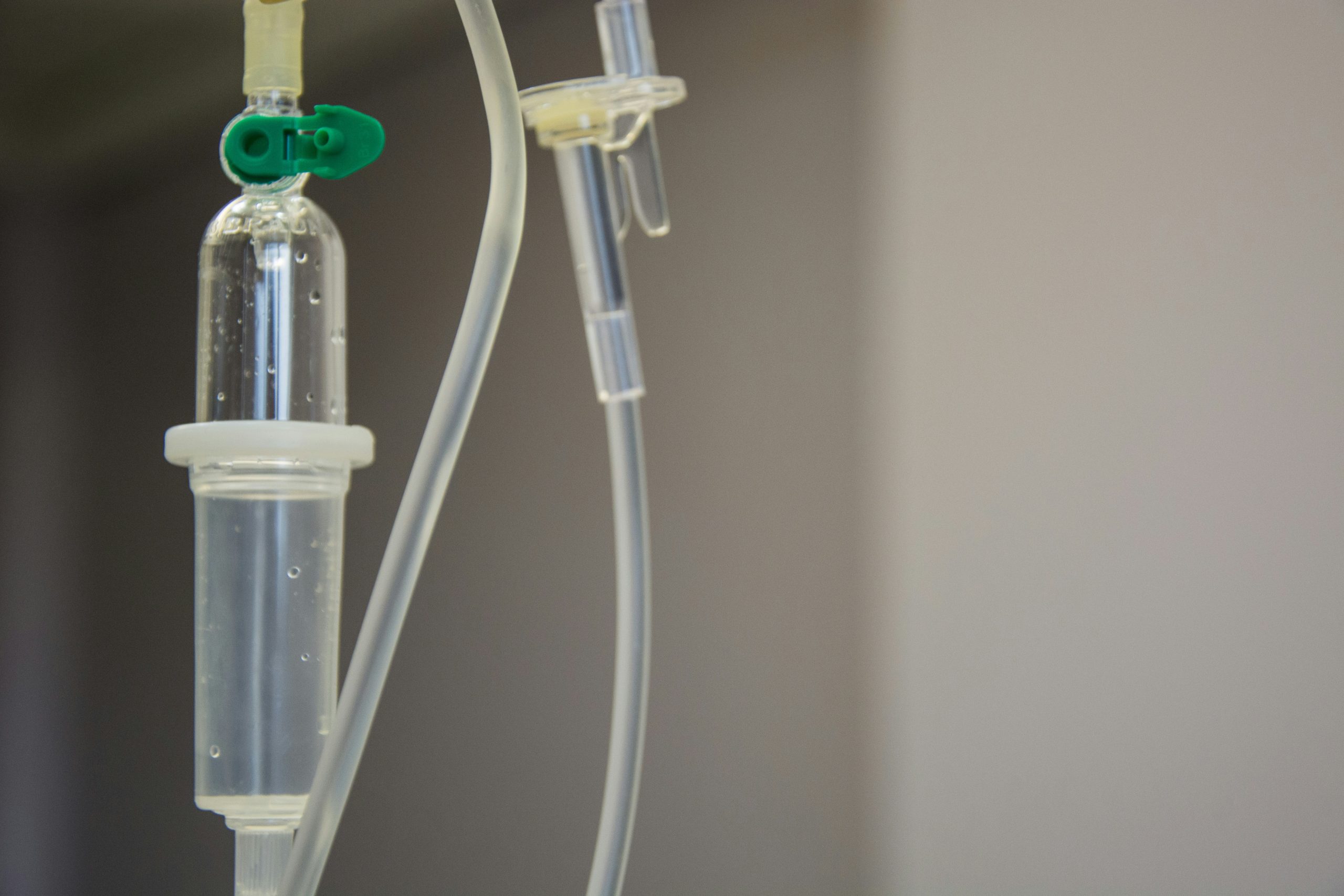
Not unlike the world of barcodes on aluminum soda cans, some barcodes on infusion bags are reverse printed. Treating the bare bag as the low reflectance value, the quiet zones and spaces are printed in white. While this sounds like a reliable solution, it doesn’t consistently work well.
We have also worked with a manufacturer doing the exact opposite: printing black barcodes on infusion bags, treating the bare substrate as the high reflectance value. And here again, it doesn’t consistently work well. How could this be? Shouldn’t one method or the other work well?

“Working well” can be elusive. At the company we recently visited, the scanners on their vision system read their black-on-clear barcodes perfectly but their verifiers were unable to decode them; and when they did, they always failed. How can you be assured these barcodes will work wherever they go?
The nursing staff at a local hospital report that white, reverse-printed barcodes scan successfully scan some of the time. Our verifiers are unable to read them. In other words, either method of printing barcodes on the bare bag is unpredictable. What’s going on here?
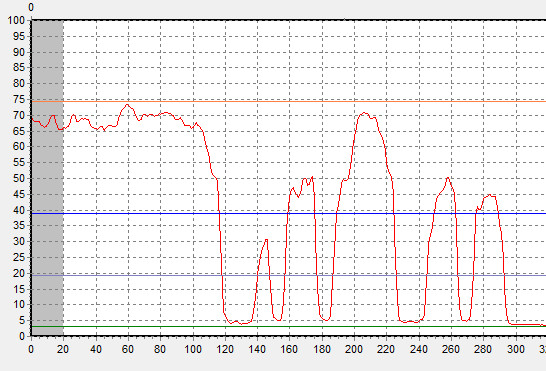
The problem is obviously the plastic bag. Why does it behave so inconsistently? The answer is subtle—and interesting. The plastic material, like an aluminum soda can, is neither entirely reflective nor refractive. It is a little of both and there lies the problem. Here’s the really interesting part. When wide bars flank narrow spaces, the reflectance of the narrow space is disproportionately less compared to a wide space, or the quiet zones.
Visual Inspection Reveals the Problem
This can be observed visually. The verification report and in particular, the Scan Reflectance Profile, shows exactly what is happening and why these barcodes fail. The reflectance values for the bare substrate is variable, and this reflectance difference triggers the Modulation parameter and causes the barcode to fail.
The Solution
The solution is pretty simple: a white rectangle over which the barcode can be printed in black. Conversely, reverse printing, print a black rectangle before printing the quiet zones and spaces in white. Simpler, affix a pre-printed thermal or thermal transfer label. But don’t rely on the bare plastic substrate—its spectral behavior is too variable.
Please share your comments or experiences.