Having spent many years studying, interpreting and explaining the ANSI/ISO 15416-1 specification for quality of the printed barcode, one wants to believe that the most common cause of barcode failure is some obscure, difficult to detect and even more difficult to remedy parameter. One would be wrong to believe that.
One of the most common causes of barcode failure is quiet zone violation or encroachment
One of the most common causes of barcode failure—and we’re talking linear barcodes here—is the most obvious, most easily detected and most preventable cause one could imagine—and isn’t one of the ANSI/ISO 15416-1 parameters. It is quiet zone violation.

Quiet Zone violation is the most easily detected and prevented cause of barcode failure
There is no scientific data to substantiate the claim that quiet zone failure is the most common cause of barcode failure—the evidence is purely anecdotal. But I have heard it said repeatedly from numerous participants in the barcode industry –and frankly I don’t have any trouble believing it, because I personally see it all the time.
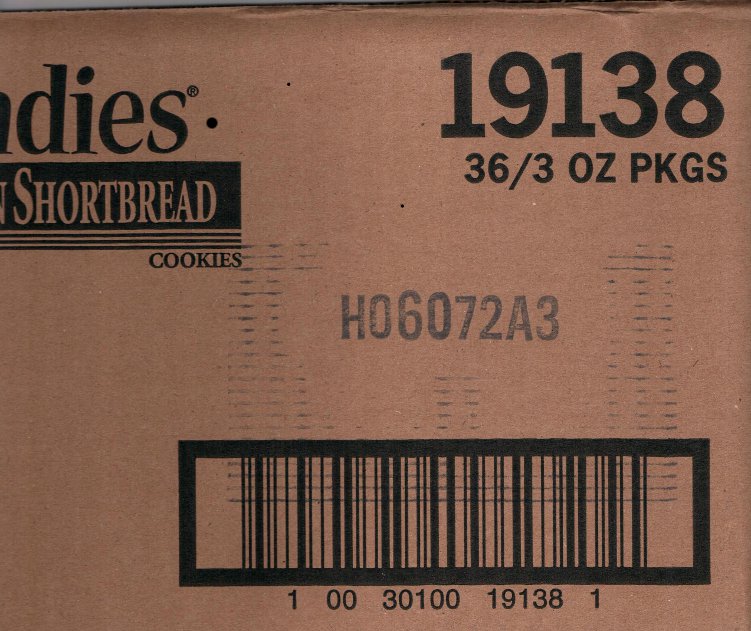
Often the encroachment is subtle, such as in the GS1-14 samples above and below. The verification report shows that the magnitude of the violation is one module: the quiet zones should be > 10 modules and the right quiet zone is 9 modules wide.
The error was not a design mistake. The error occurred when the printer applied excessive pressure to the imaging plate and literally squeezed one module of width right out of the quiet zone by spreading the symbol and the surrounding bearer bars.
Barcode failure due to quiet zone violation is usually caused by ignorance, not some technical issue
The lesson here is that the specification provides for a minimum quiet zone width—but there is no maximum. Bigger is always better. When there’s available space, why be sparing?
Most quiet zone errors are not this subtle, as the examples below illustrate. These are simple design mistakes born of ignorance.
But most mistakes are also completely preventable and without an obvious reason. In almost every case I’ve seen where at least one quiet zone has been violated, there is sufficient available real estate on the package or label. There was no causal factor that drove the design into a quiet zone encroachment.
Advancements in scanning technology have made scanners increasingly tolerance of quiet zone violations. Why hasn’t the ANSI/ISO specification likewise been relaxed? The specification remains, for a variety of reasons. The scanning environment contains a huge population of very old scanners that are not tolerant of quiet zones that are too small, and since most quiet zone problems (another non-scientific observation) are not due to limited space for the barcode, why should the specification be changed?
Some violators have pleaded “not guilty” because quiet zones are not an ANSI/ISO 15416-1 attribute—they are a factor in Traditional Verification. Didn’t the ANSI/ISO specification supersede the older Traditional specification?

Traditional verification was never really a specification because it never incorporated a testing protocol that everyone agreed upon. And besides all of that, if there is an attribute of barcode quality that impacts on barcode performance, isn’t that sufficient cause to pay it proper attention?