 Decodability is one of the graded ISO parameters that determine barcode quality. Why test and grade a barcode for quality? This is done to predict with reasonable accuracy that the barcode scans successfully using any type of scanner. That’s a tall order and a good reason why ISO compliant barcode quality is so important.
However, decodability is difficult to understand. It involves several quality factors. Decodability measures how much margin of error remains in the barcode after the print reproduction process. The more margin of error, the more likely the barcode will scan quickly and correctly.
Print Gain Causes Decodability Problems
Low decodability grades relate to dimensional inaccuracies in the barcode. A low decodability score is often caused by excessive print gain: the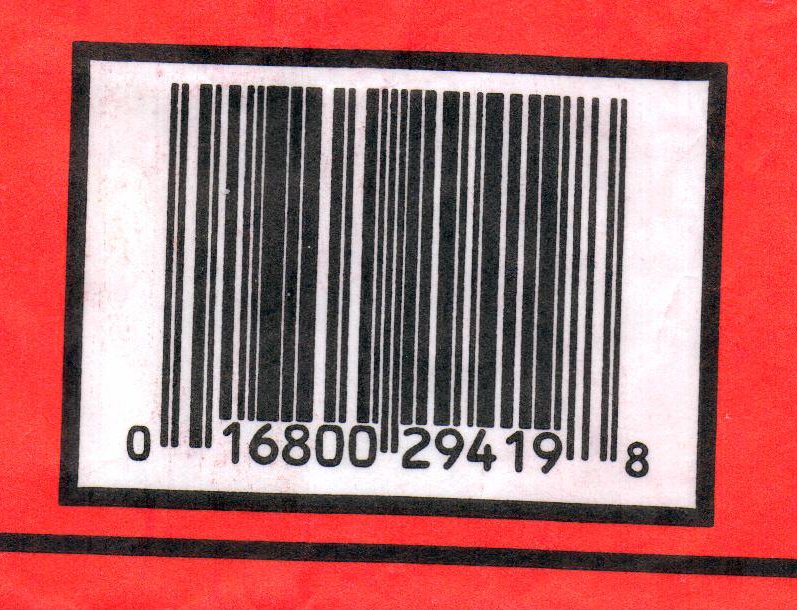 bars have been spread too much. Average bar gain is reported as a percentage of X, which is the width of the narrow bar. The verifier also reports + bar width tolerance as a percentage of X. If the average bar gain is almost equal to—or exceeds—the plus-side tolerance, decodability is downgraded.
If the barcode is consistently gained across its entire width, this can be adjusted for by imposing bar width reduction in the design program or the plate making process. The average bar gain is probably the correct amount of bar width reduction, assuming the pre-press and on-press variables all remain the same. Be aware that there can be many factors affecting the final printed image. All variables need to be identified and controlled as closely as possible.

Print Software Problems Cause Decodability Problems
Low decodability can also occur when average bar gain does not seem to be a factor. Here the cause may be related to uneven gain across the width of the barcode. While average bar gain may be well within tolerance, the actual bar gain may be very high on one side and very low on the other: hence relatively minor average bar gain.
Another cause of decodability problems is inadequate or mismatched printer resolution. If the printer is unable to execute the digital commands it is receiving from the design software, it will interpolate both bar width and bar placement and effectively distort the barcode. This usually occurs in discrete locations, not as an overall distortion of the entire symbol. When this happens it can cause the symbol to violate the design rules for that symbology and exceed bar width or location tolerances, causing decodability to be downgraded.
Check Other ISO Parameters when Decodability is Downgraded
When decodability is downgraded, it is a good idea to check the other ISO parameters. If some of them are also downgraded, it is likely the problems with the barcode are more generalized. If decodability alone is downgraded, it is likely that there is a problem with printer resolution.
Having a problem with your barcodes? We can help.