Not all barcode names have significance—UPC or Universal Product Code and Data Matrix, for example, are just generic names with no intrinsic meaning. Other barcode names are more descriptive and interesting.
Code 39
This is an alpha-numeric barcode with bars or spaces in two possible widths only: Narrow (or X) is the basic building block and wide is a multiple of narrow within a range of 1:2 or 1:3. Code 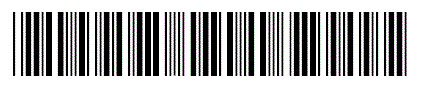 39, also called Code 3 of 9, was invented in 1974 by Dr. David Allais: “..nine elements (bars or spaces) comprise each character, three of which must be wide; hence the name ‘Code 39’.”
Code 93
Dr. Allais is also responsible for Code 39’s cousin, Code 93. He explains, “I developed Code 93 to be a higher density equivalent to Code 39 with the same character set. 93 seemed like a clever 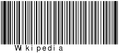 name being 39 backwards but also it is a (9,3) symbology because it involves three bars within 9 modules for each character.” By contrast UPC/EAN is a (7,2) symbology and Code 128 is an (11,3) symbology.

Two-of-Five and Interleaved Two-of-Five
This symbology is similar to Code 39: the name derives from its five element structure of which two are wide. Even more interesting is Interleaved Two-of-Five (AKA ITF) in which the odd- position characters (1st, 3rd, 5th, etc.) are represented in bars only, separated by the even-position characters (2nd, 4th, 6th, etc.) represented in spaces only. Lace your fingers together—the left hand is the bars, the right hand is the spaces. Obviously ITF must have an even number of encoded characters.
Code 128
This is a high density symbology which can be full alpha-numeric or numeric only depending on version used. Code 128 was invented by Computer Identics Corporation in  19981. It encodes the entire 128 character ASCII character set, but the name honors Massachusetts Rt. 128 through Boston where sat for hours inventing the symbology during rush hour traffic gridlock, according to the inventor.
QR Code

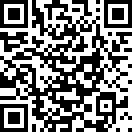
Denso Wave Corporation of Japan, a parts supplier to Toyota, invented QR Code, also known as Quick Repose Code. It enables fast reading of parts arriving in their Just-In-Time inter-company system—hence the name Quick Response.
Aztec Code
Aztec Code was invented by Andy Longacre of Welch Allyn which became a part of Honeywell, who explains, “The original test print of data surrounding a square bullseye reminded me visually of the patterns in a southwestern rug in my parent’s house, in fact a Navaho rug but in a moment of severe geographic confusion I dubbed the symbology “Aztec Code. Later in the development of decoding algorithms, we started creating screen images in which (quoting from Annex C of ISO/IEC Aztec Code) ‘the square central bullseye of an Aztec Code jumps numerically out of this image much as the ancient Aztec pyramids seem to rise vertically out of the undergrowth.’ Again geographic confusions—they’re Mayan pyramids of course.”
MaxiCode
 Also known as UPC Code, this symbology was created by UPS for managing and tracking packages. UPS workers also refer to Maxicode as “Bird’s Eye” or “Target” code because of the center target finder pattern. What is the significance of the name? Frankly I do not know, but you know there must be a story behind it, and it is more a interesting name than “Data Matrix”.
There are a great many more barcodes with interesting names. Please comment on ones you know about or post images of them at our sister site, BarcodesGoneWild.