 If you’ve ever watched a receiving associate manually key in a product code because the barcode “wouldn’t scan,” you’ve already seen the problem this article is about. The barcode looked fine. It printed clearly enough to pass a glance-and-nod inspection. And yet, at the dock door, the scanner choked on it.
This is the gap between looking right and being right — and it’s costing supply chains more than most people realize.
A Barcode Is a Measurement, Not a Picture
It’s tempting to treat a barcode like a logo: if it’s crisp, aligned, and printed at the right size, it must be good. But a barcode isn’t a decorative graphic — it’s a precision optical signal that a scanner has to decode reliably, every time, under real-world conditions: warehouse lighting, handheld scanner angles, shrink wrap glare, a slightly worn thermal print head three shifts into a run.
Because of this, the industry doesn’t grade barcodes by eye. It grades them using two international standards — ISO/IEC 15416 for linear (1D) barcodes and ISO/IEC 15415 for 2D symbols like Data Matrix or QR codes. These standards break a barcode down into measurable properties, things like:
- Contrast — the difference in reflectance between the bars/cells and the background
- Defects — spots, voids, or print inconsistencies within the symbol
- Decode consistency — whether the barcode decodes the same way across multiple scan angles and passes
- Print growth — whether bars or modules have printed thicker or thinner than specified, which shifts the whole symbol out of tolerance
Each of these gets a letter grade (A through F), and the barcode’s overall grade is only as good as its worst measured parameter — much like a chain being only as strong as its weakest link. A barcode can score well on contrast and still fail overall because of one defect zone or a print growth issue invisible to the naked eye.
Why “It Scanned for Me” Isn’t Proof of Anything
 This is the part that trips up a lot of receiving and DC teams: scanning a barcode successfully with your phone or a handheld scanner tells you almost nothing about its actual quality margin.
Modern scanners are engineered to be forgiving. They use aggressive image processing, multiple decode attempts, and adjustable sensitivity to squeeze a successful read out of a marginal barcode. That’s a feature for the scanner, but it hides a real problem: a barcode that “just barely” scans on a good scanner in good lighting may fail outright on a different scanner, in different lighting, after a few more print cycles, or once the ribbon on the printer starts to wear.
In other words, a successful scan today tells you the barcode worked this time, on this device, under these conditions. It doesn’t tell you it will work reliably at the next distribution center, on the next shift, or six months from now as print quality drifts.
Where This Shows Up as Real Cost
Barcode quality problems rarely show up as a single dramatic failure. They show up as friction, spread across the supply chain:
- Chargebacks from retail and distribution partners whose systems enforce barcode quality requirements
- Manual re-keying at receiving, which reintroduces the very data-entry errors barcodes exist to eliminate
- Shipment delays when a pallet or case gets flagged and pulled for manual verification
- Rework and relabeling costs when a vendor discovers a print quality issue after product has already shipped
- Strained vendor relationships, especially when the root cause isn’t found quickly
Because these costs are distributed and often absorbed quietly (a few seconds of manual entry here, a short delay there), they tend to stay invisible until volume makes them add up — or until a major customer’s automated system starts rejecting shipments outright.
Print Drift: The Problem That Sneaks Up on You
 Barcode quality isn’t a one-time achievement — it’s a moving target. Thermal print heads wear down. Ribbon tension shifts. Label stock changes from one roll to the next. A barcode that verified perfectly on a proof run in January can quietly degrade by summer, with no one noticing until a customer complaint or a rejected shipment forces the issue.
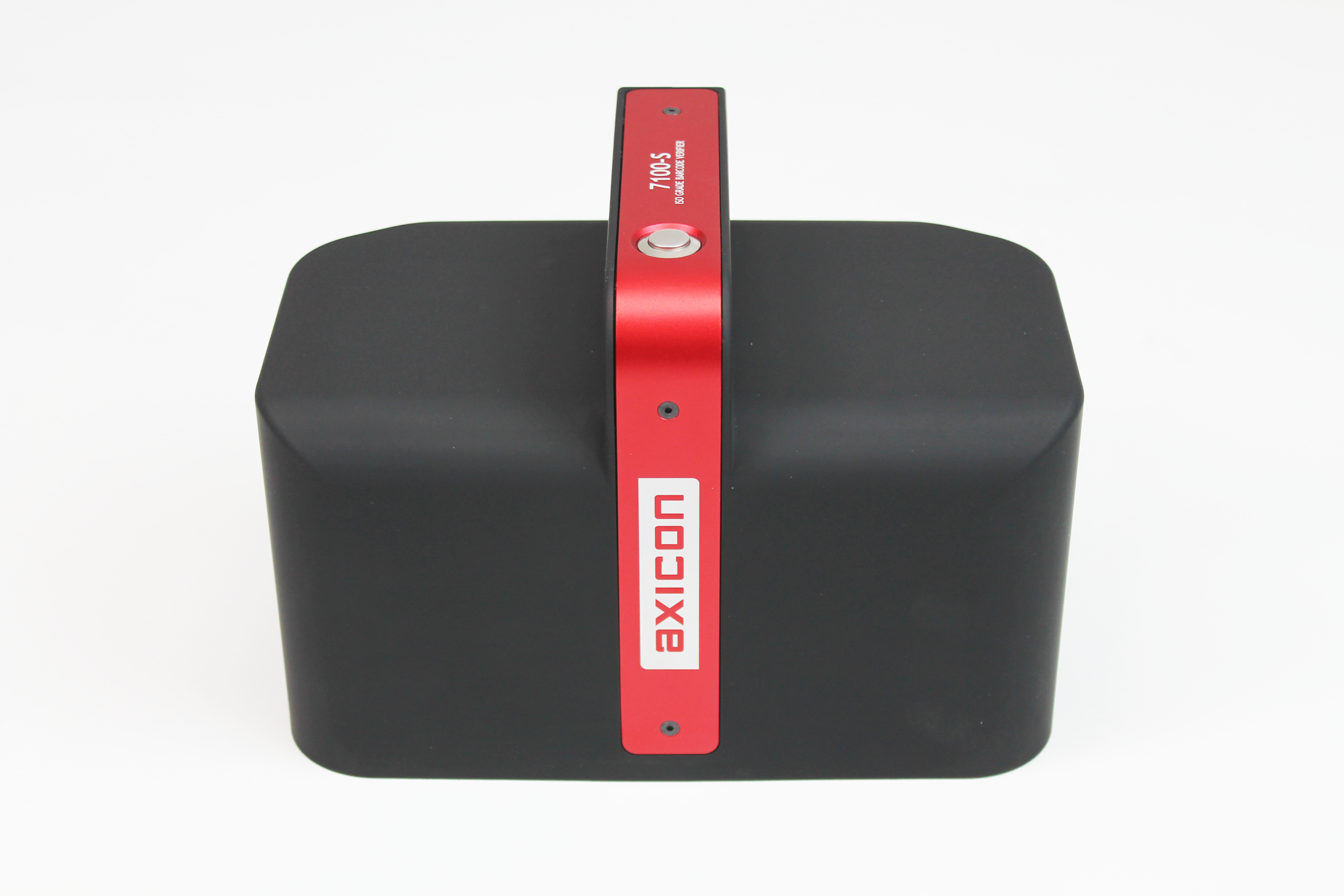
This is why leading manufacturers don’t treat barcode verification as a one-and-done design step. They build periodic, standards-based verification into their print quality process — using calibrated verifiers (not standard scanners) that measure against ISO/IEC 15415/15416 and produce an objective, repeatable grade.
What Supply Chain Managers Can Do
You don’t need to become a barcode metrologist to protect your operation from these problems. A few practical levers:
- Ask vendors for verification data, not just a scan confirmation. A test report referencing ISO/IEC 15415 or 15416, with actual grades, is a very different thing than “it scanned fine here.”
- Build barcode quality into vendor onboarding and periodic audits, the same way you’d audit packaging or labeling compliance.
- Watch for patterns, not just incidents. A single scan failure might be a fluke. A recurring pattern from one vendor, one SKU, or one print run is a signal of print drift worth investigating.
- Understand that your scanner’s tolerance is not the standard. If your equipment is unusually forgiving, you may be absorbing quality problems that will surface downstream, at a partner with less forgiving equipment.
The Bottom Line
A barcode that looks right and a barcode that scans reliably, every time, everywhere, are not the same thing. The difference is measurable, it’s standardized, and it’s exactly the kind of quiet, unglamorous quality control that keeps a supply chain moving without anyone noticing — until it’s missing.
 Take Control. Get competent, immediate and caring help. That’s us! Contact us here.