 Some interesting paradoxes are emerging in manufacturing as AI advances. Even in this early stage, as new applications continue to appear, a clear employment trend is taking shape. AI is eliminating or significantly changing some jobs, but it is also creating new ones—often more than it removes. That offers little comfort to affected workers, but AI did not start this shift. The era of lifetime employment ended decades ago, replaced by continuous learning and the need to adapt to stay relevant.
Quality and Compliance
Are quality and compliance included in this trend? In fact, many companies view quality through a lens of compliance, and it for them, quality is all about numbers. The hard focus of that lens comes at a price: tight focus always limits the field of view. My apologies for the optical analogy, but it is apt.
Value is the bigger picture. When quality is compliance, it’s all about cost. Do just enough (the threshold) to justify the cost, and call that quality. Value, on the other hand, relates to business outcomes, risk reduction, resilience, customer trust, and sustainable growth. Through that lens, quality encompasses the business culture, relationships within the company and beyond, extending to upstream suppliers and downstream customers.
The AI Contribution
AI can contribute to capability, through processes and tools, but culture and leadership form the basis for consistency and trust, both within a company and outward to existing customers and, through effective, caring marketing, to new customers. AI can’t do that.

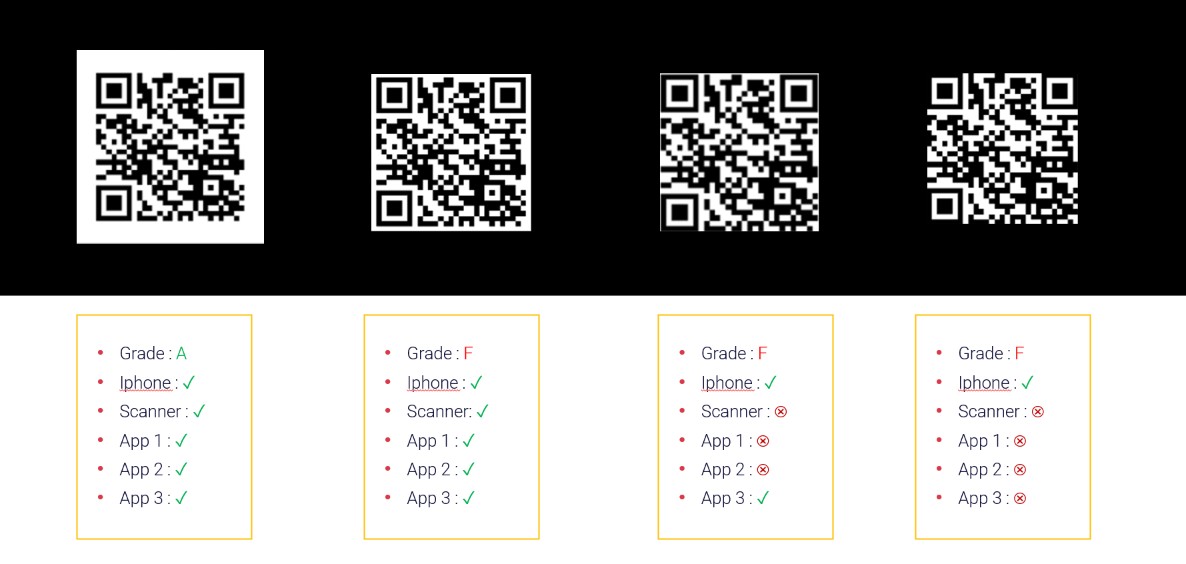
 It’s a well-known fact that barcodes are the connective tissue that holds commerce (and substantially the entire economy) together. Barcodes support the manufacturing process, from upstream raw materials and subassemblies and through the assembly process: selecting and installing the correct parts to specification with a work order. Barcodes continue to identify the product and track its movement through the supply chain, from manufacturing through distribution to the end user. AI isn’t changing that.
Barcodes in a manufacturing process identify non-compliant upstream resources. Problems or opportunities for process improvement can be identified by the dwell time between barcode scans. Inventory debit and replenishment are a well-known process. AI might improve processes but barcodes provide the process performance data.
Barcode quality and compliance are best viewed from a value standpoint. The narrow view of cost leaves companies and people at risk. AI isn’t changing that either.
Where is the Value?
 Cost is usually focused on the verifier and the person to operate it. Value, on the other hand, encompasses managing the risk of a faulty barcode, which endangers everything, from product repeatability in manufacturing, trace and track in the supply chain, inventory management and sale, and soon, post-sale user information. Value strengthens relationships within company teams and between companies that do business together. Value enhances the resilience of internal and external relationships by building trust. Relationships, resilience, and trust create sustainable growth. Value encompasses the big picture.
Value is slowly built and quickly destroyed
Barcodes that work right are critical in this big picture. A verifier is an essential tool. Risk-management tools require maintenance. Verifier calibration and recertification can be quick, inexpensive, and easy.
- On-site self-recertification may be available for your verifiers.
- Rapid turnaround, 3rd-party recertification may be available for your verifiers.
- Rental units may be available if your verifier requires more extensive and time-consuming repairs.
 Interested? Let us help. Contact us here.