 GS1 Digital Link is certainly the biggest advancement in barcoding on the near horizon. It’s not than just a change in symbology—the QR Code is much more than just another way to encode the data. It is a significant evolutionary advancement from a barcode as static product identifier to becoming a data-rich gateway.
This sets the stage for near-term developments for virtually everything marked with the GS1 Digital Link barcode. Food items will now have nutritional, expiration, recipe and allergy information all readily available to the consumer. But the implications go much farther.
Data-limited UPC’s forced retailers to assign conservative use-by dates to time-sensitive products such as meat and cheese. Item-level inventory management was virtually impossible, resulting in unnecessary food waste and lost revenues for the retailer. GS1 Digital Link supports automated markdown pricing for products with near-term expiration. It can also alert store personnel to rotate discounted inventory.
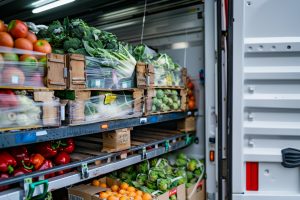 This also helps upstream distribution, which has traditionally operated on First In, First Out logistics. Variable expiration dates within the lot or batch were invisible until GS1 Digital Link. Now, warehouses will be able to operate on First Expired First Out. Less spoilage, less waste, less lost revenue. This will be especially effective with produce and perishables. Major grocery chains are already piloting dynamic markdown systems based on GS1 Digital Link. Everybody benefits.
Preventing food waste at the retail consumer level is just one important development. Currently, agriculture accounts for about 20% of global greenhouse gas emissions. Transportation adds another 16%; manufacturing ~21%. GS1 Digital Link will make more agile planning and production possible.
 Overstated waste is often pointed at the fashion industry, which contributes only about 4% to global greenhouse gas emissions, but the real impact is in microplastic pollution, water contamination and dye pollution. Fashion is a significant, under-regulated polluter. GS1 Digital Link’s item-level identification can determine what an article is made of and improve recycling accuracy while simultaneously tracking demand and supply, potentially reducing wasteful overproduction.
Real results will begin to emerge at the 2027 adoption date, but the promises and possibilities are real and exciting. This development was unimaginable when the first UPC was scanned in 1974.
It is hard to imagine what could come next once GS1 Digital Link becomes the new normal. Already there are some wild possibilities…
 Questions about barcode quality and compliance? Contact us here.