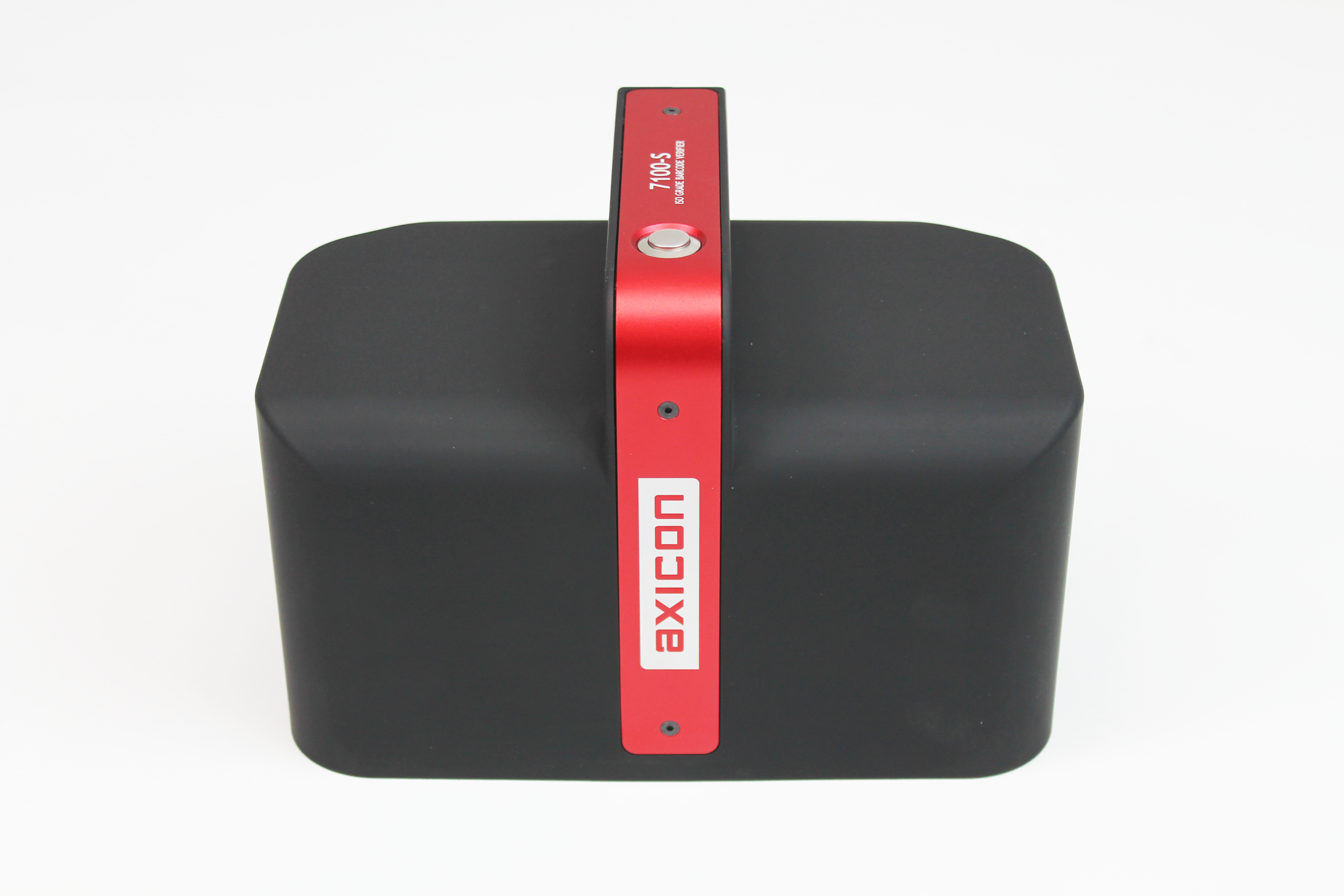
Many people refer to all photocopiers as Xerox machines. At last count, there were at over 30 different brands of photocopier. The same is true of barcode verifiers generally and 2D verifiers in particular. Like photocopiers, barcode verifiers are not all the same. We are a barcode testing lab: we can state that with some authority. Beliefs: meet facts.
Here are some of the ways in which Brand X, Y and Z differ from a user and performance standpoint:
- Some 2D verifiers get less than repeatable results when the barcode is located in different areas of the field of view. This is concerning since your barcode risk management strategy relies heavily upon verification results that are accurate, repeatable and reproducible
- All 2D verifiers require a power source to operate; all but one require wall current in addition to a communications connection to the host PC. One brand takes power through the communications cable. This makes it portable but without the tradeoffs that come with portability. Most notably, the field of view is very small and the display is limited, requiring the user to do a lot of scrolling to view the results..
- 2D barcodes have quiet zones, as do 1D barcodes (with the exception of Aztec Code). However, 2D verifiers report it differently than do 1D verifiers. There is no ISO parameter or Traditional verification attribute for “quiet zone”in the 2D standard. A quiet zone failure is reported as Fixed Pattern Damage fail. This makes it vexing to figure out why your 2D symbol is failing when all of the other parameters are grading well. Is there a structural problem with the barcode? Look for a quiet zone violation.
- 2D verifiers test and grade 1D barcodes too. Most 2D verifiers require the 1D symbol to be oriented in the X (ladder) direction or the Y (picket fence) direction within a few degrees. If the 1D barcode slightly exceeds the long dimension of the field of view, it is tempting to position it diagonally in the field of view—remember high school geometry: this is the hypotenuse of the right triangle. Only one brand allows you to do this—and could save you the expense of buying a additional 1D verifier to handle your larger barcodes.

2D verifiers must switch between two different ISO standards to test 1D or 2D barcodes. This can be confusing since the user settings could be different for each. Some of the 1D grading parameters you may be familiar with are there—but there are others that may be utterly unfamiliar. Then there are those ambiguous-sounding parameters like “Modulation” and “Decodability”. How do you improve a “Decodability” downgrade when you are standing there, looking at your thermal transfer printer?
Stay tuned. Soon we will talk about those in a future article.
#barcode #2D barcode #quality #verification