 In June 2018 it will have been 44 years since a barcode was first scanned. This occurred at Marsh’s Supermarket in Troy, Ohio. For most of those 44 years, barcode verification has meant testing and grading the quality of the printed image—things like Symbol Contrast and Modulation, attributes which relate to the reflective differences of bars and spaces graded according to internationally recognized tolerances. Except for the presence of dimensionally correct start and stop patterns and mathematically correct check digits, the data encoded in the barcode has not historically been a quality concern. This is evolving, augmented by the growing use of 2D symbologies, which have significantly greater data capacity than 1D barcodes.
The venerable UPC is a good example. It is a string of 12 numerical-only digits arranged originally in two parts: the left half representing the brand owner, the right half representing the product itself. As UPC’s served more complicated roles, the amount of encoded data increased through use of addendum codes, concatenated rows of stacked codes and other complicated schemes. With more data came the need to arrange the data in a precise sequence and to conceive of ways to deal with variable data. The GS1 Databar Stacked Expanded coupon code is an extreme example of this—even the name is complicated.
The greater data capacity of 2D symbols resolves this limitation of 1D barcodes but makes the issue of data structure a more important quality concern. More data is pointless if it isn’t presented correctly. Barcode verification now includes data validation as well as print quality grading.


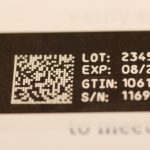
Data validation includes a prefix for each data packet, such as expiration date, lot number and serial number. Each data packet must contain a defined number of characters, presented in the correct sequence. Some data packets will contain variable amounts of data.
Presently there are over 100 prefixes, known as Application Identifiers (AI) in the GS1 General Specification. This list will grow as additional attributes evolve. 2D symbols play a critical role in food safety, medical device and pharmaceutical supply chain security and anti-counterfeit initiatives. These symbols must not only be legible, they must parse the data in compliance to published standards.
 The increasing complexity of barcodes and the increasing importance of the roles they play exert increasing pressure on barcodes to perform flawlessly. Failing barcodes have led trading partners to impose heavy fines against those held responsible. So significant are some of the penalty schedules, called chargebacks, that this has become a third important factor driving barcode verification.
Verification is the only way to assure supply chain integrity, product safety and accurate tracking of time-sensitive shipments.