The impending death of the barcode has been predicted literally for decades. The long and continuing history of barcodes and its steady expansion into unexpected and novel usages reminds us of Mark Twain’s May 1897 comment, “The reports of my death are greatly exaggerated.”
Here is a brief, incomplete, evolving list of the technologies that have threatened to make barcodes obsolete:
- RFID
- Vision Systems
- Robotics
- eCommerce
- digital watermark
The benefits of RFID are impressive and offer some real advantages over barcodes. The supposed obstacle preventing RFID from replacing barcodes has been substantially dispatched: the cost of the tag. Nevertheless cheap tags have not replaced barcodes, which have survived—and thrived. RFID does not require line-of-sight scanning, but it is harder to control—to scan just one item rather than a roomful or box full of items. RFID and barcodes co-exist very successfully, each bringing its benefits to bear.
In similar fashion, vision systems and robotics have not replaced barcodes but have benefited from incorporated barcodes into their functionality, and primarily for the same reason: to identify an individual.

Vision systems can distinguish apples from oranges; they may even be able to distinguish a Gala from a Pink Lady, but they cannot tell a New Zealand Gala from an Australian Gala, or one from supplier A and supplier B. Vision systems are great at identifying classes of product but not batches or individuals. It takes a barcode to do that.
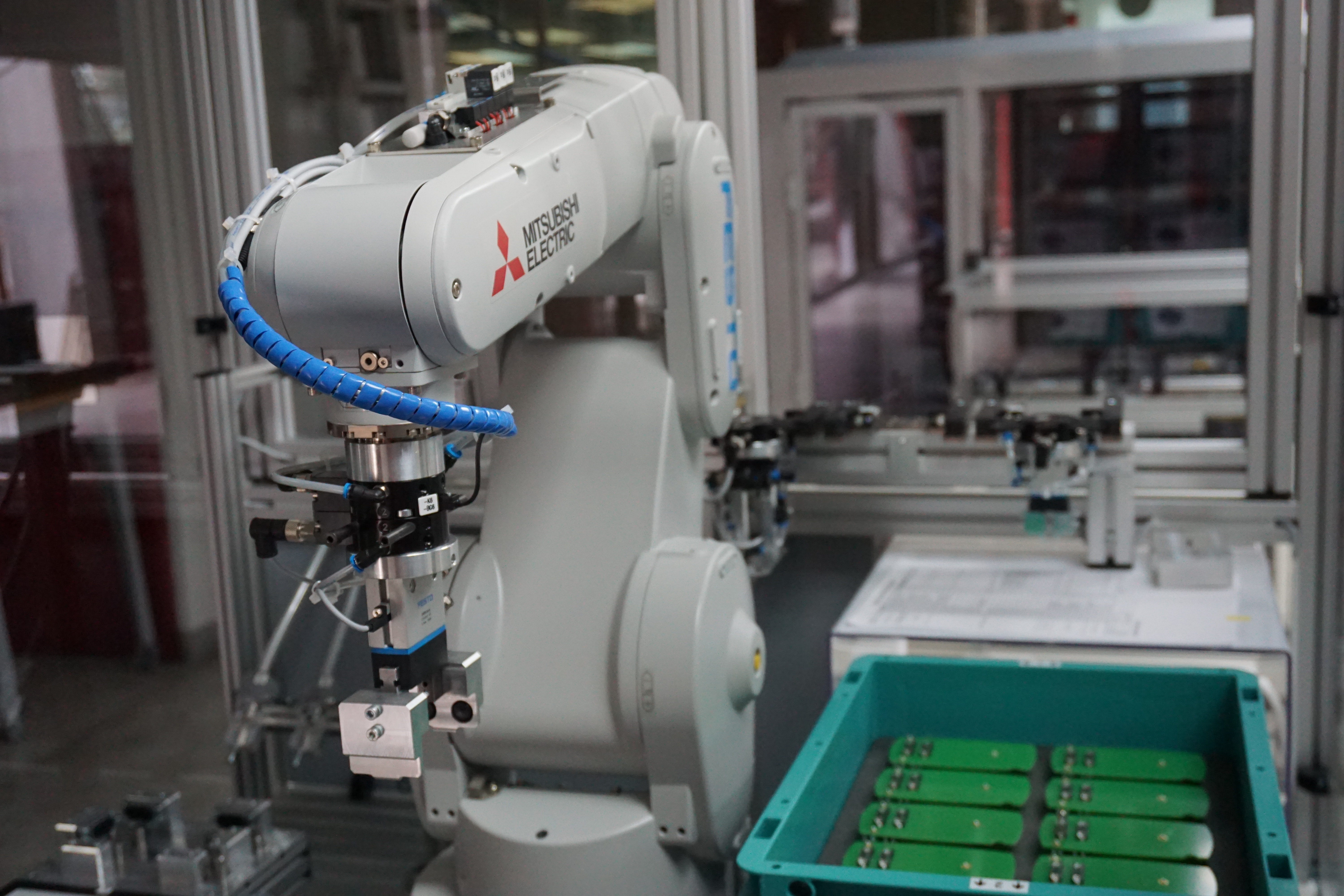
Robotics systems similarly rely on barcodes to distinguish individuals from classes. For example, in a Honda manufacturing facility, a scanner on a robotic installation arm scans the barcode on a rear window to make sure it is going into a CRV and not a Pilot.
Barcodes are not always used in such systems to identify individual parts, especially very small parts such as fasteners. The barcode can identify a reel, carton or tray of small parts or sub-assemblies.
Online shopping was widely predicted to be the demise of barcodes, and this was not altogether incorrect: the checkout scanner was eliminated. Up-steam operations rely on barcodes for kitting, picking and fulfillment, and of course logistics identify and track shipments with barcodes.
Electronic records were predicted to be the perfect replacement for paper documents, saving trees while making data shareable across disparate platforms. The sheer number of different types of documents has necessitated identifying them by class and usage. Barcodes are doing that. Patients are identified by barcoded wrist bands; medications are barcoded. Accurate bedside dosing relies on barcodes to make sure patients get the right medications.
Digital watermark made a lot of noise about making frontline check out faster, solving a problem that really wasn’t a problem. The so-called invisible barcode is interesting but does the same thing a barcode already does very well. Maybe marking consumer goods isn’t the right application?
Barcodes are not perfect—they do have limitations. As Seth Godin has wisely observed, “perfect is the enemy of good” and barcodes do a good job and play nice with other technologies that also do a good but different job. Together they provide a solution and things get made, supply chains deliver product securely and economies thrive. Barcodes continue to find interesting and unexpected utility. The reports of their death are greatly exaggerated.
Do you have examples of barcodes in new uses? Share them with us! Your comments are always welcome.