In addition to testing of conventionally printed 1D and 2D barcodes, the lab does Direct Part Mark (DPM) verification here at Barcode Test. Our work with users of this technology provides insight into beliefs and opinions about DPM. Other users might find these helpful, or at least interesting.
- A widely held belief is that there is not ISO specification for DPM verification: an AIM standard is the basis for grading. ISO/IEC 29158 is the current standard for DPM verification grading.

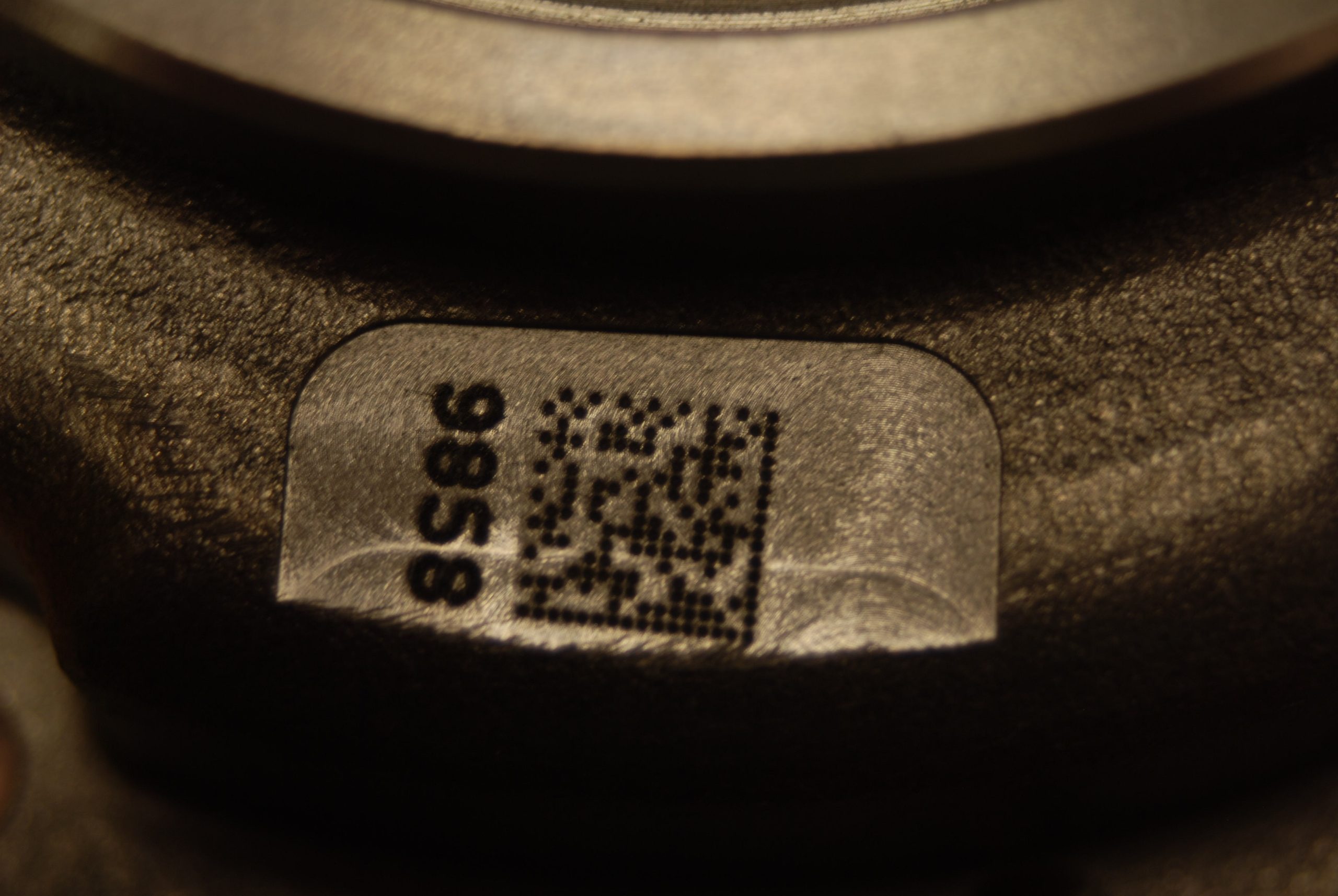 Often referred to as the AIM Standard, it originated from work done by a technical study committee within the AIM organization (Automatic Identification Manufacturers). This is not unique to DPM verification. Virtually every ISO standard pertaining to barcodes originates with AIM and advances to ISO, the International Organisation for Standardisation, and eventually becomes an international standard.
- A similar belief is that DPM verification has no relationship to ISO 15415, the standard for verification of wet ink and thermally printed 2D barcodes. In fact, the AIM DPM standard is (largely but not entirely) based upon ISO 15415.
The primary difference is that ISO 15415 is based on single, generic, standardized 45 degree lighting; the AIM DPM standard allows for a range of standardized lighting configurations. The two standards are more alike than different.
- An idea we have had here at the test lab is that DPM verification is more like scanning than verification. This is based on the opinion that scanning is all about data capture—finding at least a single good spot anywhere in a barcode; whereas verification is all about finding at least a single bad spot anywhere in an otherwise good barcode.
This entire line of reasoning rests on a misunderstanding of what the ISO standard purports to do. In negative terms, the barcode standard—and this can be said for virtually any quality standard—purports to identify relevant variables and grade them according to the level of influence they exert in causing the barcode to fail. In positive terms, the standard forms the basis for predicting scanning success with any type of scanner in an undefined “normal” circumstance.
| SIDEBAR
This is where barcode verification can be important: barcodes are usually data carriers on a consumable label or package: they are (or should be) verified continuously, over time. Conversely, a scanner should be compliant to the international standard for a barcode reading device—and it (or the manufacturer’s benchmark design) is tested once and then sent out to be heavily used, dropped, damaged and neglected for years. We have experienced chargeback situations where verification reports have proven that the barcodes are compliant and the apparent failure that triggered the chargeback was actually the user’s non-compliant scanners.
|
- Occasionally we receive 1D barcodes for DPM testing. When we explain to the customer that 1D barcodes cannot be tested for compliance to the DPM standard, they are (at least) perplexed and often (shall we say) disbelieving.
Reading DPM barcodes is only possible with camera-based scanners. Thus it is not impossible for DPM technology to work with 1D barcodes, but it is disallowed because there are so many older laser and CCD-based scanners still operating around the globe. The day will eventually arrive when DPM-compatible scanners have replaced these legacy scanners. We are not there yet.