In a previous article, we took a bird’s eye look at the ISO 15415 report, and defined the pass/fail and graded parameters that are the basis for the final symbol grade. Understanding the parameters does not necessarily equate to knowing how to improve a low parameter grade. Over the next few weeks we will bridge that gap, starting with Modulation–one of the most likely causes of a low ISO 15415 grading on a QR Code or Datamatrix symbol.
To review: modulation evaluates the uniformity of Minimum and Maximum reflectance values. Variations caused by show-through from a non-opaque background or other patterns, or uneven dark elements (dots or squares) will lower this graded parameter. Here is an example:
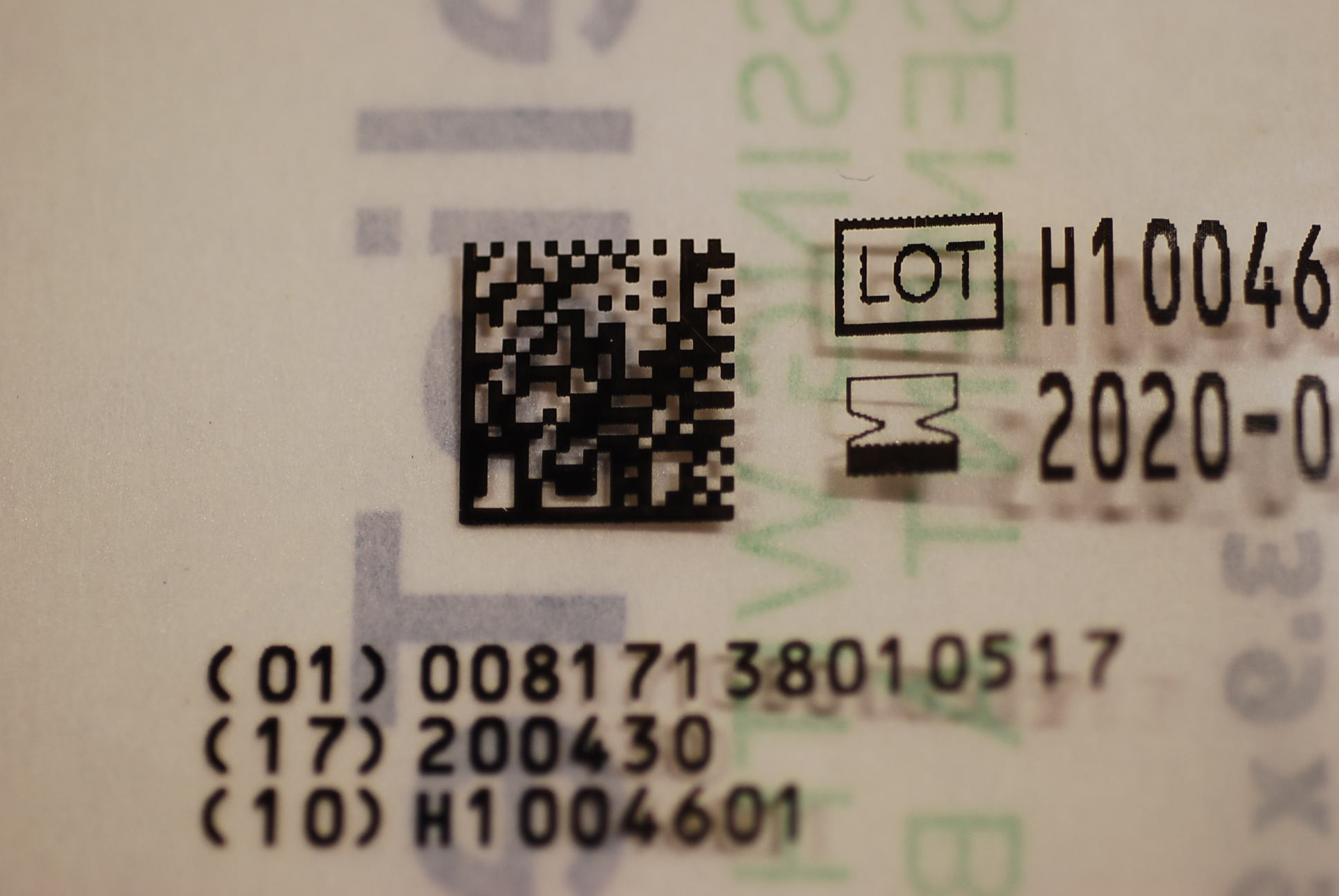
Print quality in this Datamatrix symbol is quite good, but the background graphics create variability in the Minimum Reflectance values, which confuse the scanner. Eliminate this problem by removing the background noise or printing the symbol on an opaque substrate.
_________________________________________________________________________________________________
Modulation problems can also be caused by print gain. Like the bars and spaces in a 1D barcode, the squares in a 2D symbol are both dark and light, and should be dimensionally equal. Overprinting causes the dark elements to encroach on the light elements, making them dimensionally smaller and less reflective. This is particularly acute when dark elements surround a single light element.
Here are two examples:

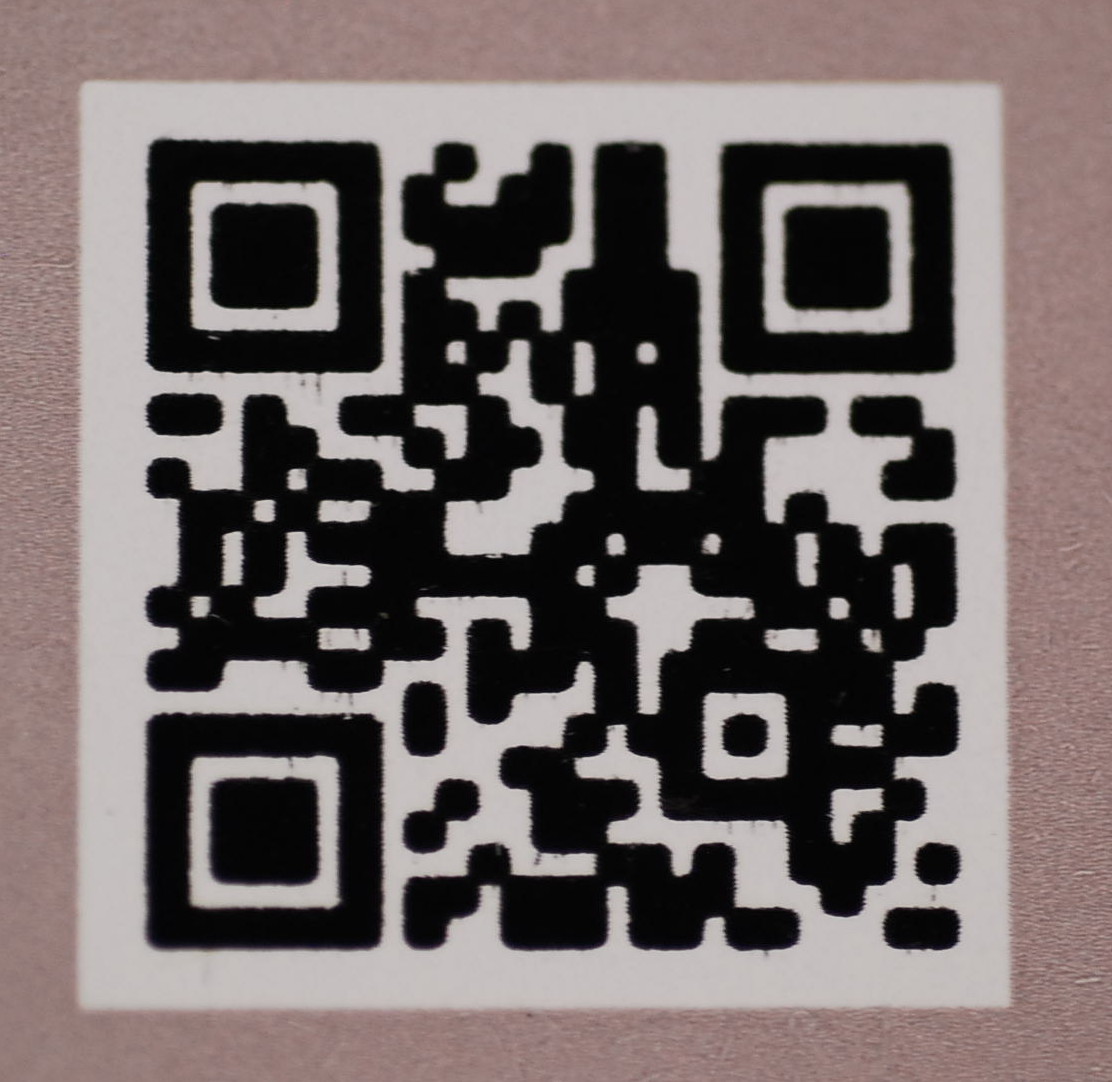
Both of these symbols evidence severe print gain. The Data Matrix code was printed on a thermal transfer printer. Incompatibility of the ribbon to the label stock will cause gain issues on thermal transfer printing. A high thermal head temperature setting will also cause gain problems on thermal transfer or direct thermal printing.
The QR Code was inkjet sprayed. Gain can be caused by absorbent substrate, an ink incompatibility, spray nozzles at the wrong distance from the substrate or an incorrect transport speed.
Static (non-variable) lithographic and flexographic printing is not immune to gain problems. Causes include incorrectly made printing plates and excessive impression pressure. These technologies are infrequently used to print QR Code and Data Matrix symbols.

_____________________________________________________________________________________________________
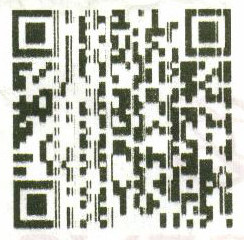
Modulation downgrading is also caused by streaks or defects in dark elements. A failed pixel in a thermal print head is a common cause. Substrates with oil or solvent stains, dirt or dust can result in voids in dark elements or gradient transitions between dark and light elements. Close visual inspection with a low power magnifier will usually reveal such problems.
Comments and questions are always welcome.