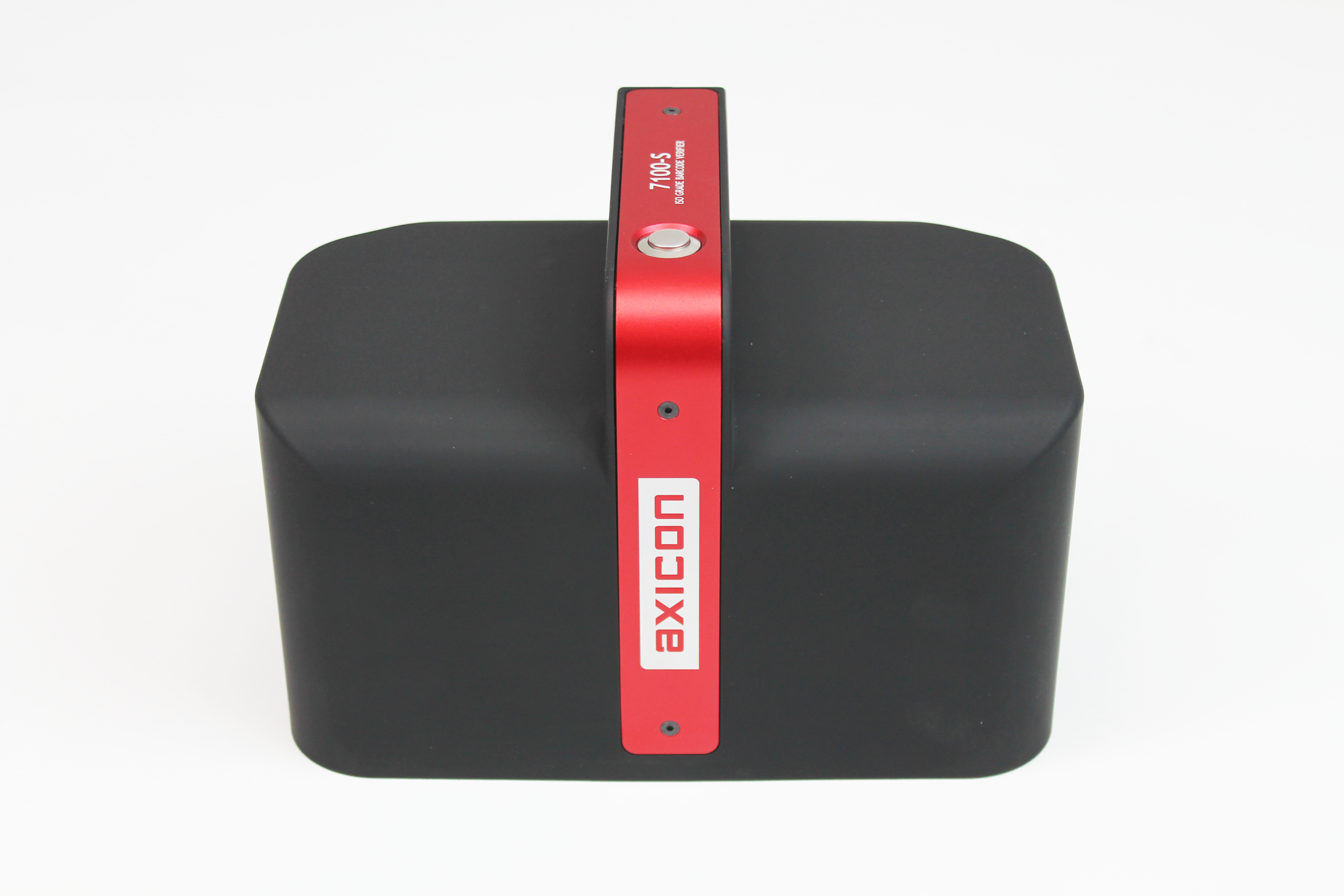
What do our barcode testing customers actually get from us? Let’s go through the process.
Customer Labels or PDF’s?
We strongly prefer to test actual labels or package samples, but some clients send email-attached electronic images of their barcodes. This is especially true of new clients with an urgent issue to resolve, and cannot wait for an overnight delivery of real samples. Verifiers scan and test a physical image. Verifying emailed PDF’s or JPGs is almost the same, with one significant difference: we print the image from the customer’s file on our office printer. The ISO print quality report tests our printer, not the customer’s printer. Does that invalidate the verification report? Not completely. We can still test the application validation, check digit and other structural aspects of the barcode. It takes the same amount of time and labor, so it costs the same as client-provided label.
The verification process produces two reports. The ISO report documents the print quality of the barcode. Several aspects of the barcode are graded individually. These mostly involve the reflective quality of the printed image and the substrate. The lowest parameter grade is the final symbol grade.
There are two different ISO Standards for barcodes. ISO 15416 covers linear barcodes (parallel lines and spaces). Grading is based on the reflective differences in lines and spaces as well as the accuracy of their placement. Other factors include leading and trailing quiet zones, and check digit accuracy. Here is an example of an ISO 15416 verification report.

Notice the parameters and their respective grades in the right panel.
A single downgraded parameter will control the final symbol grade.
We translate downgraded parameters to our client so they know how to improve the final symbol grade.
ISO 15415 covers 2D barcodes such as Datamatrix and QR Code. Reflectivity is also the basis for much of the grading, but different image accuracy factors are involved since the data is encoded both vertically and horizontally. Most 2D barcodes have a surrounding quiet zone and parameters to evaluate the placement accuracy of the dots or squares that encode the data. Here is a typical ISO 15415 verification report.

Here again, we explain to the client what the downgraded parameter(s) mean and how to improve them in their printing process.
If two or more parameters are involved, we help them understand the problem and make incremental steps to bring the process into control.

Barcodes are used in specific industrial applications. A healthcare barcode has specific requirements that differ from an automotive or military barcode. Barcode verifiers can also produce an application validation report that evaluates the data structure of the barcode regarding its corresponding application. Here is an example of an Application Validation report for a healthcare barcode.

Application standards can be daunting. A barcode with excellent print quality can fail an application validation test—and vice versa. We help our clients understand an application standard error or warning. Often, the explanation is based on an obscure chart in a complicated standard. We provide an explanation of the issue and an accurate solution within minutes.
It is not uncommon for a barcode to pass the ISO print quality standards test and fail the application validation test, or vice versa. But a passing grade on both tests is important for compliance.
Questions or comments are welcome. Contact us here.