
 Your customer has just alerted you to a problem with your barcode. Now you need to test it: is there really a problem? What is it? How do you fix it?
Or, you want to be proactive about preventing a barcode problem. How do you test a barcode?
What is the objective? The short answer: to make sure a scanner can read it. Why not just scan a barcode with a scanner and see if it works? That could work if two conditions are met. First, if you know the condition of the test barcode. Is it a perfect barcode or a not-so-perfect barcode. Second, if your scanner can tell and report the difference.
Two critical conditions for testing a barcode
A barcode that worked at the grocery store could be perfect, or it could be nearly failing–you do not know. That does not satisfy the first condition. Moreover, if your scanner (or smartphone) successfully reads the barcode, all it does is beeps. It does not satisfy the second condition of evaluating the barcode, from perfect to near failing.
You can evaluate a barcode visually. All barcodes will have bars and spaces (or dots), some of them dark, others light. The small dark bars or dots should be the same size as the small light bars or dots. If they are not, the barcode is less than perfect. Close to failing? You do not know.
Just use a scanner
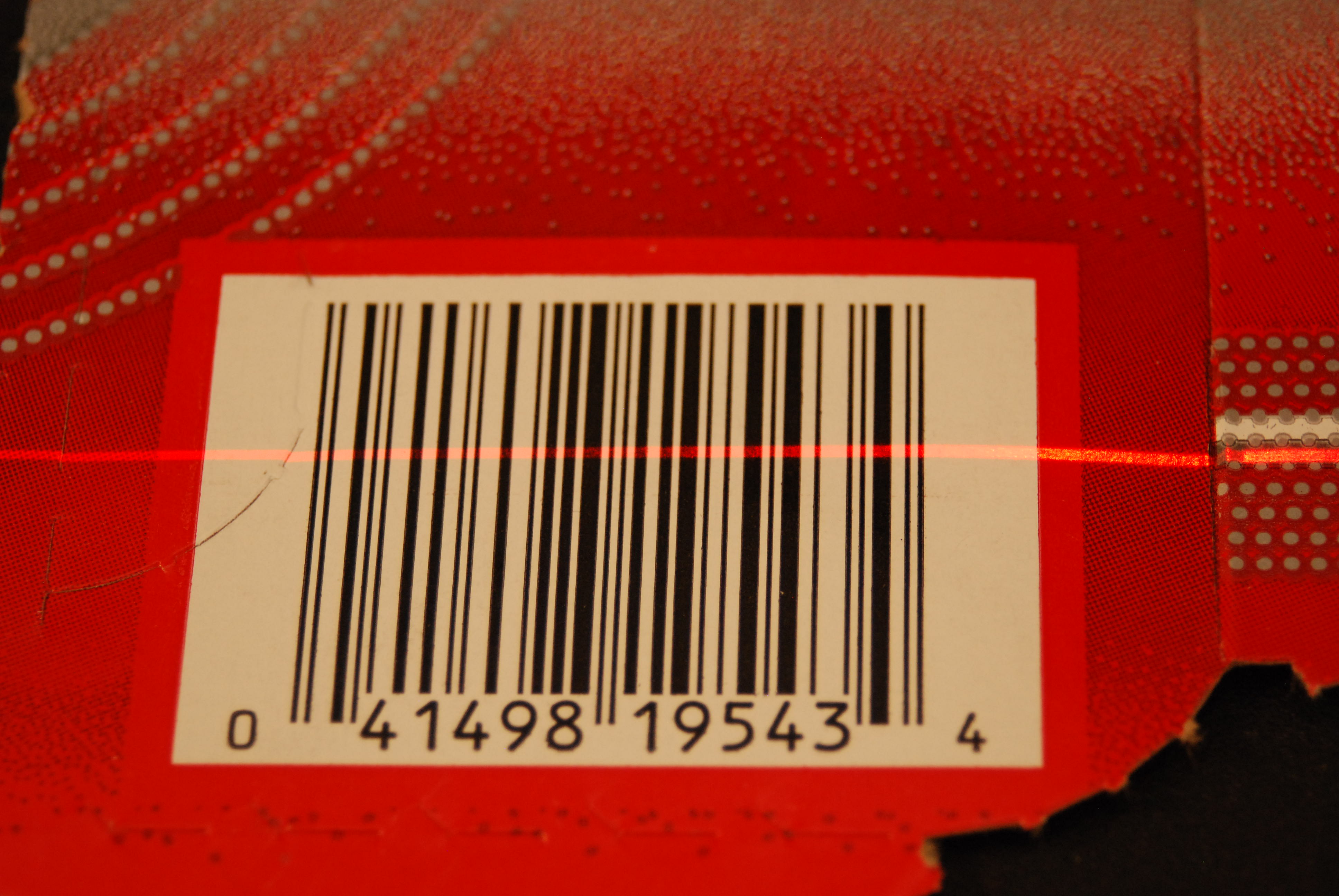 There are several different types of barcode scanners. Many are lasers, that draw a thin red line across the barcode to read it. Laser scanners were the earliest type of scanner—some of them are probably 30+ years old. Laser scanners are still made. CCD scanners use a strip of laser diodes to send a linear image of a barcode through a lens to a sensor. They do the same thing a laser does but in a very different way. More recently, digital camera scanners take a picture of the entire barcode and send it to a sensor that analyses all the data at once. Entirely different from lasers or CCD’s. All scanner types do the very same thing but in very different ways. Considering this, how can you test a barcode to ensure it will work no matter what kind of scanner will be used on it?
This gets to the heart of why you test a barcode. You test a barcode to predict that it will read successfully no matter where it goes and what type and condition of scanner will be used to read it. How can you do that, given the variety of scanner types and their:
… age (from nearly new to 30+ years old)
…condition (from as-new to dirty and dusty), and
…service history (from carefully handled by a nice person in a clean, quiet store to rough handled and occasionally dropped by a warehouse worker on a forklift)?

Standardizing the Test Conditions
The only way to deal with all these differences is to standardize a set of conditions:
- The wavelength and intensity of the light used to illuminate the barcode
- The distance of the scanner from the barcode
- The angle of the scanner to the barcode
 This is a bit of an oversimplification—there are other technical attributes for barcode testing scanners, aka verifiers. But these are the most basic controls for properly testing a barcode.
Because barcodes are used globally, an international set of attributes have been developed for barcode quality. They are administered by the ISO, a global standards organization. Performance standards have also been developed for barcode verifiers to normalize how they read, measure, grade and report barcode quality. That is now barcodes are tested.
 Questions or comments? We can help with barcode problems, Contact us here.


