 Barcodes are not going to disappear anytime soon, but we have already seen other technologies replace barcodes in specific applications. RFID is probably the biggest and best example. When you need to log pallets of products in or out of a facility, RFID is better than barcodes. A room containing a thousand items marked with RFID tags can be inventoried in a fraction of a second. It would take hours to scan them all if they were marked with a barcode.
The First Barcode
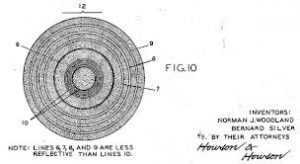
More commonly, certain barcode types will be replaced by a more effective type of barcode. This happened at the dawn of barcoding technology. The original barcode, patented in 1947, was a bullet-shaped pattern of concentric rings. It was a great idea: it eliminated the need to radially align the scanner, but it was practically impossible to print accurately. The parallel lines configuration of the UPC replaced it. Now the UPC is the end of its useful life, and GS1 Digital Link QR Code is taking over. The change is driven by the need for greater data capacity.
The same problem was solved years ago in the periodicals and book trade. There was a need to encode not only the ISSN or ISBN numbers, but also the price. The solution was the addendum code, added to the trailing section of a UPC or EAN linear barcode. It has worked successfully for decades, but a symbology with even greater capacity would be a boon.
Adding Linear Capacity

Addendum coding was also deployed in couponing. Buy an item and get money off, money back or a variety of other offers with a specially barcoded coupon. Complicated offers quickly challenged the data capacity of coupon codes, so multi-row linear barcodes evolved.
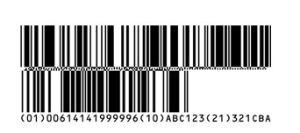
Soon the barcodes themselves were as complicated as the functions they performed. So far, I have not heard predictions of the Databar’s demise, but it would not be unexpected.
The same can be said for PDF417, a row-upon-row stack of deeply truncated linear barcodes. Many of us have one on the back of our driver’s license.
These solutions evolved because they solved problems: high data capacity and decodable with cheap laser scanners.
The Next Generation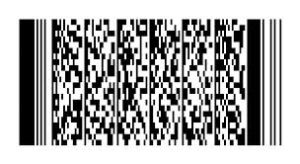
As yet, it is and the unknown whether GS1 Digital Link will take over all of these tasks, but the coding technology is here and the required digital scanners are being installed. The 2D barcodes have much higher data capacity, can encode URLs with literally volumes of data, and are smaller and easier to print. Everybody wins. How often does that happen?
 Contact us here, or sign up for a free 15-minute consultation.