The most common cause of barcode failure is poor print quality due to bars that are too fat.
There are many possible causes: an absorbent substrate, an ink that wicks because of its viscosity, the amount of pressure on the imaging master or plate, the drying characteristics of the ink, etc.
Controlling ink spread or press gain is relatively easy but only if it is a predictable, repeatable occurrence. You compensate for it in the design file using a factor called Bar Width Reduction or BWR.
Bar width reduction is a compensation for press gain
There are some critical keys to bar width reduction. The first is accurately determining what it should be in your printing process.

Printing is a multi step process, from creating the design file to creating the plate to final printing. Different printing methods have different steps. Each step is a variable: the final image is in some way changed by each step in the process. The key is knowing how the image is changed and controlling how much. For example, in flexo printing, the intermediate step of creating the polymer plate tends to cause the bars in a barcode to become thinner.
Accurate bar width reduction comes from identifying and controlling all factors and steps in your process
Each step may itself be a process, with variables to identify and control. Another important key is documentation of procedures and results, which may include exposure times, process temperatures and speeds—a host of factors that are unique to the printing method. The goal is to bring them out into the light of day so that the same process will yield the same results, day after day, regardless of who is doing them, regardless of the time of day or time of year.
Press gain is a variable that can be easily controlled, with some diligence. Different printing methods will require different amounts of bar width reduction to accurately compensate for press gain, but once a bar width reduction factor has been determined it will not vary greatly over time if all the variables remain constant.
It may seem excessive at first, but a log of each job and every identifiable variable is a great place to start. Over time, some differences may prove not be important variables—these can be weeded out and dropped from the log. Those that are important will remain, and will aggregate into a valuable record of results including barcode verifier reports.
How is bar width reduction determined initially? Testing is the best method, but industry intelligence is also not a bad place to start. At least one flexo industry publication used to recommend bar width reduction values; I recently encountered a print shop that had been using the same BWR factor for years; they were having an unpleasant time with a customer because of some bad barcodes they had printed.
Test–don’t guess–to determine bar width reduction
Bar width reduction guidelines are just that, guidelines. Bar width reduction amounts that have been scientifically determined through testing are also never permanent, unchanging factors.
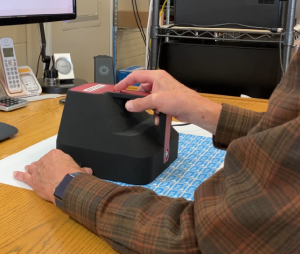
Verification isn’t only an objective look at the barcode—it is a look at the final output from the step-by-step print process, verifying that your process is in control, producing a predictable, repeatable result.