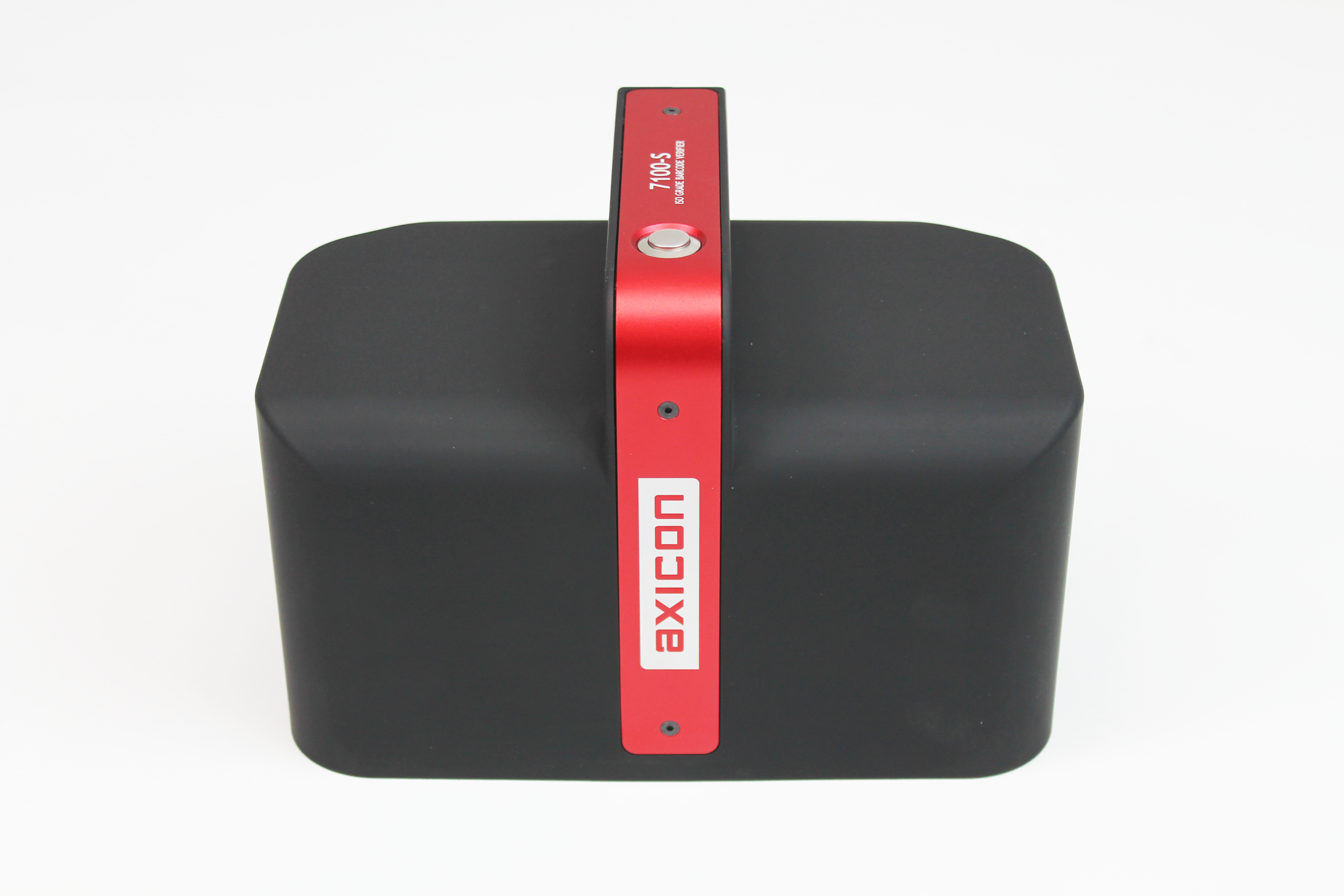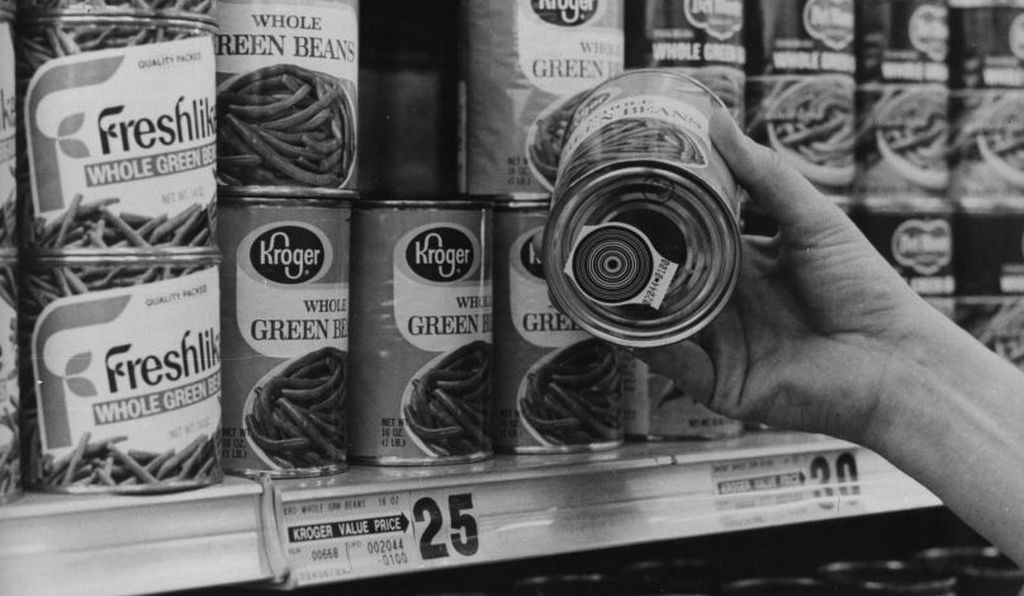
The first known (to me) barcode design, patented in 1952, was a concentric ring design.
It is interesting to note that the original, circular format barcode was in fact a linear barcode: the data is encoded with concentric rings of various thicknesses. A scanner for conventional (parallel lines and spaces) linear barcodes can decode a circular linear barcode
Since then, the design of barcodes has evolved into several different patterns. The basic themes are linear and 2D, with variations in each major category. For example, higher data capacity was achieved with stacked linear barcodes such as PDF417 and Databar.
Variations on 2D barcodes include QR Code, Datamatrix, Aztec Code, MSI (aka UPS Code), Dotcode and others. Within the Datamatrix type, a rectangular segmented variation has developed to enhance data capacity in a small space. Ultracode is a 2D symbology that uses color variations to add a third layer of data encoding.
Recently I discovered a type of symbology that circles back to the original barcode design—literally. It is an annular ring design which reminds me of the timing mechanism used in clothes washers from the 60’s and 70’s, before electronic controls took over.
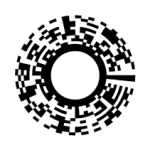
Annular Ring Barcode
The annular ring concept is not new. ShotCode symbology was developed in the early 2000’s, as a means to share links using low-resolution phone cameras and webcams. It was based on a symbology called TRIPCODE, developed at the University of Cambridge in 1999. Unlike the original, concentric ring linear barcode patented by Woodland and Silver, ShotCode was a circular 2D symbology. It was short-lived due to its low data capacity and the arrival of the QR Code.

Why circular? The original concentric ring configuration eliminated the problem of radial alignment of the scanner to obtain a complete data capture. Unfortunately, they were difficult to print due to distortion introduced by the high-speed travel of the substrate during the printing process. Adding to the problem was the absence of commercially feasible scanners. Today’s printing technology has minimized (but not eliminated) that problem, and the laser made scanning cheap, small and accurate.

Meet Professor Dr. Christoph Stamm, the CEO at Bänninger Kunststoff-Produkte GmbH in Reiskirchen, Germany and the developer of the annular ring barcode. He states that it is preferable on round, concave or convex surfaces. As of this writing, the application for annular ring barcodes has been focused on very small, 5mm diameter barcodes, requiring limited data capacity.
Will Annular Ring code become a familiar, globally accepted symbology? Unlikely, although it could be a solution looking for a yet-to-be-identified problem.
For now, it is an interesting artifact of this amazing technology. I hope you enjoyed this romp through the barcode zoo as much as I did.
 Got a problem or question regarding a barcode? Contact us here.