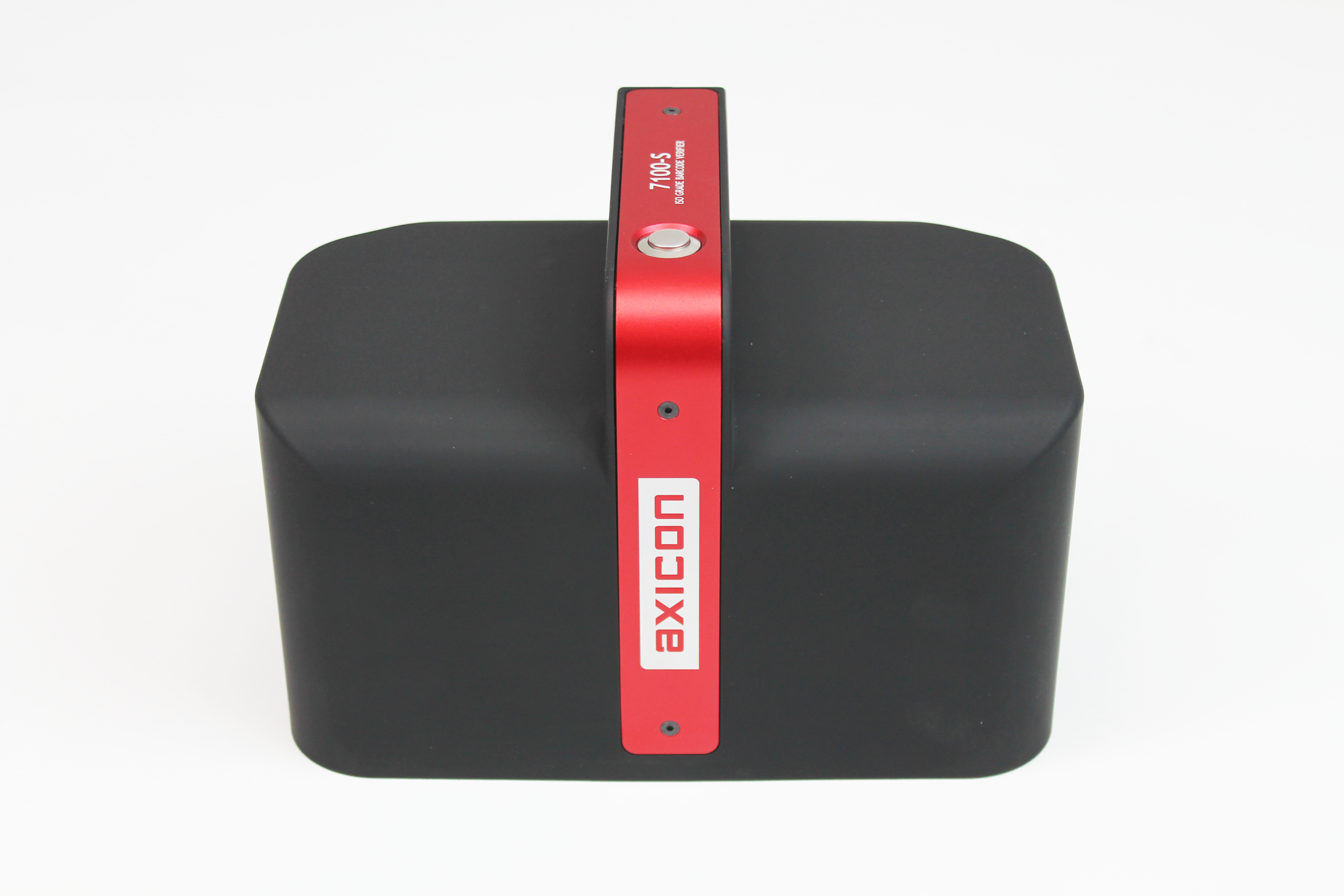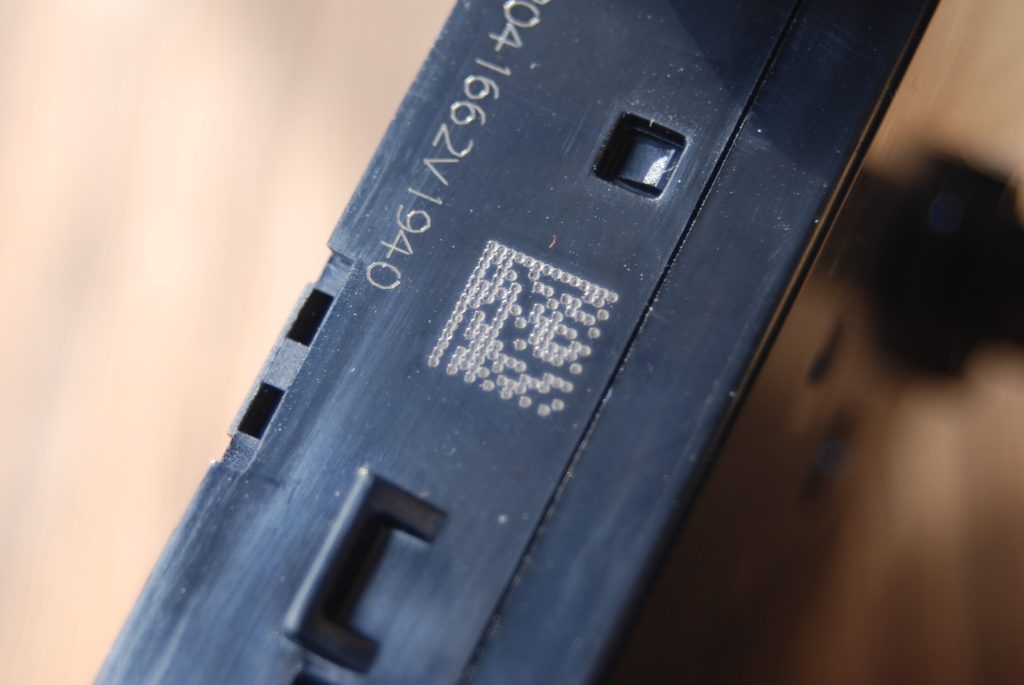

Use of DPM barcodes is on the rise. For the unfamiliar, DPM is Direct Part Marking. It is used in applications where a label or tag won’t work. For example, an engine block or subassembly like an exhaust manifold, starter, or generator. Automotive companies do use paper labels that serve the assembly process, but if the barcode needs to survive high heat or a harsh environment, DPM is the solution. Speaking of harsh environments, another common use is jet engine fan blades.
DPM = Direct Part Mark
Why would the barcode identification need to survive? If the use case requires tracking a part throughout its service life, the DPM barcode enables that. The barcode is a lookup tool, much the same way a UPC on a consumer product works. DPM look up can update a maintenance record, track oil changes in that engine, and predict when the service life is expected to end. It could be used to compare Part A to Part B to compare durability, frequency and types of maintenance issues.
DPM barcodes are used on medical implants. That links the implant used with the patient. If that implant fails, or needs to be recalled, the barcode provides that connection.
Marking directly onto a part creates a barcode that is less reflective than a barcode on a label. Scanning a DPM barcode requires special lighting. The standard which governs DPM barcode quality is different because there is very minimal reflective difference between the barcode image and the substrate.

DPM different than printed barcodes
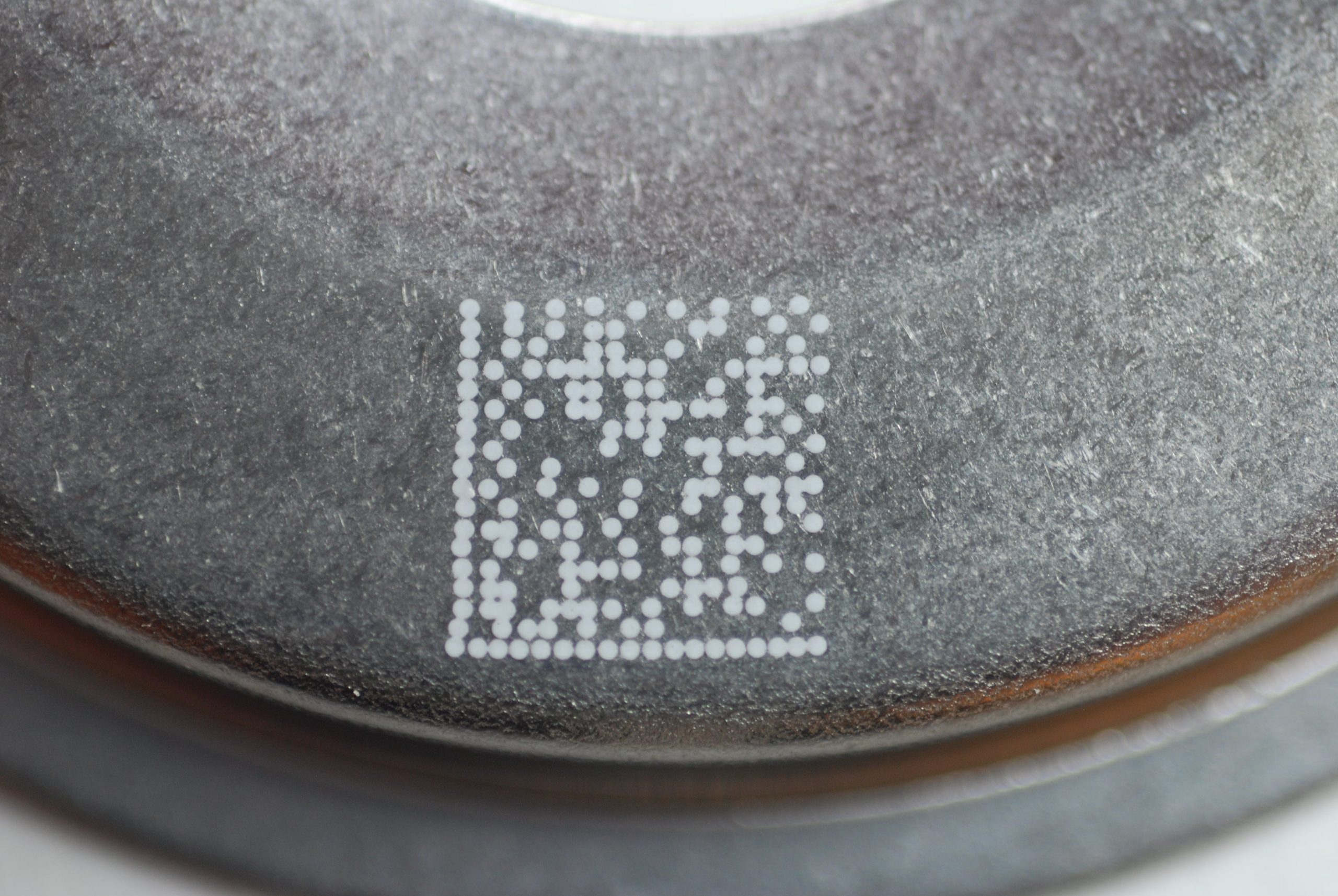
 There are as many methods for DPM imaging of barcodes as there are substrates. Peening is probably the least sophisticated: peening is defined as “…striking with a hammer…”. The barcode image is literally beaten into a (usually) metal surface. Acid etching is another method. The metal surface is coated with a photographic emulsion, exposed to an image of the barcode and then bathed in acid, permanently marking the metal with the barcode image.
Arguably the most common marking method is laser ablation, sometimes also (imprecisely) called etching. In all cases the end result is the same, a very durable, low reflectance barcode image.
While DPM barcodes are very different than printed barcodes on labels or packaging, they share two key similarities: quality and compliance.
DPM is the same as printed barcodes
DPM quality refers to the barcode being legible to the scanner. The dimensional accuracy of the size of the dots or squares, and the accuracy of their location in a grid has a tolerance defined by an international standard. Furthermore, the data encoded by those dots or square must be correctly prefixed and parsed in accordance with the application. The automotive application structures the data differently than the aerospace application, and the medical device application is yet different.
DPM verification does not involve reflectivity and reflective differences between the barcode and background, that are important attributes in conventionally printed barcodes. But DPM barcodes, like all barcodes, are there for an important reason and must work right.
 If you have questions about DPM or need assistance with a DPM concern or problem, we can help. Contact us here.