 As a barcode quality and compliance test lab, we get a lot of questions from callers who are struggling to understand the verification report. We have noticed that those questions seem to change over time, but the most common causes of barcode failure do not, so we have divided this article into two headings.
FAQ’s
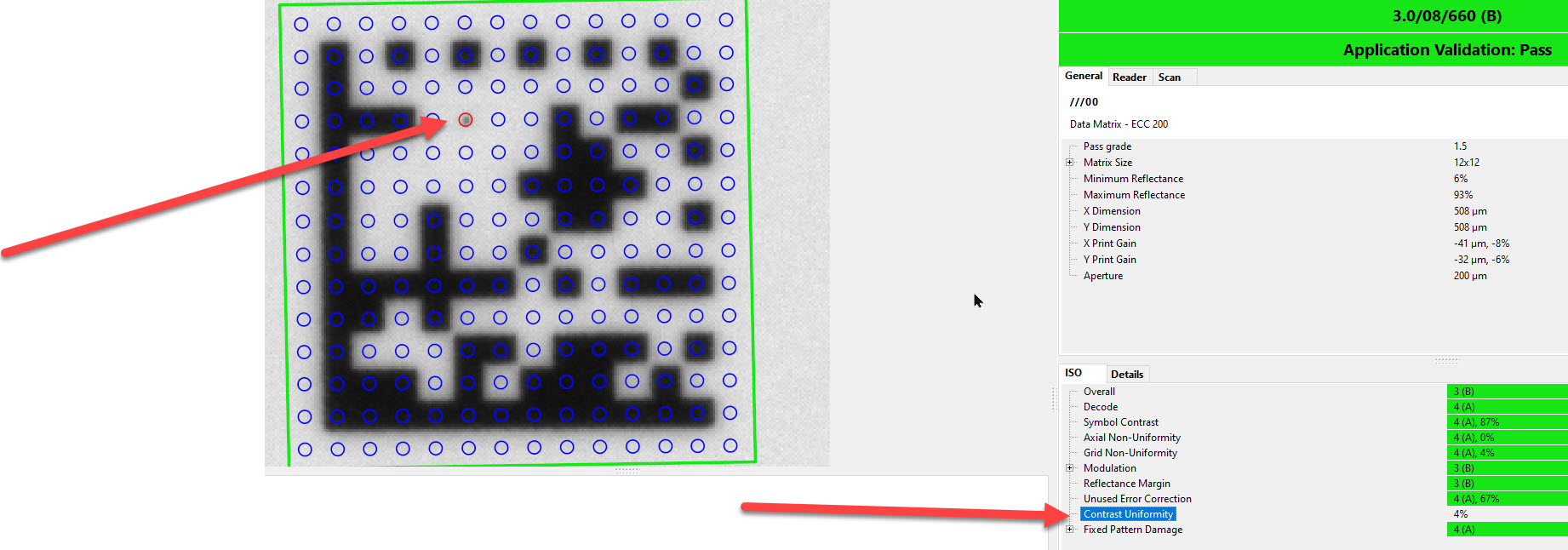
What is Contrast Uniformity?
CU is a graded ISO 15415 parameter for 2D barcodes. Like most ISO barcode quality parameters, it is calculated from the reflectance values. Quick review: linear and 2D barcodes ideally have only two reflectance values, RMax (maximum and RMin (minimum), respectively the light and dark values. There is a minimum or threshold reflectance difference between them.
Symbol Contrast on one of the parameters calculated from RMax and RMin. SC is a simple subtraction of RMin from RMax and it must be at least 50% to pass.
As with most things in life, the ideal rarely happens—there are always variations. Some reflectance-based parameters have tolerances which are expressed in grades. CU is calculated but not graded because it is a useful diagnostic tool for graded parameters. It usually pinpoints the attribute or area of the barcode that downgrades Modulation and Reflectance Margin.
Contrast Uniformity is the worst-case incidence of contrast in the barcode.
How do I correct for Modulation
Modulation grades the uniformity of RMax and RMin. RMin is usually uniformly dark, but RMax is likely to vary. The first place to look is gain, an ungraded contributing factor. Gain squeezes narrow spaces, causing them to reflect less than wide spaces. Excessive gain can completely obliterate narrow spaces. When that happens, the barcode can fail to decode.
What is the different between Decodability and Decode?
Decodability grades the attributes of the barcode against the decode algorithm, rather like comparing the actual to the theoretical. The decodability analysis in verification measures the locations and widths of bars and spaces in the barcode. Inaccurate locations and widths downgrade decodability. These inaccuracies can be caused by gain, plate distortion in flexographic printing, or by incompatibility between barcode design software and the DPI of the printer. The computer send a command which the printer cannot execute.

On the other hand, Decode is a pass/fail parameter. Based ion the grading of ISO parameters, the verifier predicts whether a scanner simply can or cannot decode the barcode. Often a graded parameter points to the cause.
The Most Common causes of Barcode Failure
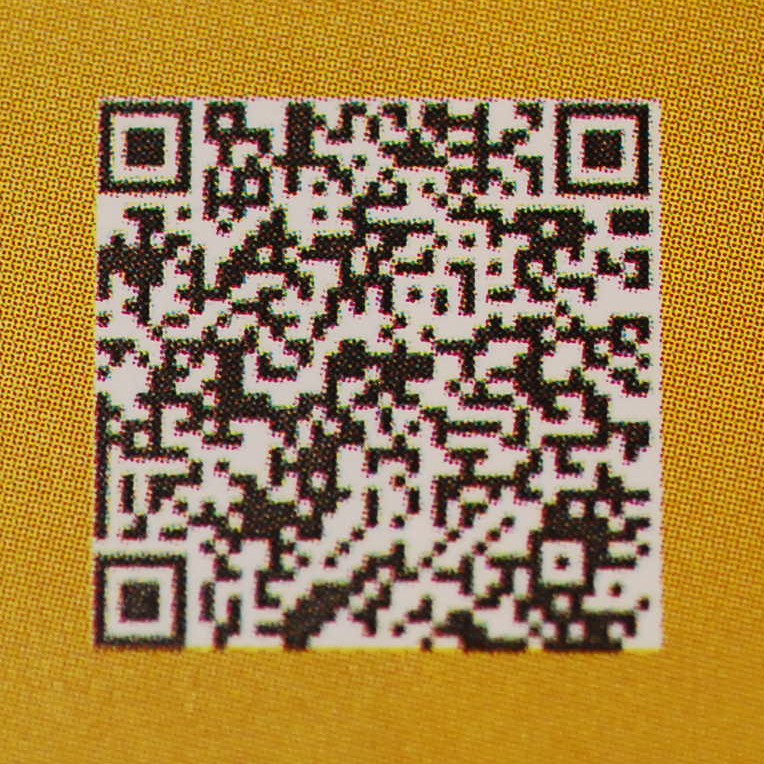 Quiet Zones are a traditional parameter, not an ISO graded parameter in linear barcodes. 2D verifiers grade quiet zones and other features in the Fixed Pattern Damage ISO parameter. When we get inquires about barcodes that are not scanning, the first thing we suspect is a violated quiet zone. Often the caller is unaware that there is a specific minimum quiet zone and not a fixed quarter-inch for every barcode. Contrary to popular belief, 2D barcodes like QR Code and Data Matrix do have a quiet zone surrounding the symbol.
Gain is a common culprit for barcode problems. Many callers are unaware that printing systems including thermal can compensate for gain (bar width reduction). Gain is usually a plus number, but it can also be a negative number, indicating that bars are thinner than nominal rather than wider. Thinner is usually better than wider, but in both cases there are limits. Our rule of thumb is single digits. Once gain is 10% or more (plus or minus), there will be problems.

Questions and comments are welcome. Contact us here.