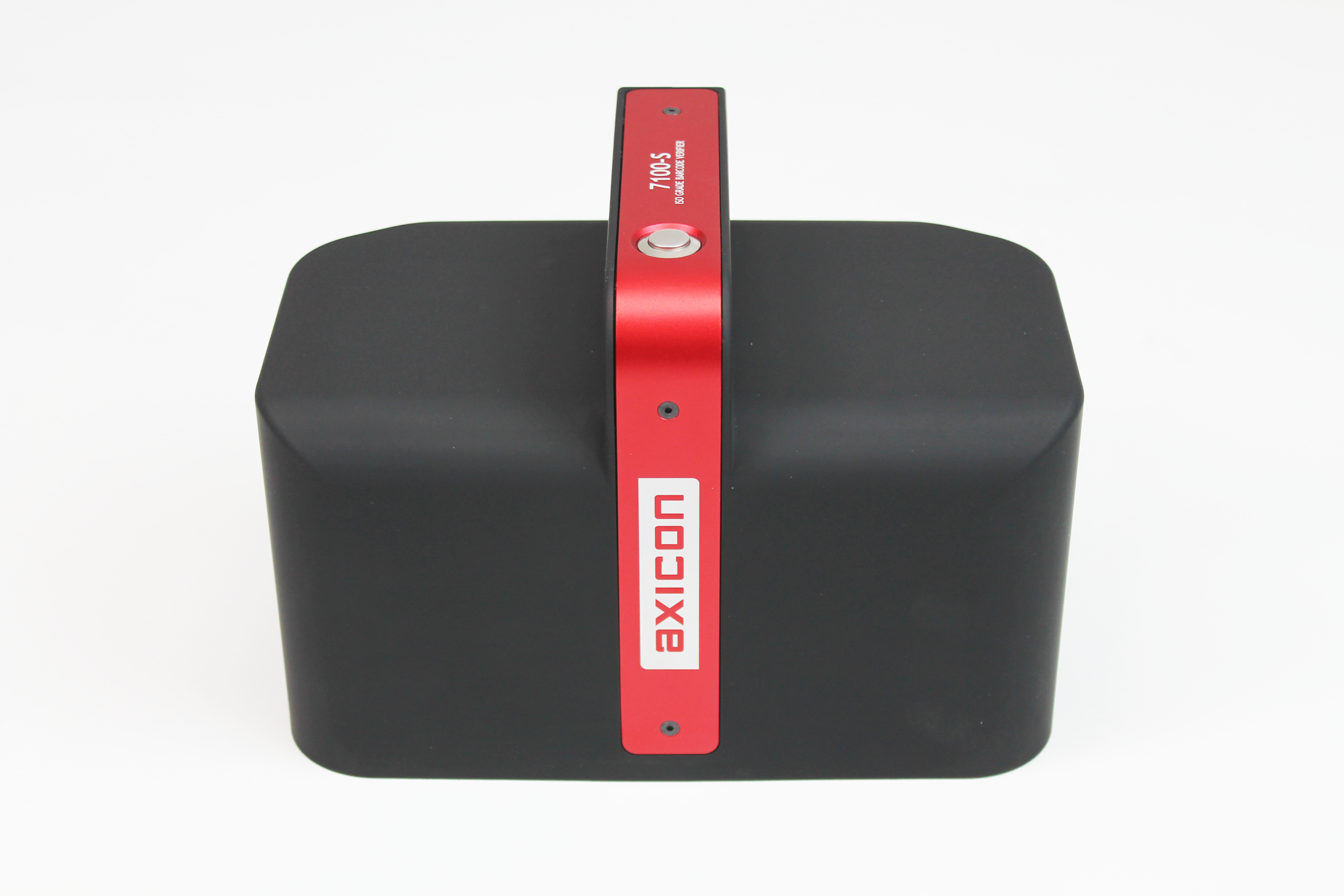
An ISO compliant, recently recalibrated barcode verifier is arguably the best and only effective defense against barcode quality-related liability. What about barcode verifier discrepancies? There are two types of verifier discrepancies:
- Inconsistency of a single verifier
- Inconsistency between two or more verifiers
This article focuses on the second type.
A familiar scenario in our barcode testing lab: A company, often a contract print or package vendor, receives a quality report from a customer, claiming unacceptable barcode quality. The verification reports from the vendor and customer disagree, often drastically. Who is right? A lot is uncertain.
Step One
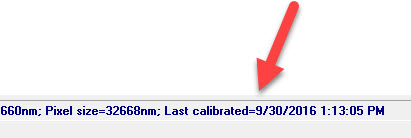 Validate the verifiers. Date of last reflectance calibration should be the same day as the verification report. There are two kinds of “recalibration”. Check both. The user on site does regular reflectance calibration. Additionally, the verifier should be within the annual factory recalibration period. Out-of-date recalibration disqualifies verification report validity. A current certificate of ISO conformance must be available for inspection.
Note: not all verifiers can be calibrated. Marketing literature may claim this to be a feature. In truth, it indicates that the verifier is not ISO compliant.
Further note: some verifiers claim to product a “partial ISO” report and test/grade fewer than the full protocol of ISO parameters. That is a nuanced expression of non-compliance.
It is likely non-compliant verifiers and compliant verifiers will disagree. Trust the ISO compliant ones but confirm the calibration date.

Step Two
Confirm configuration settings for all verifiers. They should be substantially the same. Any differences must be justified. Some differences are subtle. Linear verifiers configure differently than 2D verifiers. Different verifiers must be set as similarly as possible.
Step Three
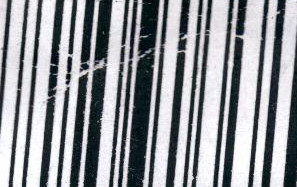
Compare verification reports to determine which ISO parameter(s) differ. Scrutinize the verification reports to understand why. Is there excessive gain? Do the verifiers report it consistently? Is there a check digit inconsistency? A quiet zone inconsistency? Defects? The barcode image above will produce varying grades in different paths through the barcode.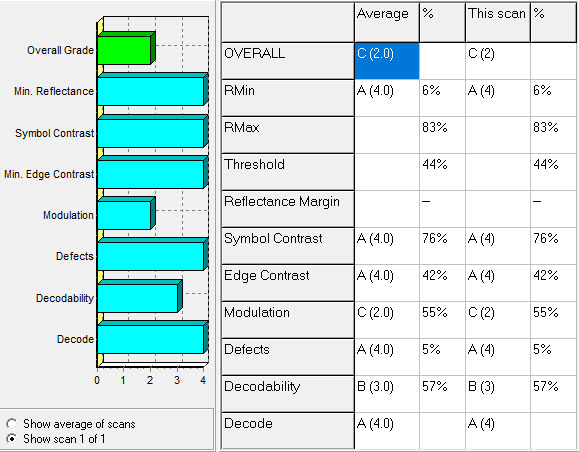
If this sounds self-evident, consider a recent encounter.
A contract printer fulfilled an order containing a large number of barcodes. They verified as compliant, grading an ISO 2.7.
Their customer rejected the entire order, their verifier grading the same labels at and below ISO 1.0. A significant discrepancy.
A deeper look. The print job involved linear barcodes. The vendor and customer both used 2D verifiers. Different verifier brands are involved.
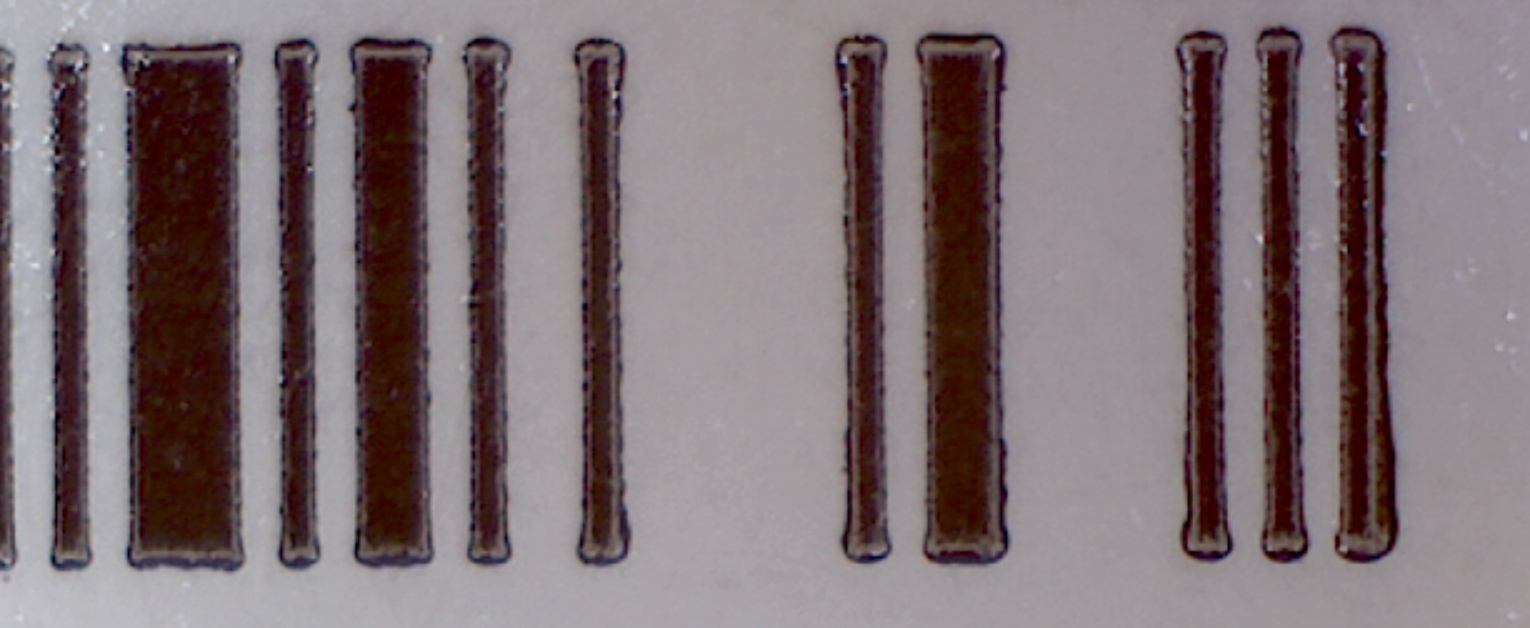 Cutting to the chase, verifier configuration caused the discrepancy. Both verifiers correctly generated ten scans. The customer’s verifier captured the entire barcode image. The vendor’s verifier captured the center portion of the barcode. Because the flexo-printed barcodes show typical distortion at the top and bottom of the barcode, the customer’s verifier failed them.
Different 2D verifiers deal with framing a linear barcode differently. Properly trained users will correctly frame the scan area of a linear barcode. Some verifiers do this automatically. Other do not.
Understanding how the verifier captures its data is every bit as important as understanding the data itself. We can help. Barcode Test LLC does barcode compliance testing as a service. We serve all sorts and sizes of companies with barcode quality testing, consulting and training.

Your comments are always welcome.
Contact us and schedule a free 30 minute meeting here.