Barcode scanning problems fall into two categories: the barcode does not scan at all, or it scans inconsistently. Non-scanning barcodes are the hardest to diagnose since the verifier is not providing clues about what is wrong.
Non-scanning barcodes usually have three causes:
- Violated quiet zones
- Excessive print gain
- Unacceptable color or color combination
Quiet Zones
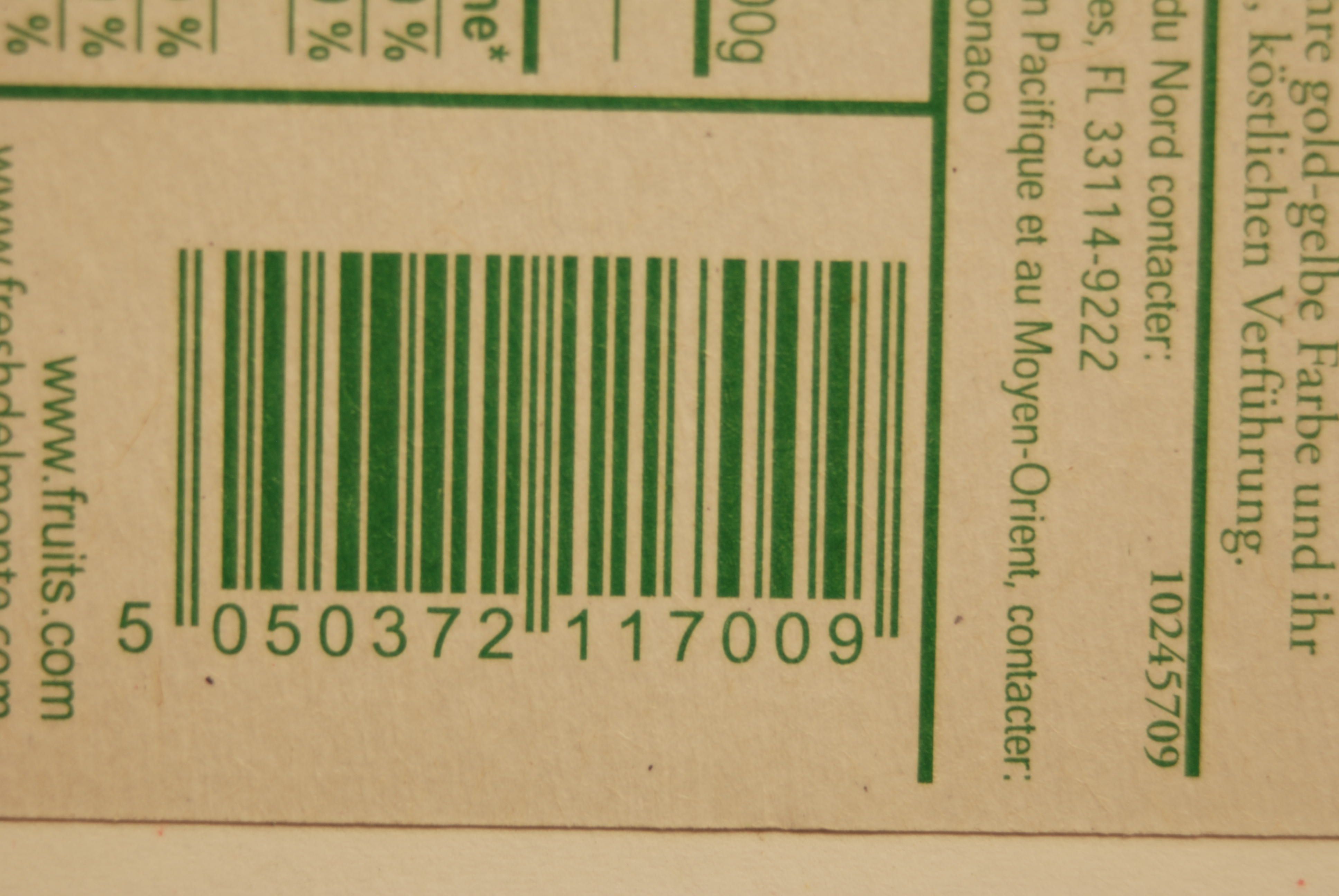 With a very few exceptions, all barcodes, whether 1D or 2D, have quiet zones. A quiet zone is a space around the barcode where no graphics or patterns encroach. On a 1D barcode like UPC or Code 128, it is a clear area left and right of the pattern of bars. There are no quiet zones on the top and bottom of a 1D or linear barcode.
The size of the quiet zone depends on the type of symbol and its size. Different types of barcodes or “symbologies” have different quiet zone requirements. The left and right quiet zones are always the same size. The amount of quiet zone is always a “not less than” tolerance. In other words, there is only a problem if the quiet zone is too small. Larger than required is never a problem.
Excessive Print Gain
The lines and spaces of a 1D barcode are called “elements”. Likewise the dots or squares in a 2D barcode. The lines and spaces in a 1D barcode have a specified nominal size, with a tolerance. This is also true in a 2D barcode. The tolerance is an allowable plus or minus deviation from the ideal width—or width and height on a 2D barcode.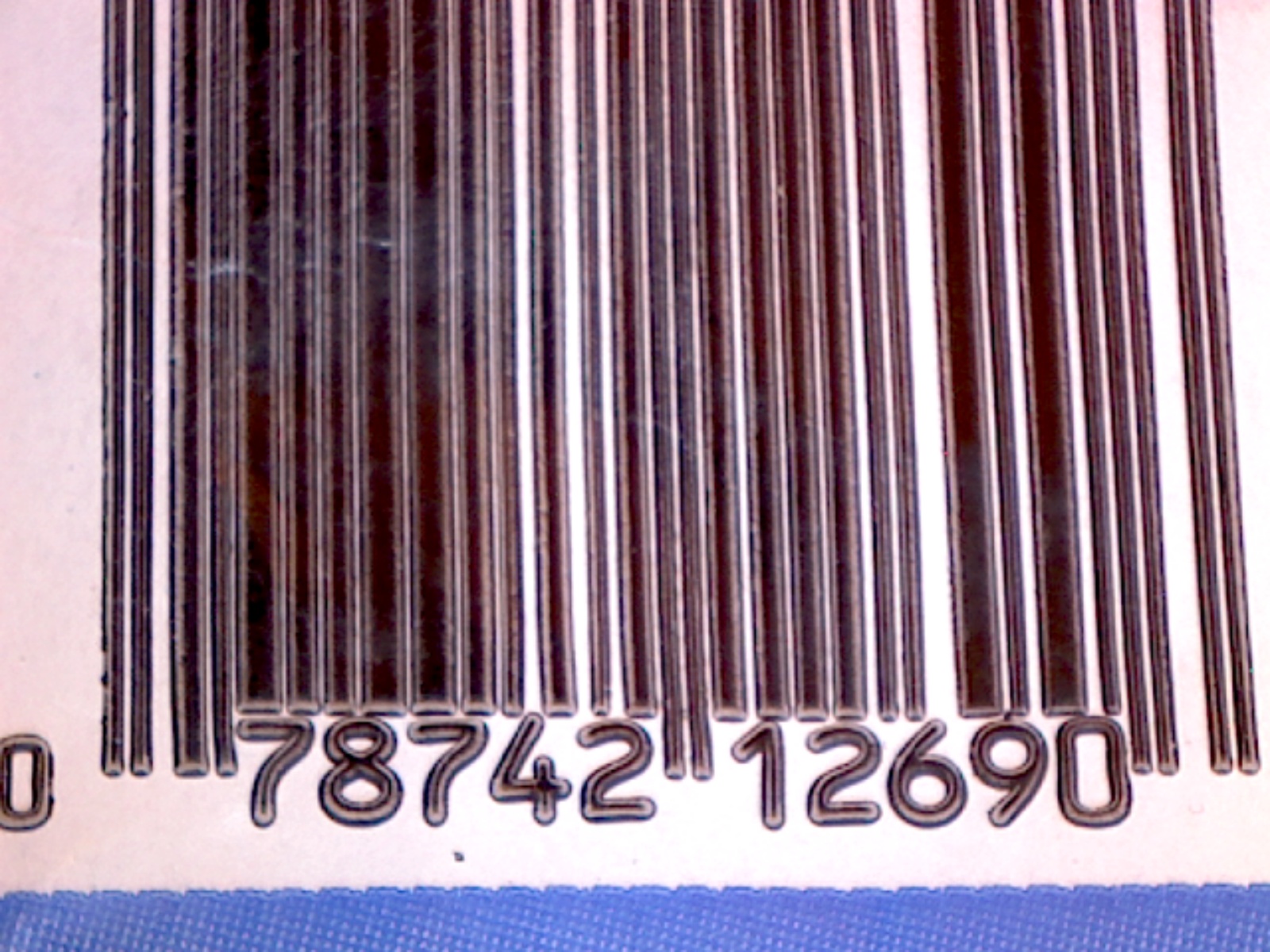
Gain results from ink spreading during the printing process, and it can have various causes. Gain does not alter the size of the barcode. All of the elements remain in their original locations. Just the width of the printed elements change, and this robs width from the non-printed elements (spaces). As this happens, the reflectivity of the spaces diminishes and as it approaches the tolerance limit, the spaces virtually disappear. Once that happens, the count is disrupted and scanning fails.

Color
Virtually all commercial and industrial scanning is done at ~660 nm—light in the red area of the spectrum. This is because early scanners were lasers. There are some exceptions such as QR Codes intended for smartphone scanning and Pharmacode 1D barcodes. The red light source in a scanner will see colors differently than in white light, and some of those colors will not work well. Viewed in red light, a red image becomes nearly invisible. Green becomes equivalent to black. A red barcode on a white background will not scan, but a black barcode on a red background works perfectly. Likewise a green barcode on a white background is great, but a black barcode on a green background doesn’t work.
 Barcodes can be printed in color, but they must have at least a minimum amount of contrast to scan. There is an algorithm for calculating whether certain color combinations will work, but be aware that if you calculate from the Pantone chart, you are assuming that those exact colors will be duplicated precisely on press.
You are invited to comment or ask questions. Please contact us here.