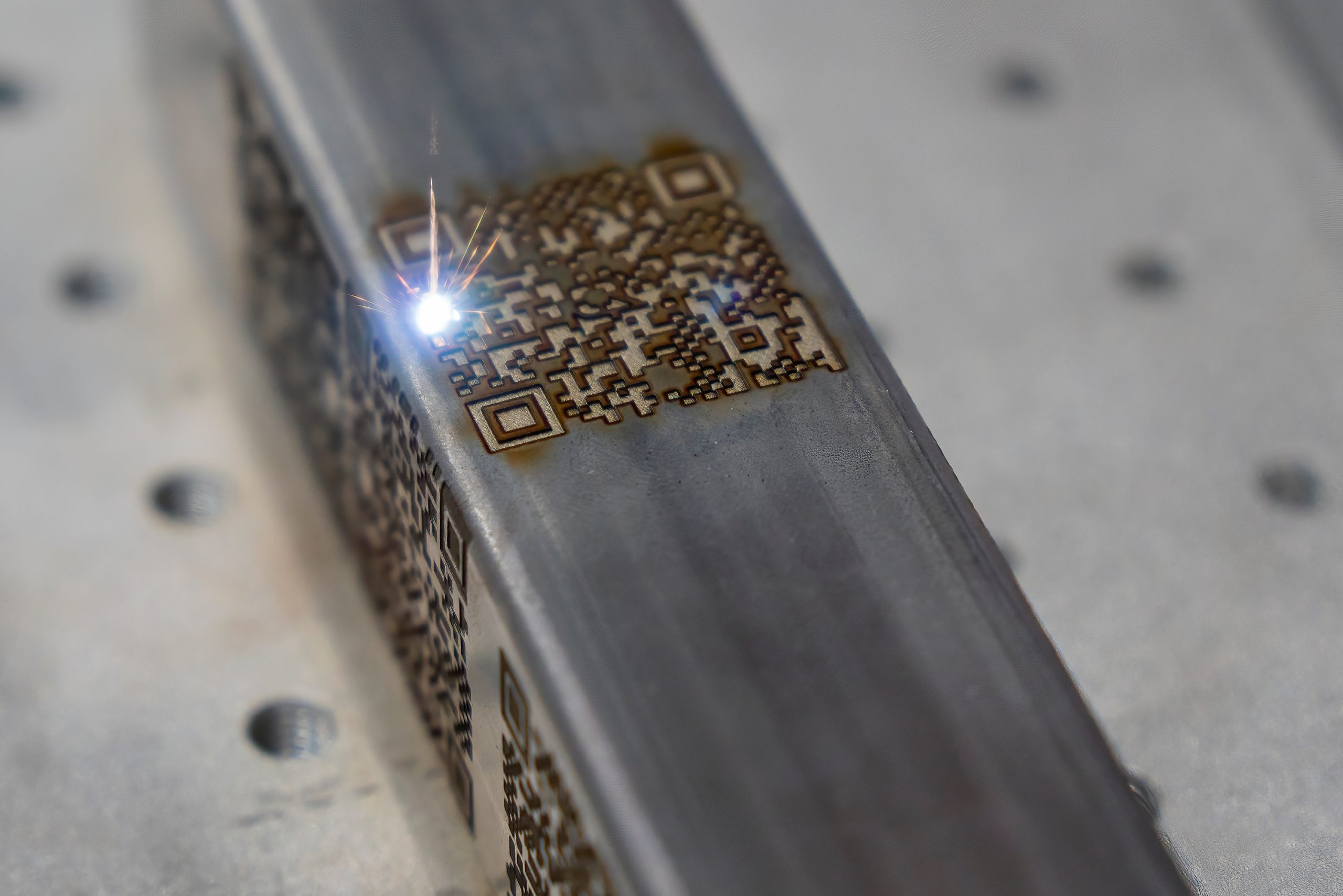
First, what is a DPM or Direct Part Mark barcode? It is a barcode that is imaged directly onto the surface of a part or sub-assembly, rather than being imaged onto a tag or label which is then somehow affixed to that part or sub-assembly. DPM barcodes can be imaged onto cast metal parts such as engine blocks, exhaust manifolds, brackets or other parts; DPM barcodes can also be imaged onto glass, ceramic, plastic or other surfaces.
How are DPM barcodes imaged onto these substrates? There are several commonly used methods, and probably many more that are less popular but also successful. Perh
aps the most common technique is laser ablation—blasting the image of a Data Matrix or other 2D symbol onto the surface of the part, using a high power laser. This can be done onto plastic or certain types of metal. Other methods include:
- mechanically marking thinner metal plate or sheet by physically denting or impressing the 2D barcode image into the metal surface;
- mechanically marking thicker metal using a milling process;
- chemically etching the symbol image into a glass or metal surface;
- abrasive blasting the barcode image into a glass or metal surface.
Why do companies DPM a barcode directly onto a part? Many parts or subassemblies need to be marked with a barcode, but because of where they are installed or used, there isn’t sufficient space for a tag or label, or it would not survive in the use environment due to heat, proximity to moving parts, vibration or other factors.

Because the substrate which carries a DPM symbol is the part itself, there is usually very little contrast difference between the symbol image and the background. This is where DPM scanning and verification are very different from conventional barcode printing onto tags, labels or packages. DPM scanners and verifiers are equipped with specialized lighting to optimize the low reflectance difference to enable the device to capture and decode the symbol.
The wide variety of substrates and marking methods has necessitated the development of standards for DPM barcodes. The ISO15415 specification and the AIM Global organization both include standards for verifying 2D DPM barcodes.
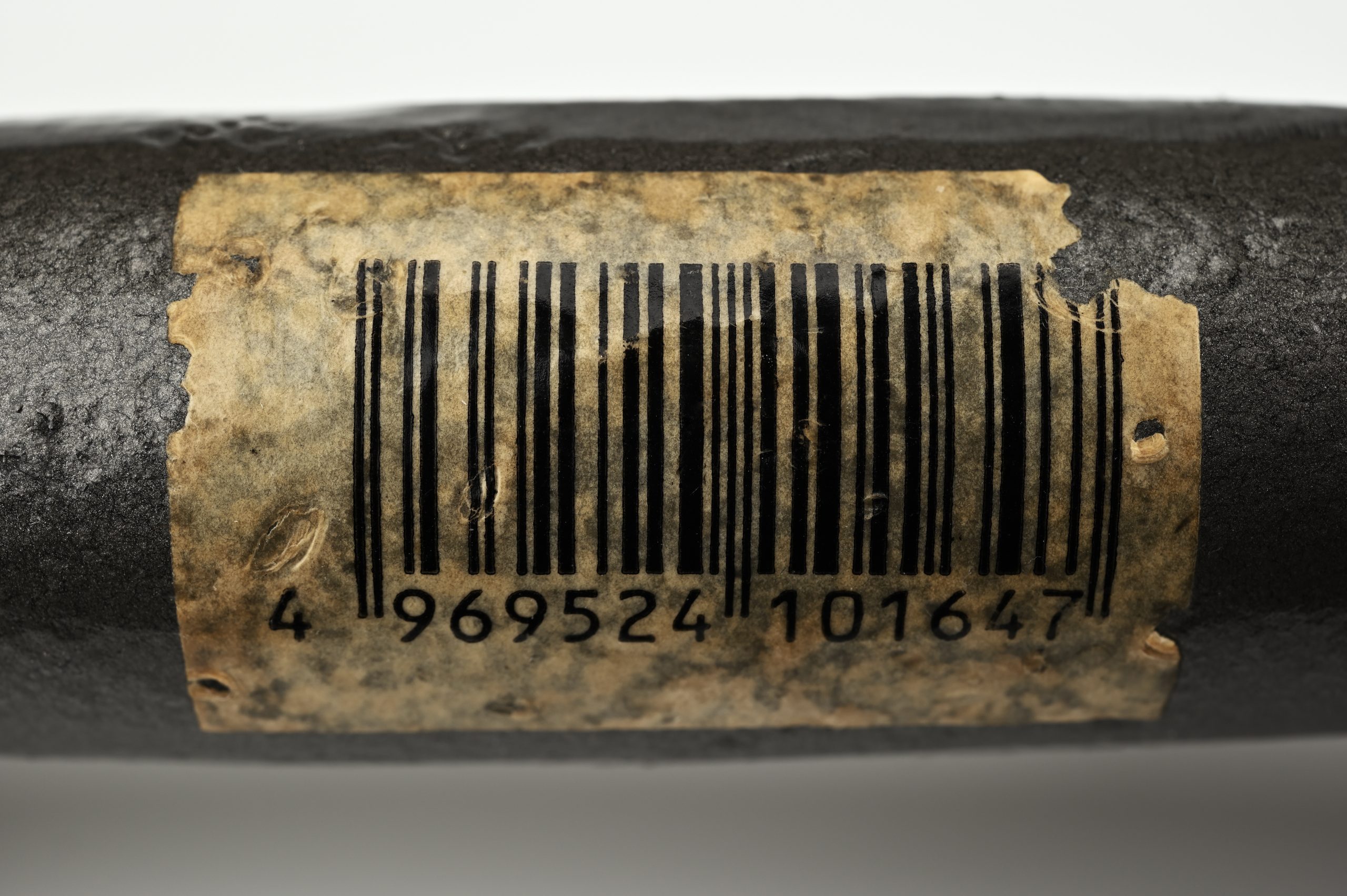
Can DPM technology also be used with 1D barcodes? Well, yes, but…. It is completely possible to successfully image 1D barcodes using DPM techniques. Dimensional integrity of a 1D barcode is no more difficult to achieve than with a 2D Symbol. Why are 1D barcodes not used in DPM applications? Possibly because 1D barcodes tend to be physically larger than 2D symbols, requiring scanners to have larger variable DPM light banks to illuminate the larger encoded area. Data Matrix and other 2D symbols are physically smaller and provide significantly greater data capacity and incur no such lighting complications.
The ISO15416 specification for verifying 1D barcodes makes no accommodation for special DPM lighting. In fact, ISO15416 requires a minimum contrast difference between the symbol and substrate, which eliminate DPM from the ability to be verified against this specification. However, some manufacturers use 1D DPM barcodes in their internal systems, using their own internal quality controls to assure high quality performance of their DPM barcodes.