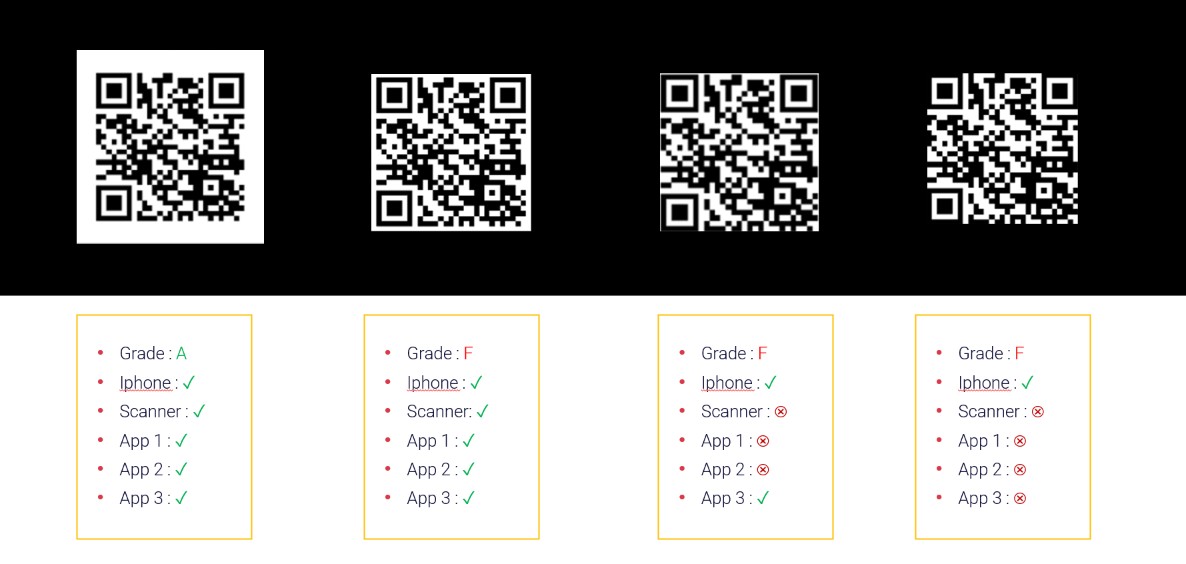
Barcodes fail for a lot of reasons. The reasons barcodes fail fall into two broad categories: they either fail because of poor image quality or because of flawed data quality.
Poor image quality is a more common occurrence for barcode failure and easier to detect, since many of these problems can be identified visually or with low magnification. Barcode failure due to flawed data quality usually cannot be detected visually but some verifiers are able to test for data structure, and when properly configured, can signal data problems quickly and easily.
Here are the seven most common reasons that barcodes fail:

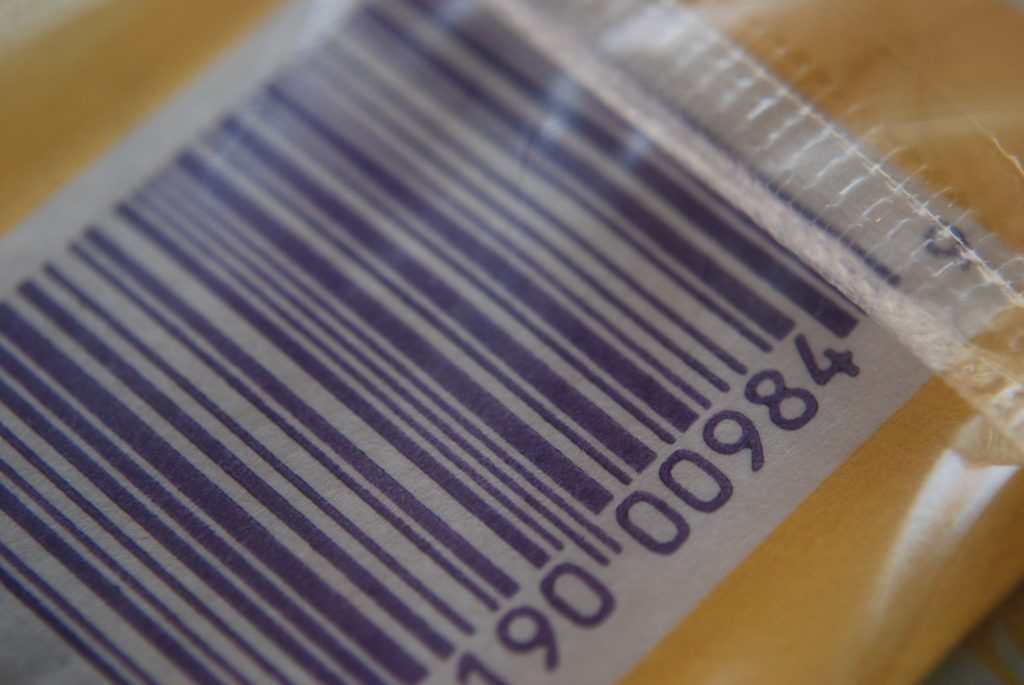
Because shrink wrapping and lamination can can a barcode to fail, it is important that verification be conducted on a barcode in its final form with all post production operations such as shrink wrapping in place.Shrink wrap or lamination often causes barcode scanning problems, especially when the over-wrap heat seal impinges on the barcode or quiet zones. [hr]
Poor print quality due to excessive press gain is a common cause of barcode failure. The bars and spaces in a barcode can tolerate a certain amount of gain or loss in width, but when the printing process exceeds that tolerance, the barcode will fail.


Certain color combinations will cause barcodes to fail—red bars against a white background or black bars against a green background are but two examples of toxic colors for barcodes. [hr]

Barcodes printed on a clear or translucent polybag can fail when the colored contents of the bag are inserted and cause a color contrast problem. [hr]

Related to this are the unexpected reflective characteristics of metal or metalized substrates such as beverage cans; bare aluminum visually appears to be highly reflective, and would seem to be an idea background for a barcode. In fact it has very low reflectance and makes a better bar color than a background or space color. [hr]
 Violation of the quiet zones is a frequent cause of barcode failure—generally this is a pre-press or graphics design error. All linear barcodes and most 2D symbols such as Datamatrix and QR Code require a quiet zone to be readable by a scanner. [hr]
Placement of the barcode too close to a fold or edge of a package can cause a “virtual” quiet zone violation if the fall-off of the high reflectance background occurs too close to the leading or trailing edge of the barcode. [hr]
Referencing the problem of flawed data quality, incorrect barcode structure is another common mistake, especially in symbols with complicated structural rules like GS1-128 and GS1 Databar Expended Stacked Symbology (Coupon Code), where the Application Identifiers must be correctly identified, in the correct order and correctly sequenced. Often the mistake is something as simple as entering a product “Use By” date in the incorrect Day/Month/Year sequence.
It is ill-advised to assume that all verifiers test for data quality, even though it is an essential component of barcode quality.
Contact Barcode-Test for further information about barcode testing services or verification equipment.