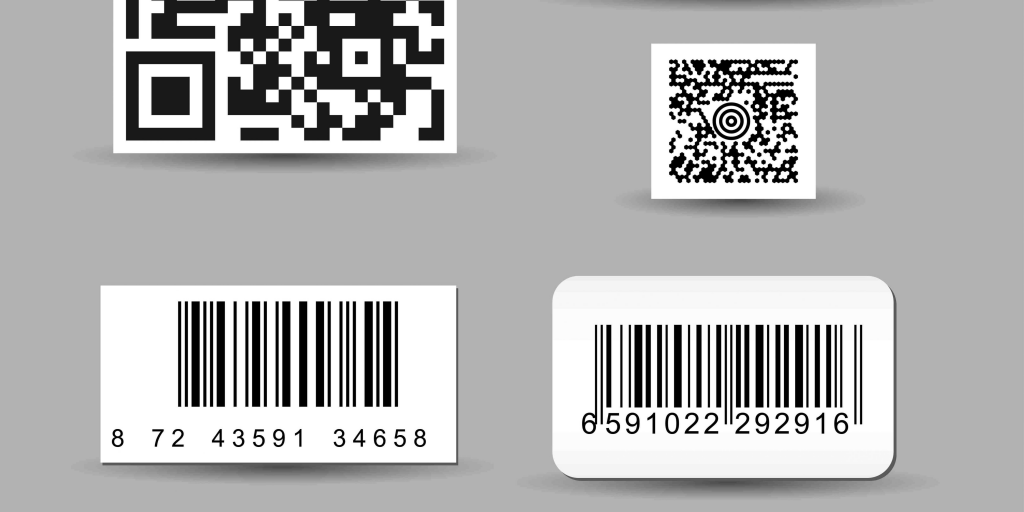
Having discussed what barcodes are and what they do in a previous article, a natural next question is, why are there different kinds of barcodes? Isn’t there one symbology that could do it all?
Barcode technology may be approaching that landmark but there is a path that got us to this point. The milestones on that path are in fact the different symbologies that have been invented; consistent with the theme of the article referenced above, symbologies were created to solve specific problems. While this seems painfully obvious, what may not be so obvious are the pain points in that evolutionary process. One example is staring us all in the face: the global UPC system. It solved a problem in the 1970’s but is now threatened by its own success as the system approaches its numbering capacity. A less obvious example is the GS1 Databar Stacked Omnidirectional symbols on loose fresh produce such as apples and oranges. We are all familiar with them but have you ever seen one scanned? They are a massive failure—and this is another part of the evolutionary process.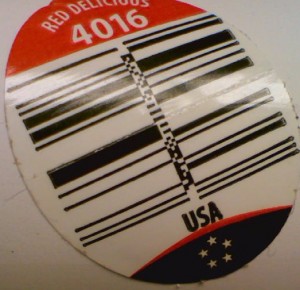
The evolutionary process in barcoding is driven by three factors: data type, data capacity and symbol size. There is an underlying, foundational fourth driver: even if it satisfies the preceding three factors, a symbology must solve a problem. Fresh produce Databar labels failed because they solved a problem that did not exist.
Barcodes encode two data types: numeric and alpha-numeric. Serial number applications are perfect for numerical-only symbologies like UPC/EAN and its cousin, Interleaved 2 of 5. Alpha-numeric symbologies can parse subsets of data representing specific attributes of the marked item: serial number, lot or batch, expiration date, etc.

For database look-up like what UPC does, numeric-only works just fine—if you have enough data capacity to serve the huge and growing population of products in a global commerce environment, which brings us to the second factor.
Data capacity and symbol size are related—the more data, the larger and denser the symbol. Where larger capacities are necessary linear barcodes have evolved into symbologies with greater encoding efficiencies. Code 128, for example, can encode pairs of characters in the same space required to encode single characters. 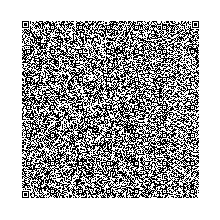 Symbol size can also be minimized somewhat by decreasing the size of the X dimension (narrow bar or space) and decreasing the wide/narrow ratio of a binary symbology, but there are tradeoffs in the barcode’s tolerance of print inaccuracies.
The most recent step in the evolutionary process is 2D or matrix symbologies, which have full alpha-numeric encoding capability, much greater data capacity than 1D barcodes and a more manageable square footprint. 2D symbologies are also more tolerant of print inaccuracies and offer user-definable error correction capability. Linear barcodes can only offer error detection.
Given all of this, what is the absolute best barcode for you to adopt in your business? If you plan to stay in business, you should use what your trading partners use—and migrate with them to whatever is next.