If you are already familiar with 1D or linear barcodes such as UPC and Code 128, you will find a lot of familiar things in 2D or Matrix symbologies, but some of those familiar things may be done in unfamiliar ways.
Start/Stop Pattern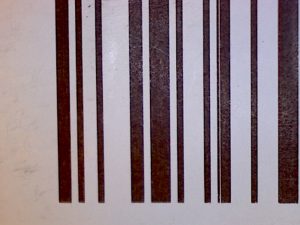
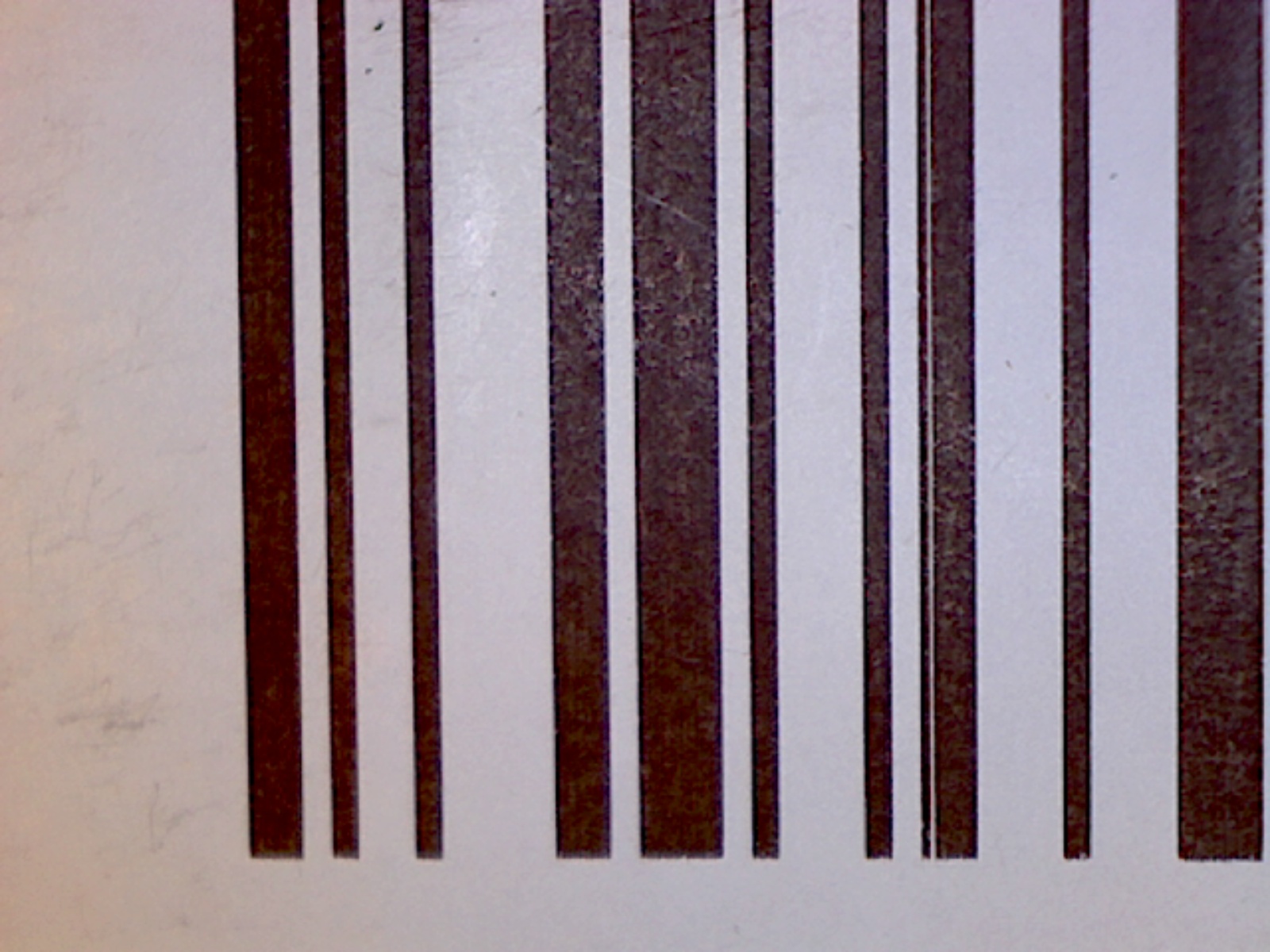
For example, in 1D barcodes there are start/stop patterns that precede and trail the variable encoded information. In UPC they are called guard bars.
Their purpose is to inform the scanner what barcode symbol is present. While the “intelligent” or encoded information will vary, the start/stop pattern always remains the same for each 1D barcode type.
In 2D symbols these are called “finder” or “fixed” patterns, and they do the same thing as start/stop of guard bar patterns in 1D barcodes. They inform the scanner of what is coming and help the scanner to calibrate itself to the symbol size by detecting the X dimension or module size of the symbol.

Bar Width Reduction
1D or linear barcodes are bar width reduced to compensate for press or dot gain, so that the ink on the label or package spreads into ideal width rather than spread beyond scanner legibility. Bar width reduction is only necessary in the horizontal direction of a 1D bar code, but the elements in a 2D symbols have horizontal and vertical dimensionality, so bar width reduction must occur in both the X and Y axes.
Error Detection of Correction
The check digit in a 1D barcode might be mistakenly equated with error correction in a 2D symbol—they are similar but not the same. The check digit is a UPC or Code 39 barcode is like spell checker in word processing: it flags an error but doesn’t correct it. The purpose is to prevent a scanner misread. Conversely, error correction in a 2D symbol is like auto-correction in word processing: it finds and corrects encodation problems so the scanner can acquire a complete data set.
X Dimension
The X dimension in a 1D barcode is the width of the narrow bar. In 2D symbols, the X dimension is the module which has both width and height. In both cases X dimension is the basic building block of the 1D barcode and 2D symbol, and determines its physical size (along with the amount of encoded data, of course).
Quiet Zone
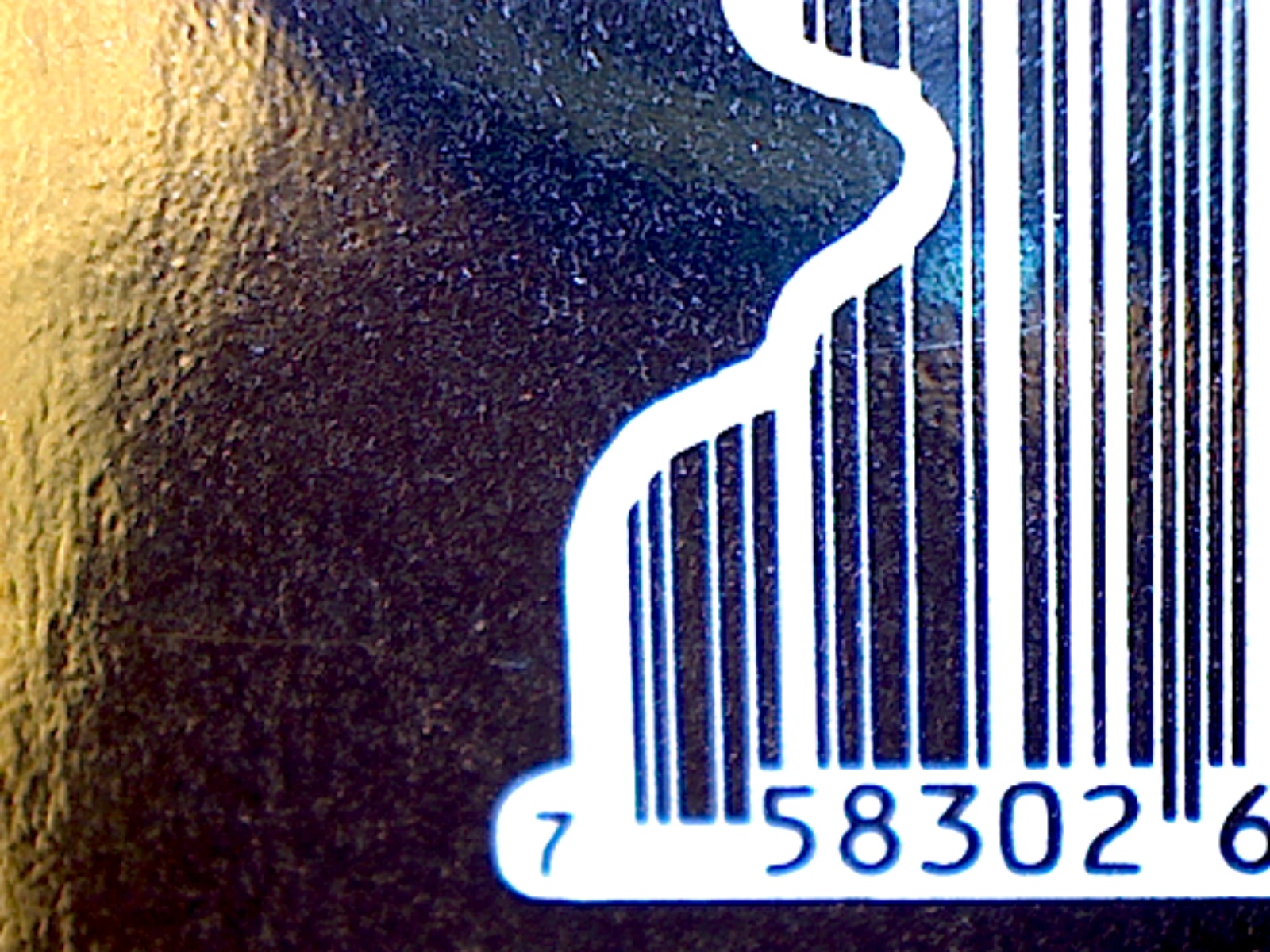
1D barcodes require a blank space leading and trailing the barcode. The exact minimum specified size is a multiple of the X dimension. For example, the minimum quiet zone for a UPC symbol is 9 times X. There is no quiet zone above and below a 1D barcode.
2D symbols also have a quiet zone that completely surrounds the symbol on all four sides, but it is very small—only 4X wide for QR Code and 1X wide for Data Matrix symbols and very critical to successful scanning.
Symbol Contrast
In 1D barcodes there are three factors in Symbol Contrast:
- There must be a minimum amount of reflective difference between the bars and spaces
- The spaces must always be light and the bars must always be dark
- The symbol is almost always scanned in 660 nm light so the bar and space colors must be visible in this red light
2D Data Matrix symbols are also scanned at 660 nm, except for very low contrast Direct Part Marking (DPM) symbols. QR Codes are meant to be scanned in white light, so Symbol Contrast is mostly a matter of contrast difference.