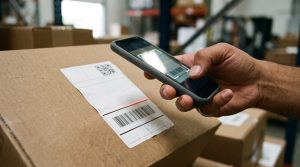
 If a barcode scans on the phone at your desk, it must be fine — right?
Not necessarily. That assumption is one of the most expensive mistakes a manufacturer can make, and it’s the reason an entire category of service exists: independent barcode verification and testing.
Scanning Isn’t the Same as Verifying
A smartphone or handheld scanner will read a barcode under forgiving conditions — good lighting, close range, a scanner tuned to be permissive with AI enhancement. But the scanner on a hospital’s medication cart, a distribution center’s high-speed sorter, or a retail point-of-sale terminal isn’t nearly as forgiving. A code that scans easily in your office can still fail intermittently — or completely — once it reaches the equipment your customers actually use.
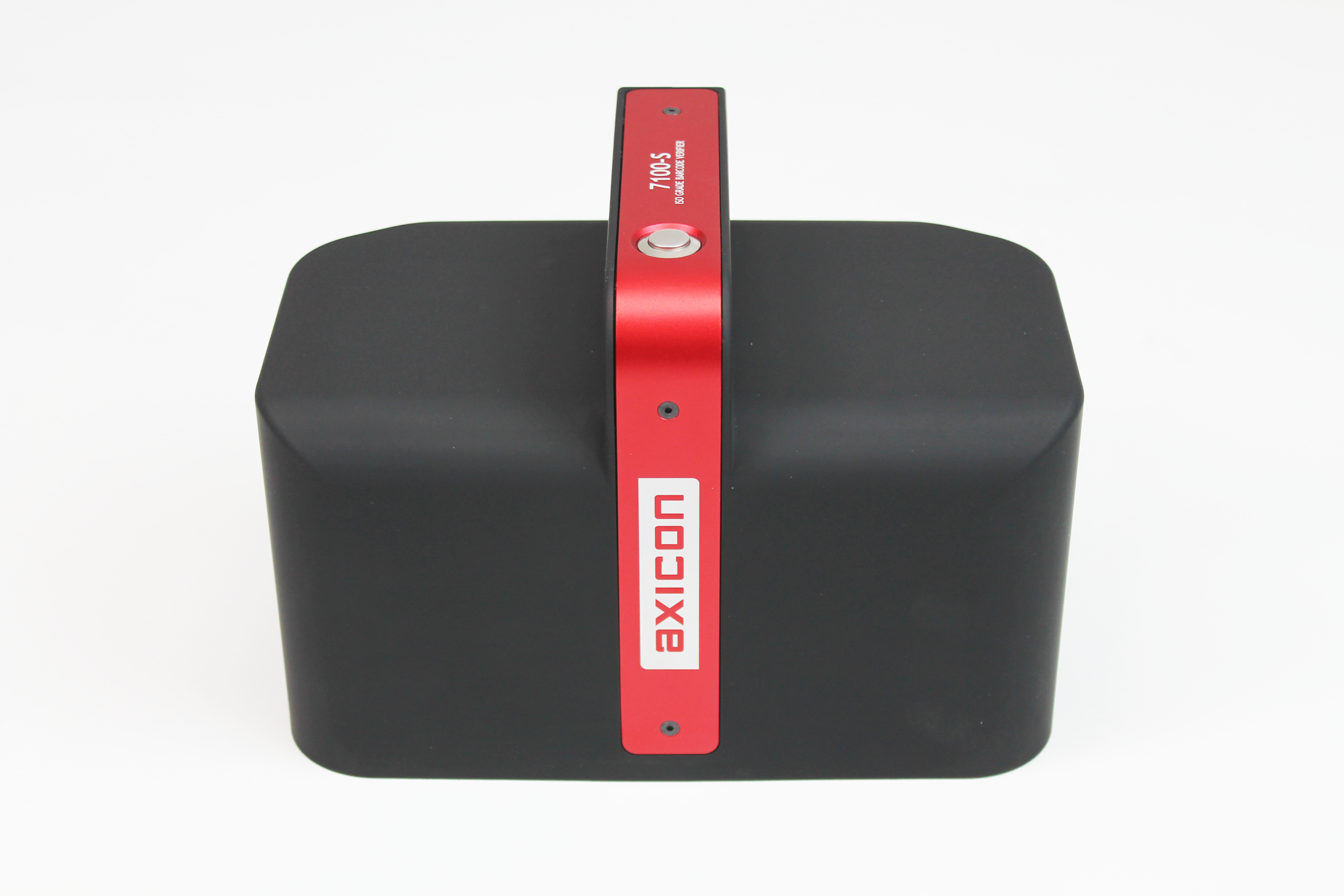
That’s the gap a true barcode verifier is built to close. Rather than simply answering “can this be read?”, a verifier measures the barcode against a formal engineering standard and produces an objective, letter-graded score (A through F) describing exactly how much margin for error the code has. A barcode that scans today but grades a D or F is a barcode that’s likely to start failing as it gets a little smudged, a little faded, or read from a slightly different angle — long before anyone in your building notices.
What a Testing Service Actually Measures
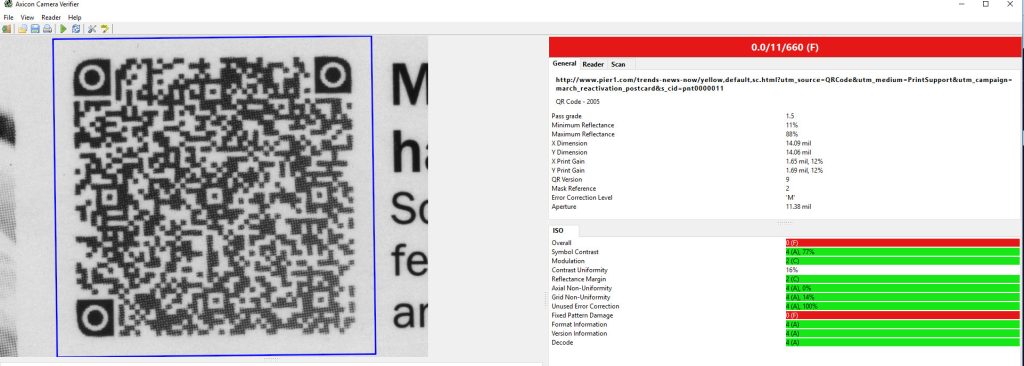
Verification against the ISO/IEC 15415 and 15416 standards scores parameters most people have never heard of, but that determine real-world scan reliability:
- Contrast between the bars/cells and the background
- Print growth or shrinkage in the bars or cells relative to spec
- Edge sharpness and consistency
- Decode integrity — whether the encoded data is actually correct
- Quiet zone — the clear space required around the code for a scanner to recognize where it starts and stops
A verifier scores each of these individually and rolls them into an overall grade, so instead of a vague “it scanned” you get a precise diagnosis — including which part of your printing or labeling process is degrading the code, so it can actually be fixed. Before it causes mayhem.
Where This Actually Costs (or Saves) You Money
Chargebacks and rejected shipments. Large trading partners — retailers, hospital systems, distributors — increasingly enforce minimum barcode grades as a condition of doing business. A shipment with substandard barcodes can be refused at the dock or trigger a chargeback, and by the time that happens, the product is already packaged, palletized, and in transit. Catching a marginal code before it ships is dramatically cheaper than catching it after.
Regulatory compliance. For medical devices, FDA’s Unique Device Identification (UDI) rule requires a machine-readable barcode carrying specific data — and that barcode has to actually work, not just exist. Pharmaceutical manufacturers face similar requirements under the Drug Supply Chain Security Act (DSCSA), where every unit needs a scannable, traceable identifier as it moves through the supply chain. An unreadable or miscoded barcode isn’t just an inconvenience in these industries — it’s a compliance gap.
GS1 standards changes. The GS1 system that underlies most retail and healthcare barcodes is transitioning toward 2D barcodes (like DataMatrix and QR-based formats) as the industry’s “Sunrise 2027” initiative moves forward. Products still relying solely on older barcode formats will need to adapt, and verifying that a new 2D symbol is actually printing correctly is a different (and less forgiving) exercise than checking a traditional linear barcode.
Patient safety. In hospitals, barcode medication administration (BCMA) systems rely on scanning a patient’s wristband and the medication package barcode together before a dose is given. A barcode that fails to scan at the bedside doesn’t just cause a delay — it can push nursing staff toward risky workarounds, like overriding the safety check entirely. Barcode quality is, quite literally, a patient safety issue in these settings.
Why Independent, Calibrated Testing Matters
Anyone can buy a barcode scanner. Few organizations maintain verification equipment that is properly calibrated and traceable to a recognized standard, and even few bother to train their verifier users. A verifier that’s drifted out of calibration can pass codes that are actually marginal, or fail codes that are actually fine — which defeats the entire purpose. A user that hasn’t properly configured the verifier software, or doesn’t understand the verification report is more of a liability than a help.
An independent testing service brings benefits an in-house spot-check may not:
- Calibrated, recertified equipment, so a grade issued today means the same thing a grade issued next year means
- Objective, standards-based grading — not “it scanned for me,” but a documented result against ISO/IEC 15415/15416/TR 29158
- Familiarity with the equipment, so it is correctly configured for the type of barcode it is testing
- A paper trail — verification reports that can be handed to a customer, an auditor, or an FDA inspector as evidence of due diligence
- Root-cause diagnosis, not just a pass/fail — explaining how the verification grade points to a cause, and how to make adjustments to achieve better grading
A barcode may seem like a small thing to get wrong, but it’s a big, expensive thing to get wrong badly. Verification catches problems while they’re still cheap to fix — at the time of printing, long before it’s on the loading dock, at a hospital bedside, and not in an FDA warning letter. For manufacturers in regulated industries especially, a barcode testing service isn’t an extra step; it’s the step that confirms all the other steps actually worked.

Need help? Got a question? We can help. Contact us here.