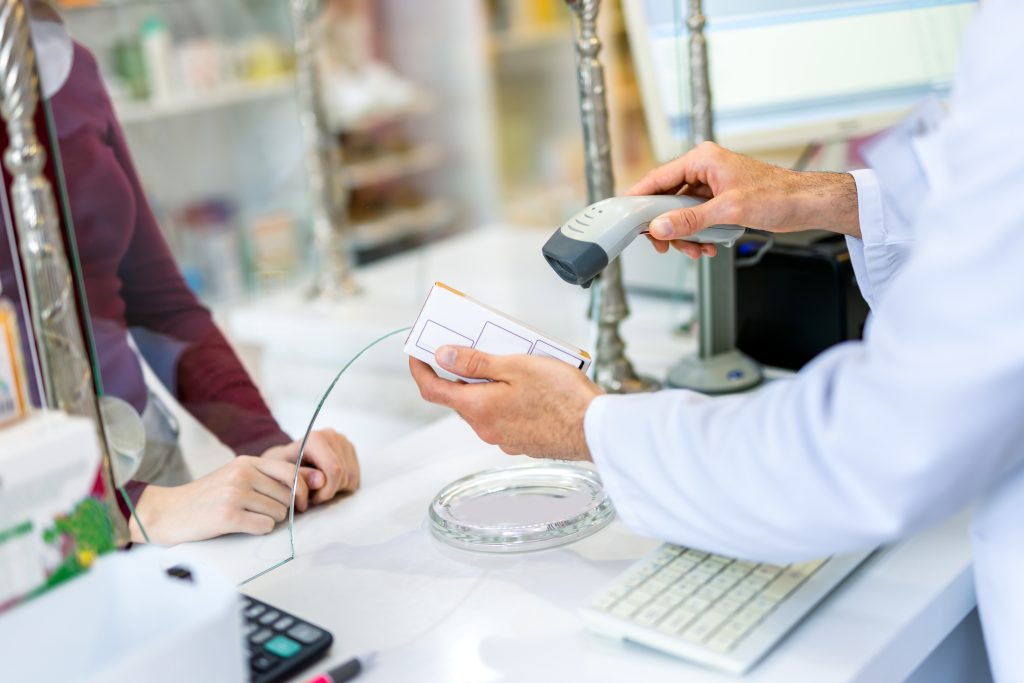
 Maria Delgado stood at the pharmacy counter at 6:40 on a Tuesday evening, holding her son Eli’s inhaler prescription and checking her watch. She had eleven minutes before the after-school program closed and she still needed to pick him up.
The pharmacist scanned the box. Nothing happened.
She tried again. Still nothing. A small crease had formed at the top of the box during shipping — invisible to the eye, but enough to break up the pattern the scanner needed to read. The pharmacist keyed in the number by hand instead, double-checked the dosage against the label, and rang it up. Ninety extra seconds. Maria made it to pickup with two minutes to spare.
She never thought about it again. But somewhere upstream, that ninety seconds was the visible edge of something much bigger.
Three weeks earlier…
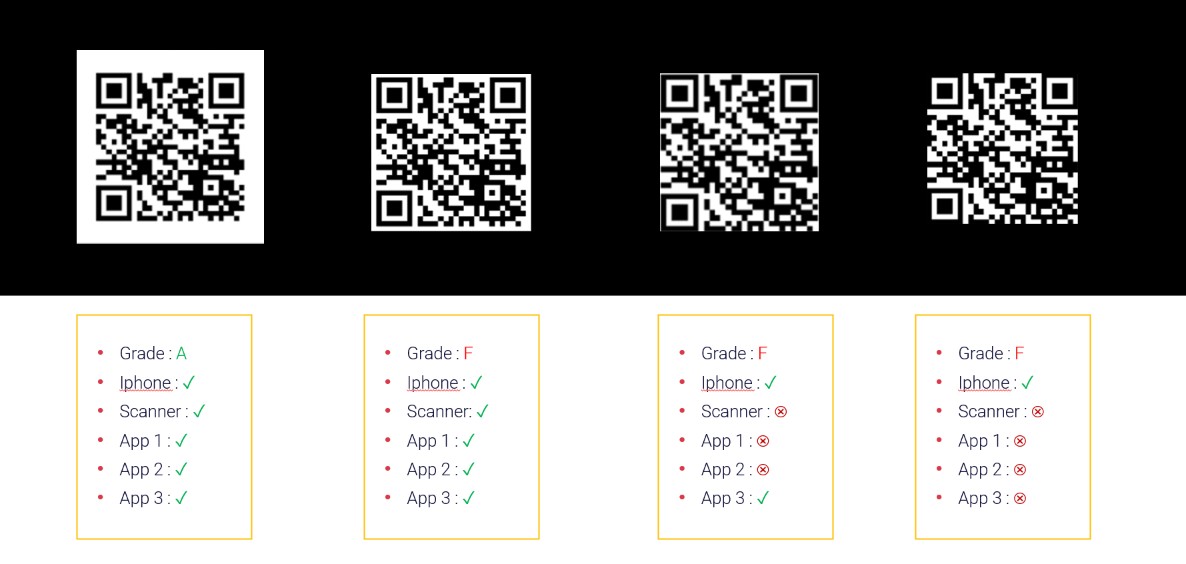
…at a packaging plant two states away, a quality technician named Dwayne ran a random sample of inhaler cartons through a verifier — a handheld device that doesn’t just check whether a barcode scans, but grades how well it scans, on a scale that runs from A down to F, the same way a report card does. The verifier doesn’t care whether a human eye can see the barcode clearly. It measures things eyes can’t: how evenly the ink deposited, whether the bars are exactly the right width, whether the quiet zones on either side are wide enough for a scanner to lock on.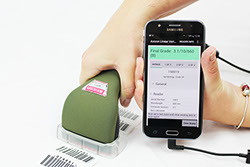
That day, Dwayne’s sample came back with a grade of C. Technically passing. But a C on a critical, fast-moving product like an inhaler carton — one that gets jostled through trucks, conveyor belts, and stockroom shelves before it ever reaches a pharmacy — is a warning sign, not just a passing grade. He flagged it. The print head on the packaging line was laid down slightly too much ink, a problem called “bar growth,” where the bars print a little fatter than they should and start crowding the spaces between them.
The line supervisor adjusted the printer. The next sample came back a B. Grade held steady through the rest of the run.
Most of the cartons from that batch scanned perfectly at every pharmacy in the country. One — the one that ended up in Maria’s hands — picked up a shipping crease on top of an already-marginal print. That’s the nature of barcode quality: it’s not about whether a code works today, on a clean counter, under good lighting. It’s about how much margin it has left when something goes wrong, because something could.
Trust–the Unspoken Promise
Maria didn’t know any of this. She didn’t need to. That’s the point.
She didn’t know that somewhere in a lab, a technician had spent an afternoon feeding sample cartons through a machine that speaks in ISO grades instead of pass/fail. She didn’t know that a “quiet zone” is a real technical term, not a metaphor — the blank margin of space on either side of a barcode that gives a scanner room to find the edges of the pattern. She didn’t know that pharmacies, hospitals, and grocery stores build their entire trust in a product’s identity on a system most people glance at for a tenth of a second and never think about again.
What she knew was this: her son’s medicine was correct, it was in stock, and it cost her ninety seconds instead of a wasted trip and a call to the doctor’s office the next morning to sort out a mix-up. What she knew was that when she buys groceries on a tight budget and the register rings up the sale price instead of full price because the promotional barcode matched the one in the system, that’s ten dollars that stays in her pocket for something else that week. What she knew was that when Eli’s older brother’s asthma medication got recalled for a labeling error last year, the store was able to pull every affected unit off shelves within a day — because every single unit could be traced, unmistakably, back to its lot number, through a barcode that had never failed to scan.
None of that required her attention. It required someone else’s attention–and caring.
Invisible when it works
Barcode quality is invisible when it works and expensive when it doesn’t — not in dollars alone, but in trust, in time, in a mother standing at a counter with somewhere else she needs to be. The people who grade codes down to fractions of a millimeter aren’t doing it for the barcode. They’re doing it for the ninety seconds Maria didn’t lose. Good people do good things.
 Got a barcode question? We can help. Contact us here.