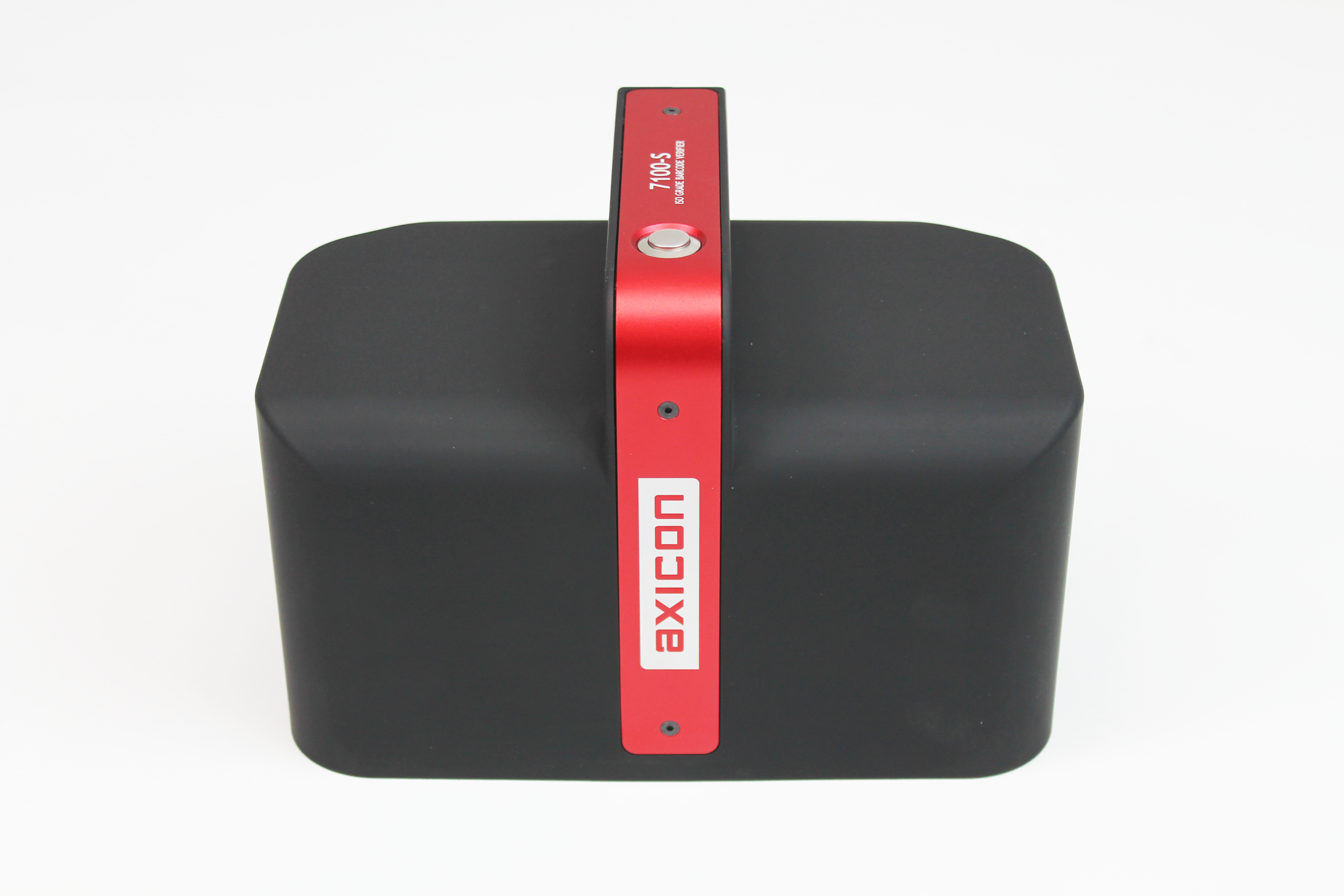
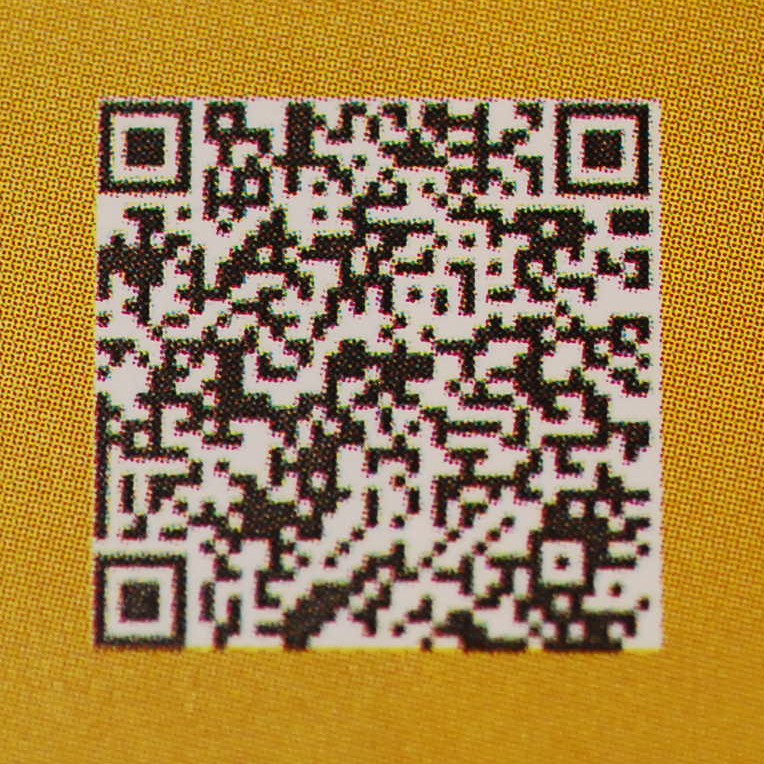
 In some aspects, 2D barcodes are very different from 1D barcodes. Optimizing them for best performance is almost a completely different subject—but there are a few similarities. In a 1D barcode, the X dimension is the building block for bars and spaces (elements) of varying widths. In a 2D barcode, there is only one element size, so the X dimension and the element are always the same. Nevertheless, using as large an X dimension as possible makes life easier for the printer and the scanner, because the tolerance or margin of error is larger when the X dimension is larger.
 Because 1D barcodes have elements of various widths, there is a mathematical relationship between the X dimension and wider bars or spaces. 1D barcodes can also be
truncated, shortened from their specified or optimal height. Neither of these factors pertain to 2D barcodes.
Quiet zones are another shared attribute of 1D and most 2D barcodes. As with 1D barcodes, the 2D barcode quiet zone is a multiple of the X dimension, and different types of 2D barcodes have different quiet zone requirements. It is important that they not be encroached, as that can negate scanning.

The specified QR Code quiet zone is 4 times the X dimension. However, a 1X quiet zone is generally (but informally) accepted for QR Codes intended to be scanned by smartphones. Datamatrix Code requires a 1X quiet zone. Aztec Code specification uniquely requires no quiet zones. The best practices with 2D barcodes including Aztec Code is always include at least the minimu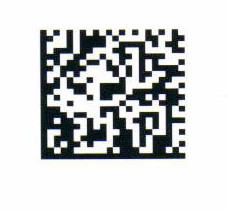 m quiet zone. Larger is better. When the scanner must find the barcode in a heavily populated field of graphics and printed information, decode rates suffer. Quiet zones help scanners to perform best.
Because 2D barcodes encode data in the X and Y axes, they are uniquely sensitive to distortion or gain in both axes—especially when it is non-uniform. Greater amounts of gain in one axis is possible when a barcode is moving through a printing process. 1D barcodes printed in picket fence orientation are less vulnerable to this, since gain in the height of the bars is meaningless. But differential gain in a 2D symbol can be problematic, especially at higher rates of print speed.
 In thermal printing systems, some operators believe that higher speed printing can be compensated by increasing the print head temperature. This only further degrades the intended X and Y dimensional uniformity of the printed 2 D symbol. Printing speed and element quality is a balancing act. Only a barcode verifier can help achieve the right balance between print speed and barcode quality.
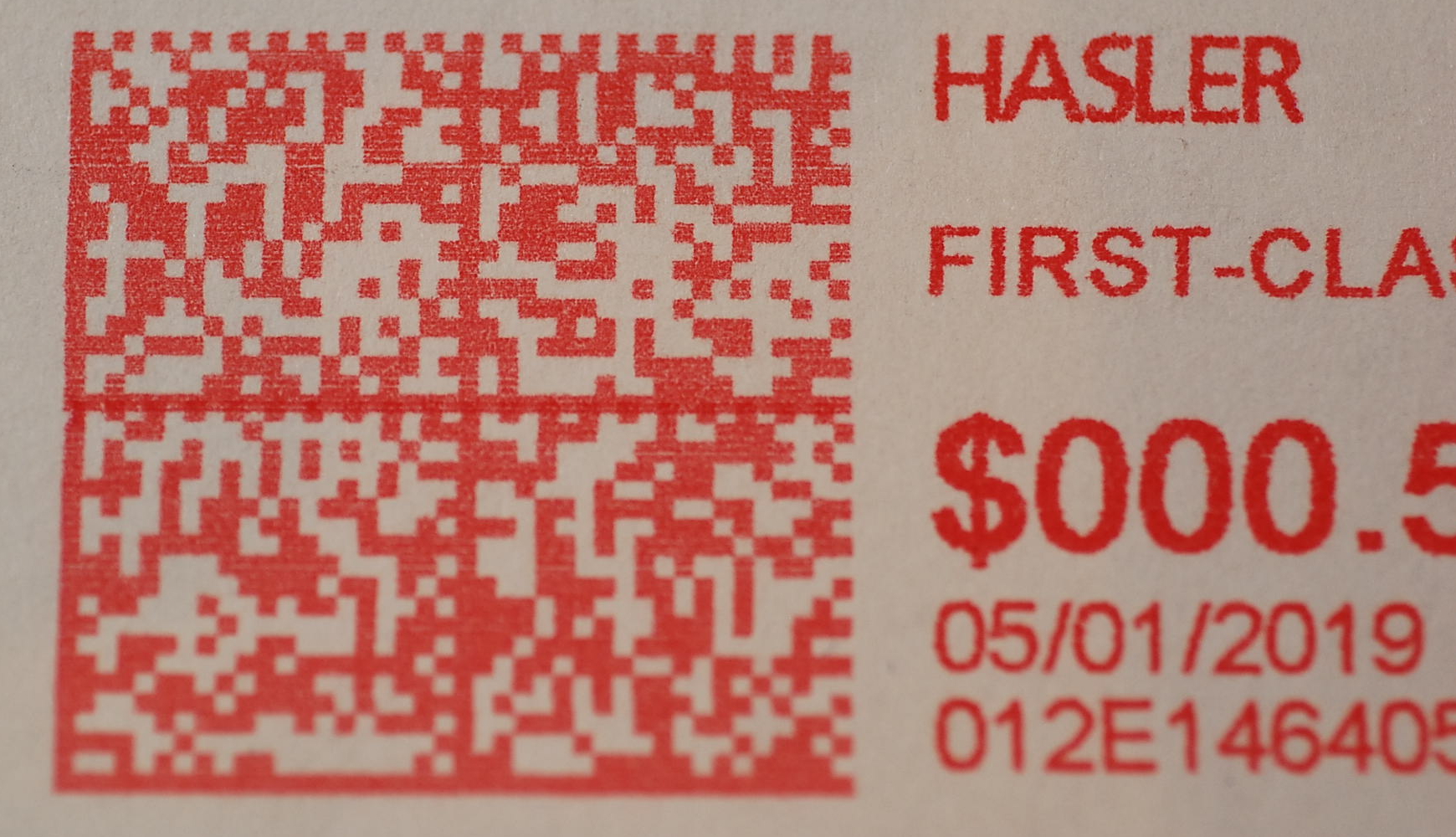
2D barcodes are printed in colors that are impossible with 1D barcodes. US Postal Datamatrix Codes, for example, are a bright red. 2D barcodes can also be reverse printed, for example white against a black background. However these variations are not permissible in all situations. The postal service uses special wavelength scanners to decode red Datamatrix barcodes. It is always advised to check with trading partners before deviating from the standard black-on-white barcode imaging convention.