Recently we sprinted through the history about how barcode types have developed by solving problems. Today there are dozens of different types of barcodes. Special capabilities of each barcode type solve problems for specific users. A popular question: what will replace barcodes? A better question: what is the next evolutionary step? The answer: what problems are driving barcode development?
More accurately: what situations are driving barcode development?
Barcodes store data accurately, cheaply and securely. They will be around for many years. How they are used is probably going to change a lot. Here are some emerging situations.
High Speed Expiration Date Coding
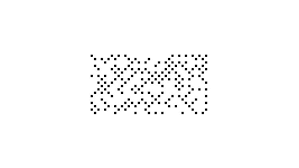
A new barcode type has been developed. Why? To solve a problem, of course. The problem: to print a legible barcode onto a product moving at high speed down a conveyor line. Traditional barcodes and barcode printing systems cannot do this. Dotcode solves this problem in the tobacco industry. Other industries with a similar need will sign on.
Invisible Barcodes
Digimarc Corporation invented a technology for printing invisible UPC barcodes all over a product package. This eliminates the small but valuable barcode-only space from the package. It speeds up checkout by eliminating the need to find the barcode—it’s everywhere.
Product Validation
Right now, UPC barcodes on consumer goods identify a class of products. A container of yogurt from a particular manufacturer, a specific volume and flavor has the same barcode in every store. The humble 12 digit UPC does all of that, and it is at the limit of its capability. Imagine the barcode doing more—and less. In one scenario, a vision system identifies the product, volume and flavor. A much smaller barcode validates what the vision system saw. The two technologies work together to complete the transaction.

Secure Barcodes
Most commonly, the security role of barcodes detects and signals duplicates. In an entertainment venue, tickets are uniquely barcoded. If two of the same barcode are presented, one of them is
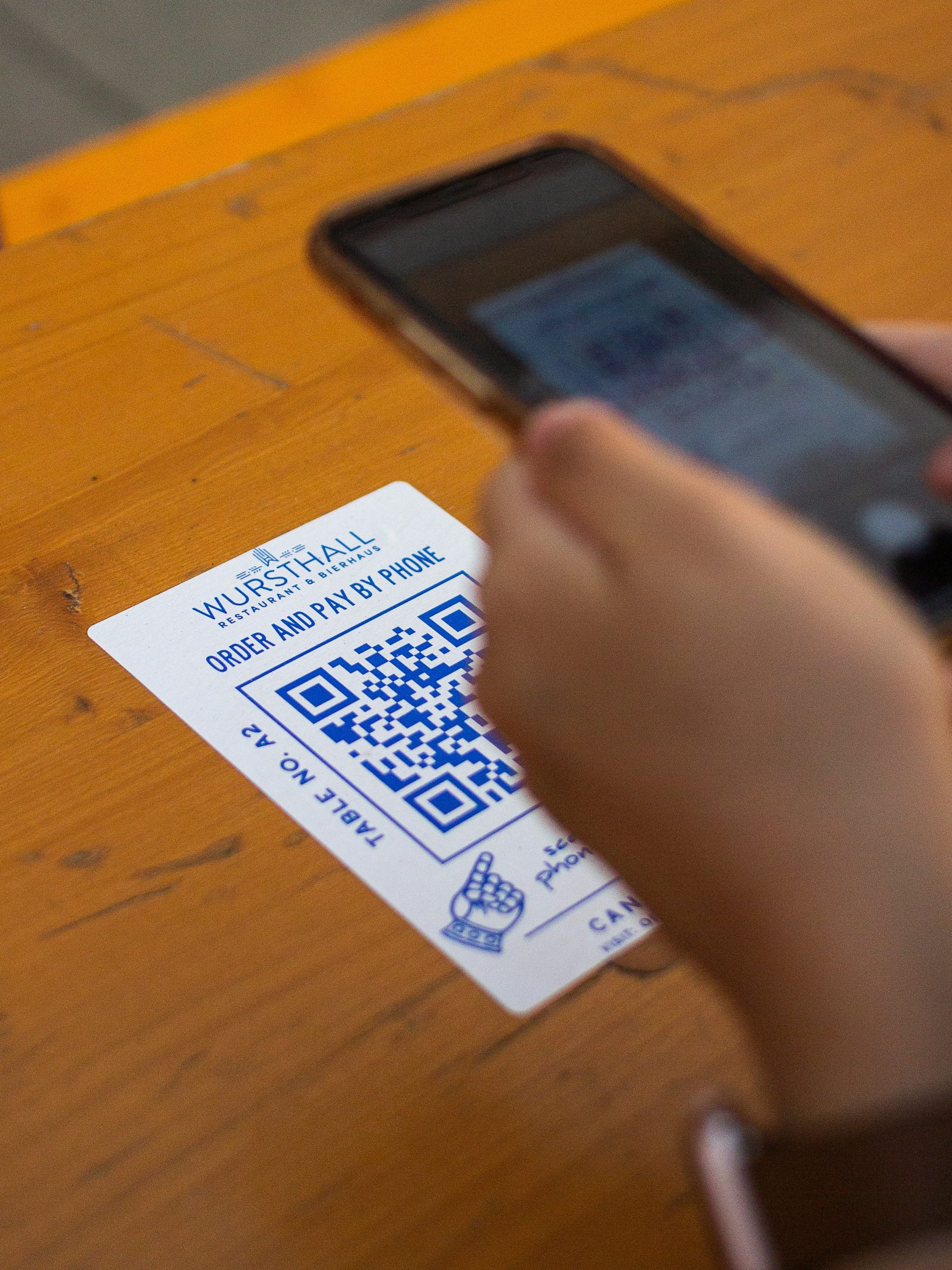
counterfeit. Pretty primitive “security” but now there is something better—a lot better. Denso, the inventor and owner of the QR Code patent, developed SQRC, a highly secure form of QR Code. A single QR Code carries both public and private data.
A conventional smartphone or scanner reads only the public-accessible data in an SQRC barcode. There is nothing unusual-looking about the QR Code. No one would suspect it contains secret data. A specially enabled scanner with a cryptographic key scans the private data encoded in that same QR Code.
How is this used? One application: government-issued identification card or drivers license. Liquor stores scan them to verify the shopper’s age. Additional information might be present but unavailable to a store clerk. But an authorized agency–a gun store, police officer or hospital emergency room could see it.
The death of barcodes was predicted almost from the beginning of their first usage. They have survived for nearly 50 years not due to the cleverness of the technology, but because of its adaptability. Barcodes are viable today—and probably for many tomorrows– because they solve problems.
Comments are always welcome. Contact us here.