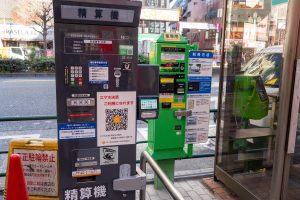
 The eve of GS1 Sunrise 2027 seems like a good time to do some myth-busting about QR codes, and a good place to start might be the Sunrise event itself. Americans were aware of the enormous presence and popularity of QR codes in Asia, and came back with stories about unstaffed QR-based food stores, but the popular opinion was that QR codes were just another Asian fad, like Tamagotchi, Puri Kura photo booths, and customized avatars from QQ.
Just another Asian Fad
COVID busted that myth in Europe and the United States. QR Code-based restaurant menus and tickets displaced a lot of wait staff and ticket agents.

Just another Barcode
The functional similarity of AR Code to UPS is undeniable, but that’s also the difference. QR Code does everything the UPC does—and much more. Linear barcodes can have error detection (some but not all do), but QR Code has error correction. That’s a big difference—and also the basis for the next myth.
QR Codes are Invulnerable
Putting a logo in the middle of a QR Code is an example of this myth, but if you do enough damage, even a QR Code cannot recover. “My logo makes the barcode more attractive” is the often-heard rationale. Sorry, your toilet is unattractive but serves an important purpose. Make sure your QR Code (and toilet) work right, or it can cost you a lot.
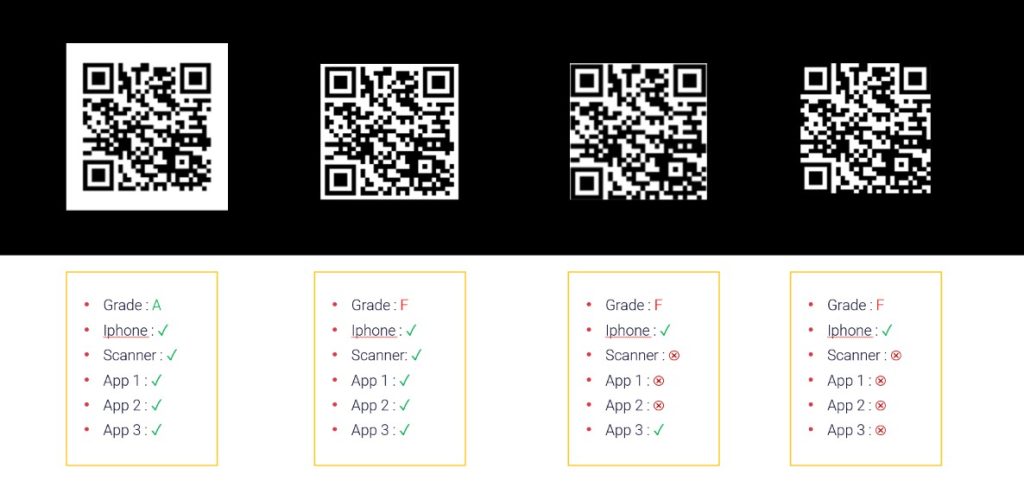
If my Phone can scan it, it’s a Good Barcode
This is a consequential myth if your business depends on that QR Code. Your phone can see colors the scanner at the dock door cannot see with its laser-emulating red light. “It scans” does not equate to “it’s compliant,” and that can also cost you—a lot.
Another difference: most phones can read a QR Code without the required minimum quiet zone surrounding it. Here’s a chart from my friend, Bruno Rolland of Axicon France:
QR Codes are a Malware or Security risk
Like most other myths, there is a kernel of truth. A QR Code can encode any URL, and you don’t see where it’s going until the QR Code lands you there. Flying blind. Don’t conflate the message with the messenger. You shouldn’t click on a link in an email from an unknown or suspicious sender. It’s no different with a QR Code. Think before you click—or as my father said back in the stick-shift days, “Make sure brain is engaged before putting mouth in gear.”
QR Codes only work with URLs
Of course not. They worked for years in automated cafeterias and vending-machine stores in Japan. QR Code is a data carrier, like any linear or 2D symbology.
GS1 Sunrise 2027 is a big deal, but it’s not the only deal.
 Bigger is Always Better; smaller is Always Worse
Honestly, I’m a bit guilty of this one. And like the other myths, there is some truth in it. Larger elements (dark or light dots) do provide more tolerance for print gain, but—carried to an extreme—it’s a myth. Optimize the symbol size for how it’ll be scanned. A postage stamp- or business card-sized QR Code is great for mobile phone scanning. A QR Code on the side of a building next to the expressway needs a much larger symbol.
 Our verifiers have GS1 Sunrise 2027 software. We can help you outsmart the myths and launch with confidence.
Contact us here.