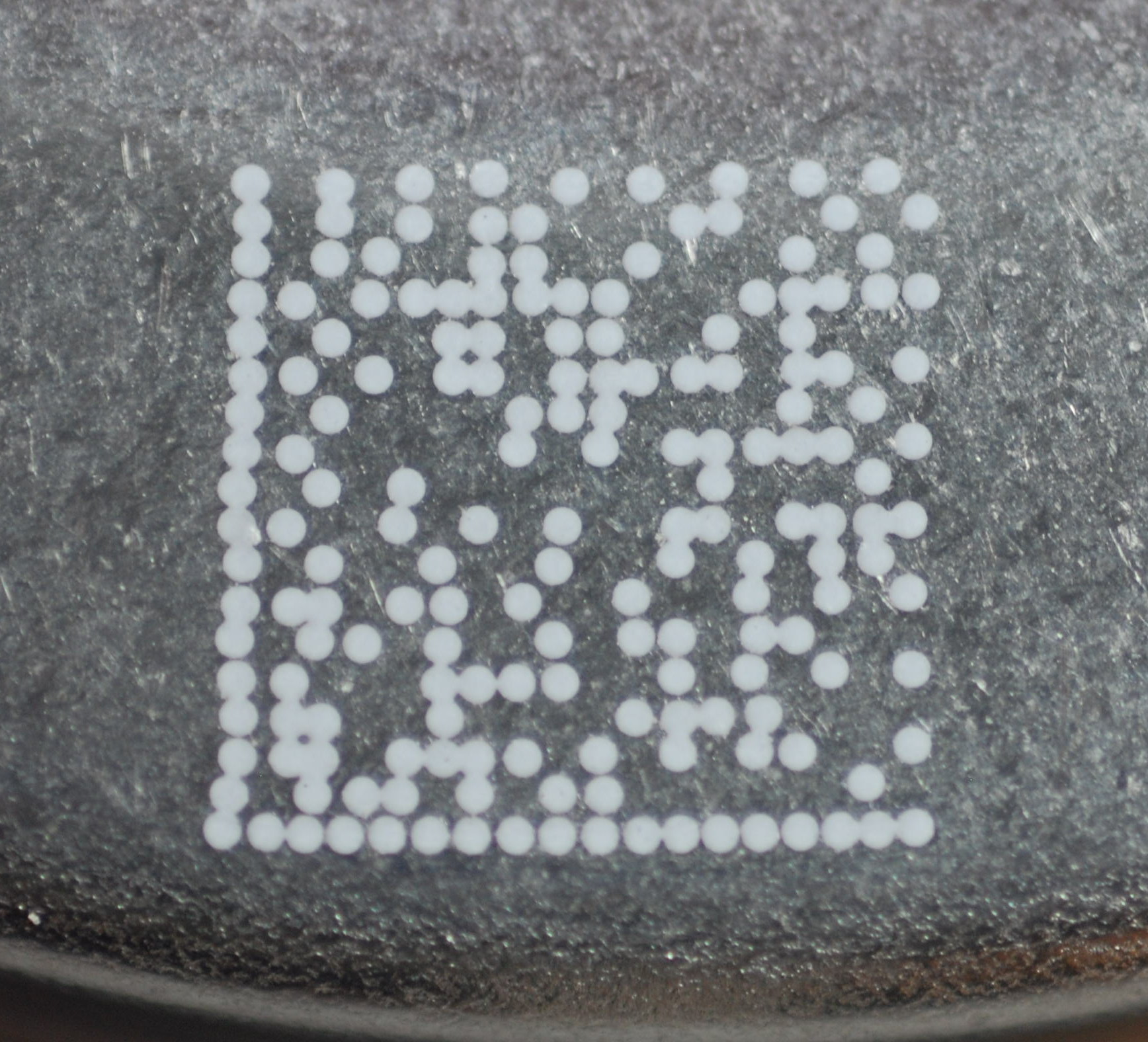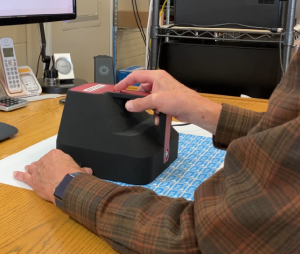
Over its 50+ year history, automatic identification technology has gone through distinct eras.
False Starts
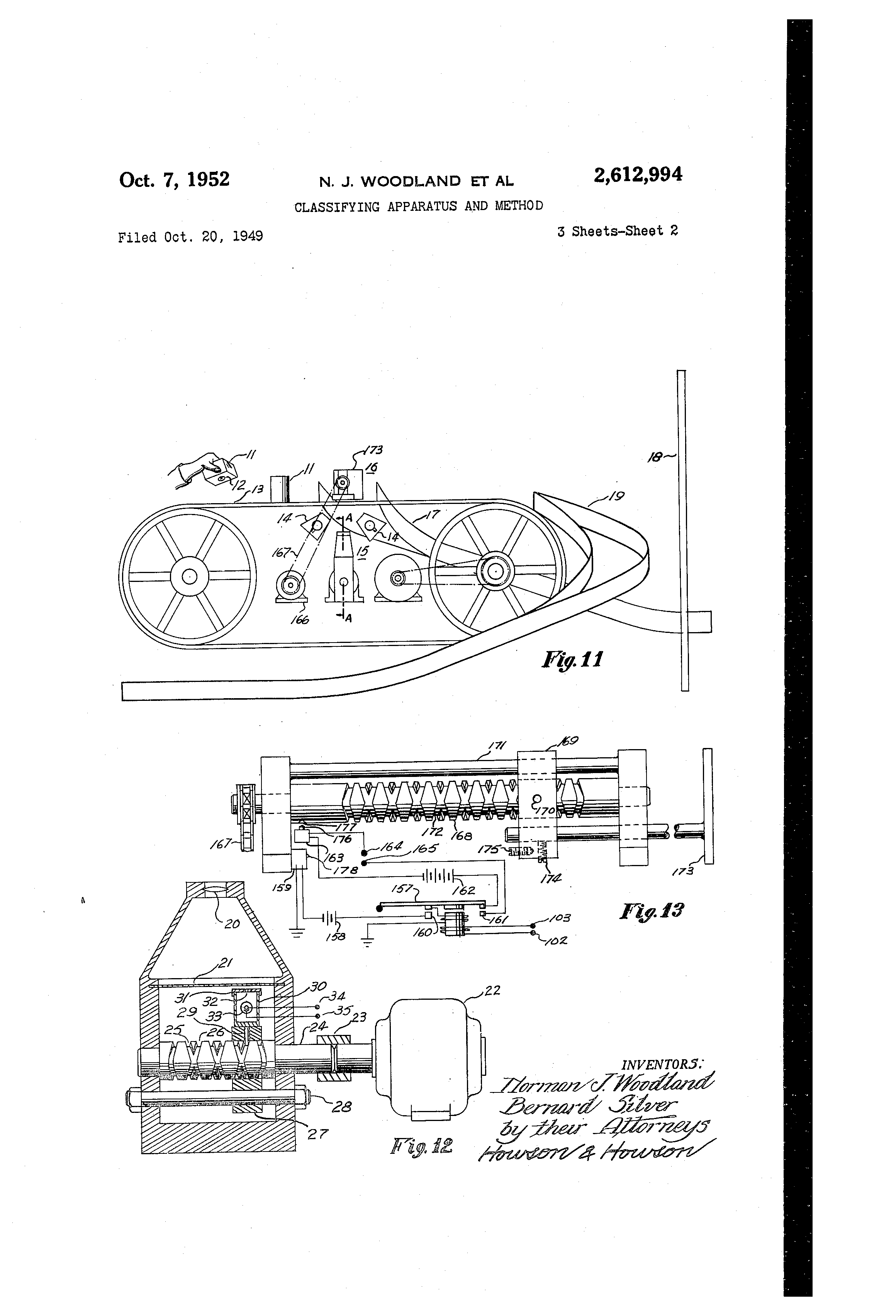
From its invention in 1948 to the mid-60s, the industry was in an era of false starts. Woodland and Silver’s bulls-eye barcode was a brilliant failure largely because the technology to read it didn’t exist. It predated lasers, looked like a science-fair project and was very large. This was the era of conception and false starts.
Early Standardization: Mid-1960’s-1970’s
Two important developments in the next ten-year period put barcodes on the map: the invention of the laser and a collaboration of Kroger and the National Association of Food Chains. The laser solved the scanning problem. Kroger had a pricing, slow checkout and inventory control problem. The trade association stepped in and asked Logicon, Inc. to develop a standard for their industry, from which the Universal Grocery Products Identification Code was born in the summer of 1970. A special committee to design the barcode was formed, and in 1973, IBM’s UPC design was selected.
Diffusion: Mid-1970’s-1980’s
Grocery stores are more than food repository. Every imaginable assortment of people roams the aisles and stand in the checkout queue: healthcare professionals, military, automotive, aerospace, forestry, logistics–everyday workers and management professionals. The benefits of barcodes spread into a broad range of applications and formed the era of diffusion.
Capacity Crunch: Late-1980’S – 1990’s
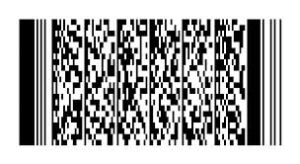
Evolving industry applications needed more than just an item ID, more than linear barcodes could reasonably accommodate. Stacked linear barcodes like PDF417 were an incremental improvement, but DataMatrix and QR Code were a real solution. Denso (Toyota) invented the QR Code, and still owns the rights to it. It was an industrial code long before it became a consumer tool in the form of a phone-scannable URL.

Get Serious: the late 1990’s
ANSI X3 formalized barcode grading in 1990. ISO 15416 for linear barcodes, and ISO 15415 for 2D symbols took over in the late 1990’s. Up until now, “does it scan” was good enough.
GS1
The Uniform Code Council (North America and UPC) and the European equivalent (EAN and the rest of the world) melted into GS1 in 2005. With this came global harmonization based on standards for item identification (GTIN) and Application Identifiers for data fields such as expiration dates, lot and batch numbers, etc. GS1 is the administrative backbone of everything from manufacturing to end-user and the supply chains that link them.
Mobile Scanning
Smartphones made 2D (mostly QR) codes into a consumer tool, taking over boarding passes, event access, payment systems and marketing. Retail barcode systems would inevitably follow.
Documented Quality and Compliance Grading
UDI in healthcare and regulatory drivers in highly regulated industries sealed the deal, ending the “does it scan” non-metric, replacing it with “does it comply?”
Retail 2D, Digital Passport and DSCSA
GS1 Sunrise 2027 is now in the adoption crunch. It is already far beyond groceries. Textiles and electronics are solidly aboard. Others will follow. More than just a new symbology, the Digital Link QR variant serves well beyond point-of-sale into sustainability and recycling.
As of May, 2026, the EU’s Digital Product Passport is now EN 18220:2026 an engineering specification encompassing symbology, encoding, production quality and durability. Guaranteed scanning reliability is a requirement.
Here in the USA, enforcement of the DSCSA (Drug Supply Chain Security Act) is officially pharma’s problem. Phase-in closed on May 27, 2026. It’s now a QMS issue. “Does it scan?” is gone. Now, it’s a documented, auditable ISO part quality criterion. Now it’s a regulatory bar.
 Welcome to the new era. Got a barcode question? Contact us here.