It is only natural that the comparison would arise It is as natural as change itself. The evolution of barcodes over the past 40+ years is evidence of this. Woodland and Silver’s round barcode, patented in 1952, solved the problem of directional scanning, but could not survive the distortions of rotary printing, so barcodes evolved into blocks of parallel lines of various widths, encoding numerical-only data.
The need to encode alphanumeric data led to the evolution of Code 39 but the barcodes were getting too long to scan. Code 128 solved that problem by 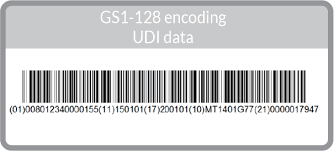 encoding numbers in pairs rather than single characters. The need to encode still more data led to the development of stacked barcodes, all the while occupying more and more precious space on labels already squeezed with required ingredients and allergic warnings in addition to brand graphics.

The evolution of the 2D barcode—not really a barcode in the strict sense—was inevitable. 1D barcodes encode data on one axis; a 2D symbol encodes data in the X and Y axis, making them higher capacity and smaller. Could there be any real doubt that 2D symbols are better than 1D barcodes? Well…..
Both forms of automatic identification have their strengths and vulnerabilities. Both are printed images: that basic fact makes them vulnerable to print inaccuracies and physical damage, but in different ways a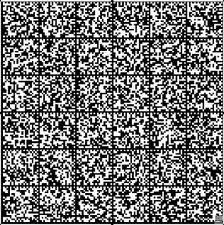 nd to different degrees.
Linear or 1D barcodes are sensitive to parallel damage, but forgiving of perpendicular damage. A scanner needs only a single pass through all of the barcodes and spaces to decode even a heavily damaged 1D barcode.
Most linear barcodes have error detection, in the form of check digits. These help to ensure that the correct digits have been encoded into the barcode but do not help the barcode to recover from damage.
Matrix or 2D symbols are sensitive to damage in the X and Y axis, but have error correction capability, but this comes at a cost. Although it can recover a heavily damaged symbol, it adds either encoded data which makes the symbol physically larger or makes the X dimension smaller (or both).
Both types of barcodes have tolerances on the reflective differences between the symbol and its background, and the uniformity of the two primary reflectance values (Rmin and Rmax). Both types of barcodes have tolerances on print gain and defects.
Matrix symbols are uniquely sensitive to axial and grid accuracy. Elongation on one axis is limited to a tolerance. Likewise, un-squareness has a limited range. Linear barcodes are insensitive to height elongation and tolerant of proportional length elongation if it is accurate. Moreover, as long as the bars are parallel, linear barcodes are tolerance of un-squareness.
Which is better? The best barcode type is the one used by those with whom you trade, with whom you share a supply chain. The reason there are different barcode types is that they serve different needs, with different attributes and capabilities. One size does not fit all.