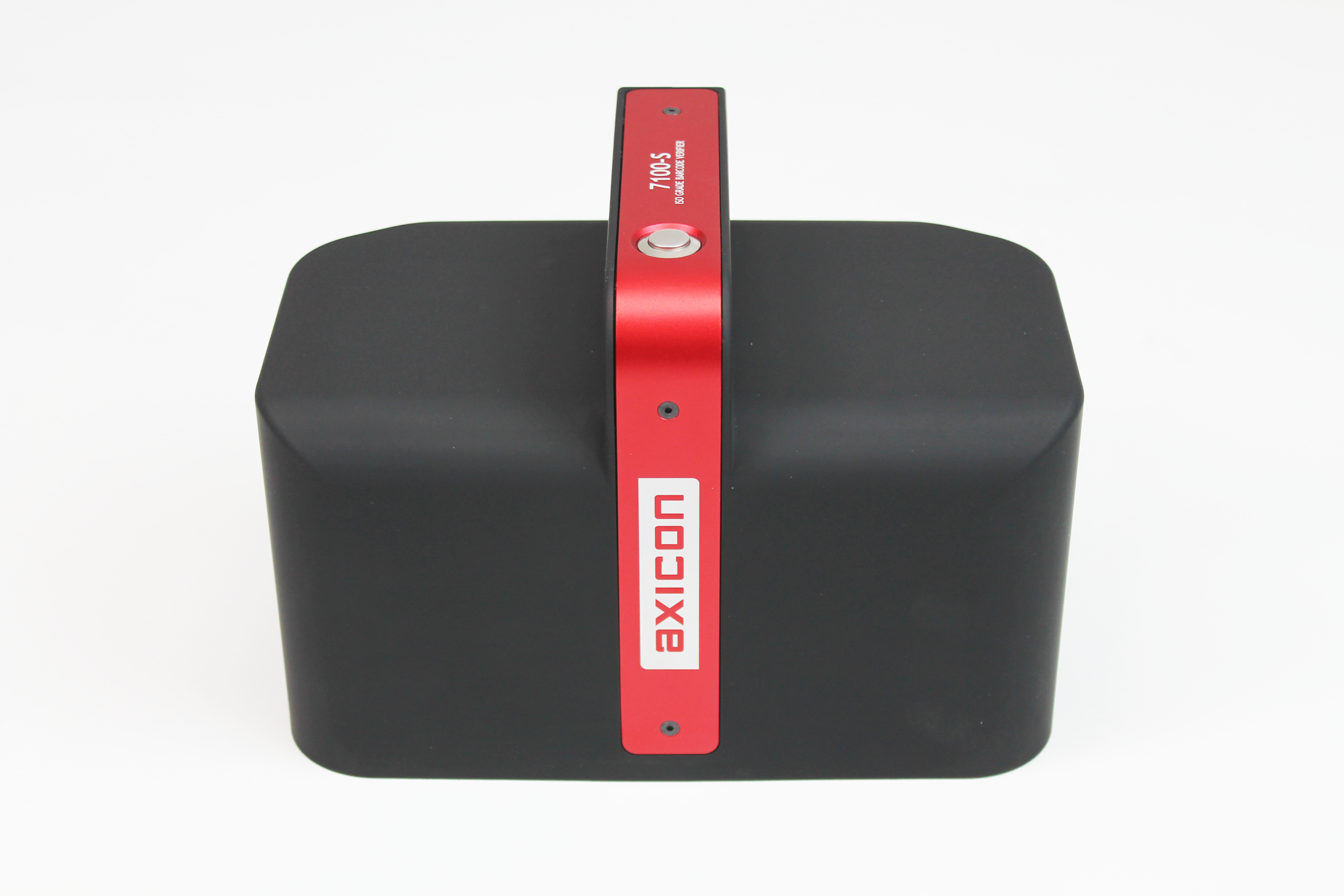
Section 7.6 of the ISO 9001 standard address Control of monitoring and measuring equipment. It states:
“All monitoring and measurement equipment used for product and process verification must be controlled and calibrated against nationally traceable standards at specified intervals.
You should ensure that such devices are available to guarantee continuity of in-process measurement capabilities. All test equipment must be calibrated either:
-
At regular, planned intervals
-
Or prior to use”

Barcode verifiers measure and grade the critical attributes of the print quality of the symbol; printing barcodes is a process. Thus, Section 7.6 pertains to barcode verifiers.
ISO 15426 is the standard to which compliant barcode verifiers must comply. This standard has two sub-categories. ISO 15426-1 pertains to verifiers of linear (1D) symbologies; ISO 15426-2 pertains to verifiers of 2D symbologies. If a barcode verifier complies to these standards, why is there yet another standard to which compliance is required?
The answer has to do with the nature of, well, nature itself. We live in a world of continual change. Nothing is permanent. At a sub-atomic level, even the hardest of materials is comprised of particles in motion, subject to change brought about by temperature, degradation over time and many other factors.

Electronic devices and mechanical assemblies go through a “burn in” period. Vehicles no longer require “breaking in” but stated fuel economy rates are disclaimed until the vehicle has traveled some miles. After that, a long period of relative stability (hopefully) follows, but that is really a period of more gradual change. Relative stability is not permanence. Measurement devices themselves are not immune to change.
How is it possible to measure something to a standard when the measurement device itself is changing?
There are two answers. The first is tolerances. Few things are really expected to perform exactly the same over time: there is a defined margin of error (stated positively, a range of acceptability) within which the device is deemed acceptable, and beyond which the device is out-of-specification.
The second answer relates to the first. A measurement device is validated by testing it against internationally accepted performance parameters. In the case of a barcode verifier, validating the instrument is done with test images of barcodes with engineered, highly precise errors. If the verifier detects the errors and reports them within the stated tolerances, the verifier can be re-certified as ISO compliant.
Barcode verifiers are optical-electronic devices. Change occurs in numerous ways:
- Gradual intensity or spectral shift of the illuminating LED’s
- Subtle degradation of electronics
- Atmospheric and process-induced dust and dirt on lenses and mirrors
- User-influences such as fingerprints on lenses, strain on electrical connections, drops and breaks
 Because they perform an important risk-management role, barcode verifiers should be tested and re-certified regularly. Verifier brands make different claims about ISO re-certification, some claiming it is not necessary, and some recommending annual recertification, others in two-year intervals. Most ISO auditors will require annual re-certification.
The cost of re-certification varies between manufacturers. The process usually takes a few days. NIST-traceable Performance Qualification test kits are also available from some manufacturers, which enable users to validate and self-recertify their own verifiers on site.
For additional information, contact us at lab@barcodetesting.com or inquire at our Contact area.