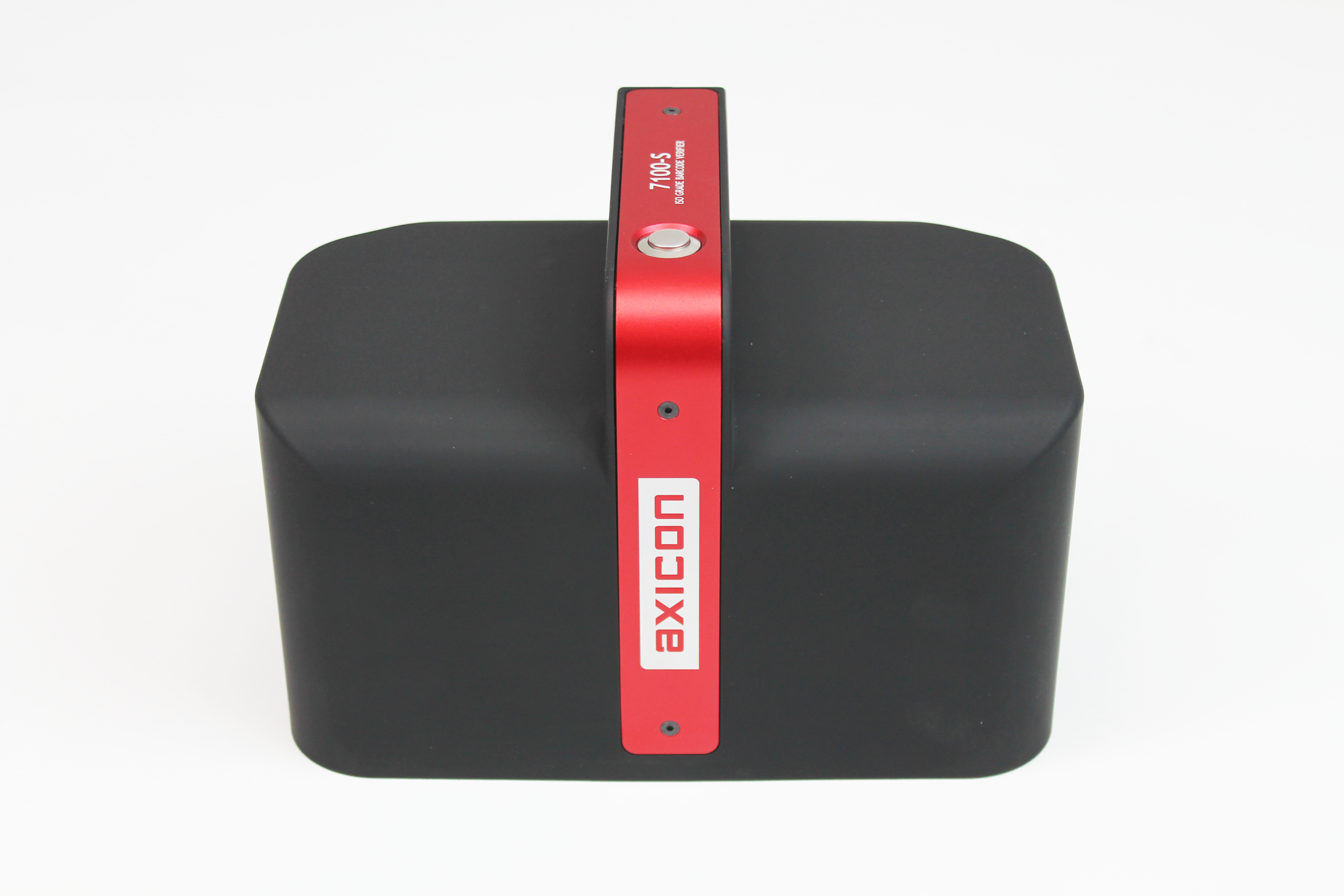
An ISO compliant barcode verifier is the absolute best way to protect yourself and your company. A bad barcode can do considerable damage to your business, your supply chain and your customer relationships. But what if you don’t have a barcode verifier? There are reasons why you might not:
- Too expensive

julien tromeur on unsplash - It’s all a big scam
- Our barcodes are supplied to us and therefore we cannot be held liable
- We’ve never had a problem before (my personal favorite)
- All the technology automatically eliminates any possible problem

The list is by no means comprehensive, but it attempts to illustrate a spectrum of truth, starting with is somewhat true (expensive) to nonsense (scam) to history predicts future (never had a problem) to downright foolhardy (technology).
Whatever the reason for not having a barcode verifier, there are some smart things one can do to assess barcode print quality without one. The questionable decision not to have one doesn’t inexorably cause questionable behavior without one. You can make the best of a bad situation while you wait for wisdom to arise in the skeptics. Here’s how:
- Is the barcode located in a space unencumbered by graphics or text—especially at the beginning and end of a 1D barcode, or anywhere around a 2D symbol? All barcodes and symbols must have quiet zones around them.
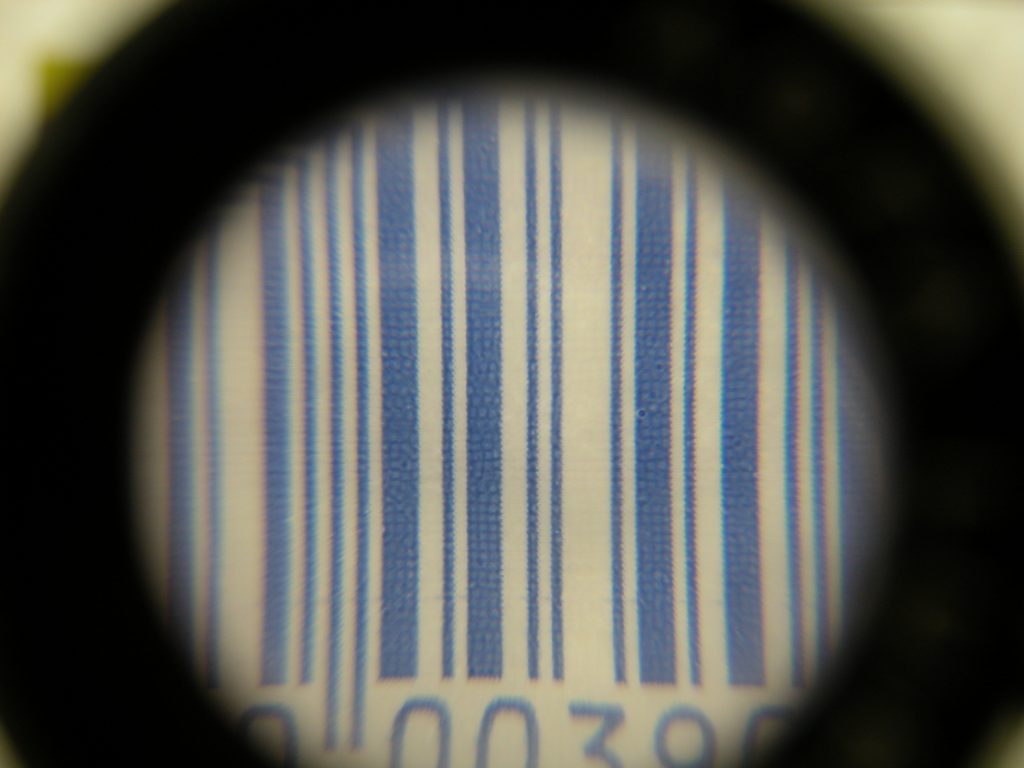
- Look at your barcode with a low power loupe or magnifier. 10X or 8X is sufficient. You don’t have to know what you are looking for—just look. Are bar edges sharp? Are the narrow bars equal in width to the narrow spaces? If any of the answers are “no” you probably have a problem barcode.
- Are there spots in the spaces and/or voids in the bars? These cold confuse the scanner into thinking they are additional bars or spaces.
- Is the background uniformly light and the bars or dots uniformly dark? The symbol should have only two levels of reflectivity—high and low. If there are other shades or patterns within the symbol area, that’s a problem.
- Is the background behind a 1D symbol green or in the green spectrum? Not good! The red laser light will see that as black. A black barcode on a green background will look all black to a scanner.
- Is the barcode printed in a red part of the spectrum, including orange, purple and some browns? The red laser will see that as white. A reddish barcode on a white background may be nearly invisible to a scanner.
- Does the barcode wrap around a cylindrical surface? That’s not necessarily a problem unless you cannot see the entire barcode without rotating the cylinder (can, bottle, tube, etc.). If you can’t see it all at once, nether can the scanner. Rotate the barcode 90 degrees to eliminate the effects of the curved surface.

These observations do not account for everything that could go wrong with a barcode, but they are better than nothing. If acquiring a verifier is just not feasible, a great alternative is to send some samples periodically to a testing service. This will benchmark your barcode quality at a known point in time and could reveal important steps you can take to improve barcode print quality. Repeated tests could identify variables you can then work to control.