Those of you who have been barcoding your products for a while can go ahead and roll your eyes, but remember, here is where you started. Barcoding is like life—you can’t skip any steps. Everybody starts at the beginning, so for you newbies, here is where you start.
Barcode Standards
How will your barcodes be used? If you are installing an internal system just to keep track of items in a closed loop system, skip down to the section on Barcode Design Software. But if you are marking items that will be shared with trading partners, you need to be concerned with compliance to standards so everybody gets barcodes and the data they contain in accordance with agreed upon formats. If you are not sure what those standards may be, ask your trading partners or the trade association that represents your industry. There are trade associations for virtually every major industry and if there are barcode standards in place, they can point you to the specifications and standards that will define how the barcode is structured, which symbologies you can use, and any other details that will impact how your barcodes must be designed and printed.
GS1 is probably the largest barcode standards organization in barcoding, and they publish the standards for barcodes in several major industries includingGS1 health care, retail commodities where UPC is used, packaging, logistics and many others. Because there are so many users, GS1 also acts and as the number bank for UPC, now known as GTIN12 which stands for the Global Trade Identification Number for the 12 digit barcode. To get a GTIN12 number you must apply and pay a fee to GS1. There are GS1 affiliates on all continents in  over 100 countries including 41 European nations, 21 Middle East and Africa nations, 21 nations in the Americas and 29 nations in the Asia Pacific region . To apply for a barcode number at GS1US click here.
There are also independent GTIN12 reseller from who you could purchase the rights to use a barcode number for your product. This is not advised. In addition to distributing the essential numbers GS1 is responsible for ensuring that they have not accidentally been released to someone else.

Barcode Design Software
Where do you plan to print your barcodes? If you are using a third party printer make sure they understand that they are responsible for the readability of your barcodes. To do this effectively, you should have a printed barcode policy that clearly states the minimum acceptable grace level for your barcodes. It is also highly recommended that you require your printer vendor verifies your barcodes and proves that they did by sending periodic verification reports using an ISO compliant barcode verifier.
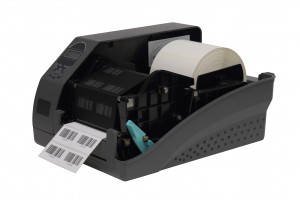
If you intend to print your own barcodes you will obviously need a printer such as a Zebra or similar barcode label printer. You will also need label design software. A printer and the design software is not a place to skimp. You get what you pay for and a high quality, new printer and good barcode software will be easier to use and produce a high quality result. Choose a printer with enough print width to handle your label barcode and any other necessary information, and high enough resolution (dots or pixels per inch).
There are many barcode design software apps available. To begin, choose one that is compatible with your Apple or Windows computer. Make sure the software has the latest version of the symbology (barcode type) you intend to print. We recommended that you consider what type of barcodes you may be migrating to or adopting in the future and buy software that includes it. You will be responsible for the quality of your barcodes–actually you are also responsible even if somebody else prints them. We highly recommend you buy an ISO compliant barcode verifier and here again, make sure it will verify the barcode symbologies you think you and your trading partners will be using in 5 years.